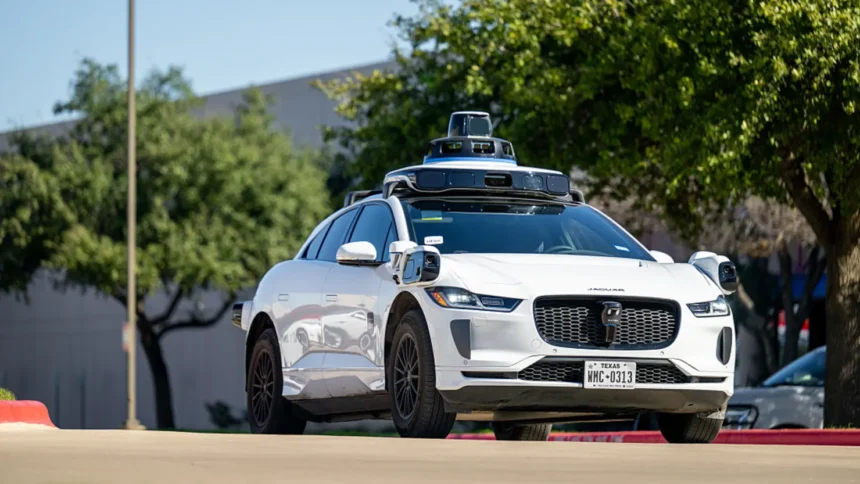
Waymo’s expansion into Miami marks a shift from experimental rollout to structured market capture, as Alphabet’s autonomous driving unit begins offering paid robotaxi rides in the city. The move comes at a moment when the commercialization of self-driving services is becoming a competitive benchmark rather than a technological curiosity – a transition closely followed by NewsTrackerToday as autonomous mobility matures.
Miami becomes the sixth U.S. market where Waymo operates a paid robotaxi service. Initial coverage spans approximately 60 square miles, including Design District, Wynwood, Brickell, and Coral Gables, with rides booked directly through Waymo’s app. The company has indicated plans to extend service toward Miami International Airport, a step that would significantly raise the operational bar by introducing time-sensitive, high-density traffic conditions. In my assessment, airport access is less about geographic expansion and more about validating reliability under pressure – a critical threshold for mainstream adoption.
Waymo reports that nearly 10,000 Miami residents have already signed up for access, suggesting early consumer interest before full-scale availability. To support operations, the company is partnering with Moove for fleet management, including charging, cleaning, and vehicle maintenance. This operational structure highlights an often-overlooked reality of autonomy: software capability alone does not determine success. As News Tracker Today has previously noted, fleet uptime and service consistency increasingly define competitive advantage in urban robotaxi markets. According to Sophie Leclerc, a technology sector analyst focused on platform economics, early market entry creates behavioral lock-in. Once users integrate autonomous rides into daily routines, switching costs become psychological rather than technical. I would add that Waymo’s aggressive city-by-city rollout strategy appears designed to normalize robotaxis before competitors achieve comparable scale, turning familiarity into a moat rather than relying solely on technological superiority.
Operational scale also amplifies risk. Waymo’s recent challenges in San Francisco – where vehicles struggled during storms and power disruptions – underscore the importance of edge-case performance. The company says it is refining systems to better handle extreme conditions, but public trust will depend on predictability rather than perfection. As NewsTrackerToday observes, autonomous services are judged less on average performance and more on how they behave when cities themselves are under stress.
Waymo ended 2025 with active services in Austin, Atlanta, Los Angeles, Phoenix, and the San Francisco Bay Area, reporting roughly 450,000 paid rides per week and approximately 14 million trips completed over the year. Liam Anderson, a financial markets analyst specializing in infrastructure-driven technology, argues that utilization metrics now matter more than deployment headlines. High trip volume transforms autonomy from a capital-intensive experiment into an infrastructure asset with measurable unit economics. From my perspective, sustained utilization also accelerates data-driven refinement, reinforcing Waymo’s lead as new cities come online.
Beyond the U.S., Waymo is testing in New York, Tokyo, and London, while signaling its first international commercial launch. Competition remains intense, with pressure from Tesla, Amazon-owned Zoox, and major Asian players. The decisive variables for 2026 will not be novelty or valuation, but response times, service reliability, and expansion discipline. For NewsTrackerToday, the key question is whether Waymo can convert its early scale advantage into durable trust before rival networks reach operational maturity.