Finnish quantum computing startup IQM is preparing to enter public markets through a merger with SPAC Real Asset Acquisition Corp., in a move that signals growing confidence in Europe’s quantum sector. The transaction values IQM at approximately $1.8 billion pre-money and is expected to close around June, pending shareholder and regulatory approval. Analysts following developments for NewsTrackerToday view the decision not merely as a liquidity event, but as a strategic attempt to secure long-term capital for a capital-intensive technology cycle.
Unlike traditional IPOs, SPAC mergers offer faster timelines but introduce redemption risk, as investors may withdraw funds before listing. The deal structure could provide IQM with more than $300 million in gross proceeds through a combination of PIPE financing and trust capital, assuming limited redemptions. For a hardware-driven company operating in a research-heavy field, sustained funding is essential to maintain engineering momentum, manufacturing capability and international expansion.
Recent disclosures indicate that IQM has delivered 21 quantum systems to 13 clients and expects at least $35 million in 2025 revenue. While modest relative to large-scale technology firms, these figures represent meaningful commercial traction in a sector still transitioning from laboratory validation to repeatable enterprise deployment. Coverage assessments at NewsTrackerToday suggest that early sales credibility is increasingly critical, as public investors demand clearer revenue pathways rather than purely theoretical technological advantage.
Quantum computing promises exponential gains for specific classes of computational problems, including materials science, optimization and certain financial simulations. However, commercial scalability remains constrained by hardware stability, error correction limitations and integration complexity. Liam Anderson, financial markets expert, argues that “public markets will reward measurable execution over visionary narratives.” In his view, sustained backlog growth and service revenue expansion will matter more than headline claims of quantum supremacy.
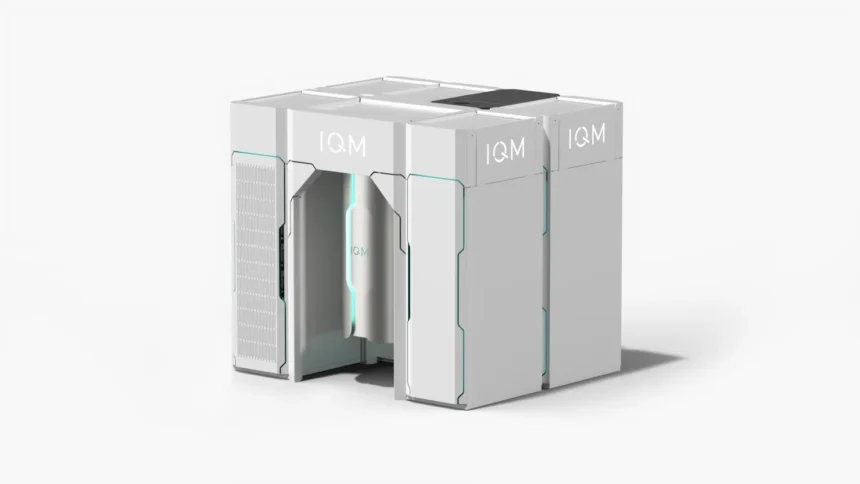
IQM positions itself as a builder of full-stack, open-architecture quantum systems deployable on-premise or via cloud access. This hybrid approach aligns with enterprise data center integration strategies, where quantum processors are increasingly viewed as accelerators complementing classical high-performance computing rather than replacing it. As discussed in infrastructure analyses tracked by News Tracker Today, hybrid quantum-classical architectures may define the industry’s near-term commercial pathway.
Competitive dynamics intensify the stakes. European and global rivals have raised substantial private capital, and state-backed investments – particularly in China and the European Union – continue to expand. Ethan Cole, chief economic analyst specializing in macroeconomics and central banking, notes that “quantum is no longer a research contest alone; it is an industrial policy arena.” Public listing could position IQM as a visible European champion, but it also subjects the company to quarterly transparency pressures uncommon in early-stage deep-tech ventures.
Looking ahead, the next 12 to 24 months will test whether IQM can convert initial deployments into scalable revenue growth, repeat customer contracts and sustainable unit economics. Redemption levels in the SPAC process will signal investor confidence, while backlog expansion will indicate commercial durability. If successfully executed, the listing could strengthen Europe’s presence in the quantum race. If operational metrics lag expectations, public scrutiny may prove unforgiving.
The broader question is whether quantum computing is approaching a commercially investable inflection point. IQM’s public debut may offer one of the clearest indicators yet – a development NewsTrackerToday will continue to monitor as quantum ambition transitions from research milestone to market accountability.