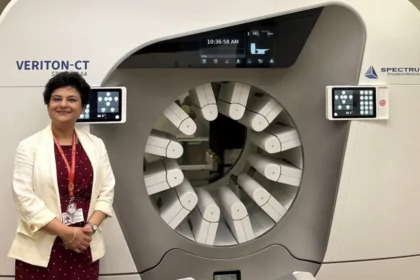
The global race to develop brain–computer interface (BCI) technology is intensifying as companies in both the United States and China accelerate efforts to build systems capable of connecting the human brain directly to digital devices. In the U.S., companies such as Elon Musk’s Neuralink and the OpenAI-backed startup Merge Labs are advancing implantable neural technologies, while Chinese entrepreneur Phoenix Peng is pursuing competing approaches through two startups – NeuroXess and Gestala. According to NewsTrackerToday, the growing number of players entering the sector illustrates how rapidly BCI research is evolving into a major frontier of both medical innovation and advanced computing.
Gestala, which focuses on non-invasive BCI systems based on ultrasound technology, has already attracted significant investor interest. The company raised 150 million yuan (about $21.6 million) just two months after launching, reaching an estimated valuation between $100 million and $200 million. The funding round was co-led by Guosheng Capital and Dalton Venture with participation from Tsing Song Capital, Gobi Ventures, Fourier Intelligence, Liepin, and Seas Capital.
Founder and CEO Phoenix Peng said the round was heavily oversubscribed, with total investor demand exceeding $58 million. The capital will support research and development, expansion of the team from roughly 15 employees to around 35 by the end of the year, and construction of a manufacturing facility in China. The three-month-old startup plans to complete a first-generation prototype by the end of the year.
The brain–computer interface industry has recently seen increasing investment in ultrasound-based technologies. Gestala is the first company in China focused specifically on ultrasound BCI systems, although similar projects have emerged in the United States, including those developed by Merge Labs. Sophie Leclerc, technology sector analyst, notes that non-invasive neural interfaces could significantly broaden access to BCI systems by reducing the medical risks associated with implanted devices.
Peng believes ultrasound technology may represent the next generation of brain–computer interface systems because it can interact with larger areas of the brain, including deep neural circuits that are difficult to reach with traditional implanted electrodes. As NewsTrackerToday notes, technologies that eliminate the need for surgical implants could significantly expand the practical applications of BCI systems in clinical medicine.
Gestala is initially focusing on medical use cases, particularly the treatment of chronic pain, which affects millions of people globally. Early research suggests targeted ultrasound stimulation may help reduce pain levels by influencing neural activity in specific regions of the brain.
The startup is also exploring potential applications in mental health and neurological rehabilitation, including treatments for depression, post-traumatic stress disorder, autism, obsessive-compulsive disorder, and stroke recovery. In the longer term, the company plans to investigate conditions such as Alzheimer’s disease, essential tremor, and Parkinson’s disease.
Daniel Wu, geopolitics and energy analyst, notes that the development of brain–computer interfaces is increasingly shaped by global competition as well as cross-border scientific collaboration. In his view, the United States maintains strong leadership in neuroscience research, while China’s manufacturing infrastructure and large clinical research networks could accelerate large-scale experimentation.
The company believes its competitive advantage lies in speed and scale. By leveraging China’s integrated manufacturing ecosystem, Gestala aims to move from prototype development to production faster than many international competitors. As News Tracker Today observes, the ability to combine advanced research with large-scale manufacturing could become a decisive advantage in the emerging BCI industry.
Gestala is also partnering with major Chinese hospitals to accelerate clinical trials, which the company estimates could cost roughly 20–33% less than comparable studies conducted in the United States or Europe. At the same time, the startup is developing what it calls an “Ultrasound Brain Data Bank,” a large clinical dataset designed to train artificial intelligence models capable of decoding neural signals and supporting future neurological diagnostics.
From a broader industry perspective, NewsTrackerToday notes that the convergence of neuroscience, artificial intelligence, and advanced computing is transforming brain–computer interfaces into one of the most strategically important emerging technology sectors.