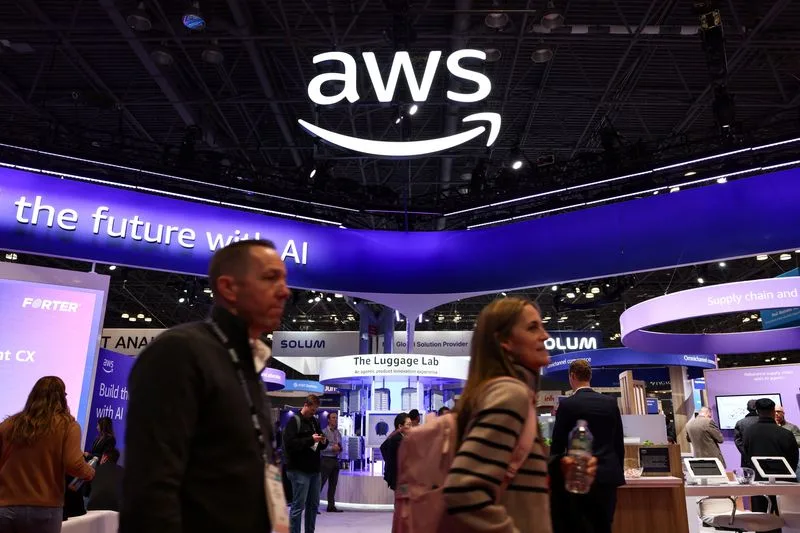
The growing integration of artificial intelligence into government infrastructure is reshaping relationships between cloud providers, AI developers and defense institutions. Recent developments involving Amazon Web Services (AWS) and Anthropic’s AI models illustrate how commercial AI technologies are increasingly intersecting with national security considerations. In its initial coverage of the situation, NewsTrackerToday notes that cloud platforms are gradually becoming intermediaries between AI developers and government customers.
AWS confirmed that it is assisting clients in migrating U.S. Department of Defense workloads away from Anthropic technologies toward alternative AI models available within Amazon’s cloud ecosystem. At the same time, organizations can continue using Anthropic’s Claude models for tasks unrelated to defense operations. This distinction reflects growing sensitivity around how advanced AI systems are deployed within government environments.
The situation highlights the expanding role of cloud providers in the AI economy. Through services such as Amazon Bedrock, AWS allows enterprises and public institutions to access multiple AI models from different developers within a single infrastructure environment. According to NewsTrackerToday, this structure gives organizations the flexibility to switch providers if regulatory, security or political constraints affect a particular technology.
Government agencies have become increasingly cautious about relying on private AI developers. Concerns about supply chain security, data protection and geopolitical risk have pushed defense institutions to examine the origins and governance of the technologies they deploy. Infrastructure providers like Amazon are therefore responsible not only for computing resources but also for managing the broader AI ecosystem available to clients.
This shift matters because most organizations build applications directly on cloud infrastructure rather than integrating each AI model independently. As a result, cloud providers influence which technologies remain accessible to different categories of customers. Liam Anderson, a financial markets expert, argues that multi-model AI platforms are emerging partly as a response to technological dependency risks. Allowing organizations to operate several models within one environment reduces the danger of relying too heavily on a single AI developer.
At the same time, tensions continue to grow between technology companies and governments over the acceptable uses of artificial intelligence. Some AI developers seek to restrict military or surveillance applications, while governments increasingly view advanced AI systems as strategic assets for national security.
Amazon occupies a particularly complex position in this landscape. The company is both a major investor in Anthropic and one of the largest providers of cloud infrastructure for U.S. government agencies. In recent commentary, News Tracker Today emphasizes that this dual role places cloud providers at the center of negotiations between AI developers and public-sector clients.
For organizations operating in regulated sectors, the ability to migrate workloads between different AI models may become a crucial capability. Defense agencies, financial institutions and critical infrastructure operators increasingly require technology stacks that can adapt to shifting policy or security requirements.
The broader AI market may gradually fragment into multiple ecosystems shaped by regulatory and geopolitical priorities. Governments are likely to favor systems aligned with national security policies, while enterprises will prioritize flexibility in their technology choices. As NewsTrackerToday highlights, cloud platforms capable of supporting multiple AI models and enabling rapid transitions between them could become some of the most influential players in the evolving artificial intelligence industry.