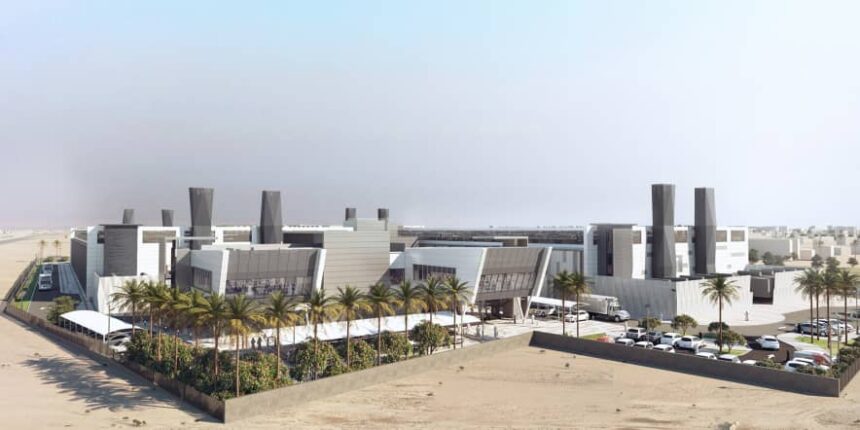
The artificial intelligence infrastructure boom that swept through the Gulf states with extraordinary momentum has run headlong into the realities of regional conflict, and NewsTrackerToday examines how one of the sector’s most ambitious expansion zones has been transformed – almost overnight – from a magnet for global capital into a geography of caution and deferred ambition.
Pure DC, the Oaktree-owned data center developer with operations across the United Arab Emirates and planned expansion into Saudi Arabia, has placed investment decisions on hold across all Middle East opportunities. Its CEO, Gary Wojtaszek, was characteristically blunt in describing the calculus at work: no rational actor deploys fresh capital at scale into an environment where physical assets are being struck by military ordnance. A data center on Yas Island in Abu Dhabi – a facility Pure DC operates – sustained shrapnel damage following an Iranian attack, giving the crisis a tangible, concrete dimension that spreadsheet risk models were never designed to capture.
The pause is not an isolated corporate reaction. It reflects a broader freeze across a sector that, until recently, was riding an almost euphoric wave of Gulf state patronage, cheap electricity, and abundant land. Hyperscalers and independent developers alike had positioned the region as a cornerstone of the global AI infrastructure buildout. That thesis has not collapsed – but it has been placed in suspension.
Daniel Wu, a specialist in geopolitics and energy, argues that the conflict has exposed a structural vulnerability that investors in digital infrastructure consistently underweighted. Physical data center assets, unlike financial instruments, cannot be hedged or repositioned. When they become military targets, the risk profile changes categorically – not incrementally. The skyrocketing oil prices and supply chain disruptions triggered by the conflict compound this, squeezing the economics of new construction precisely when security costs are rising. NewsTrackerToday highlights the particular tension at the heart of Pure DC’s position: the company has not abandoned the region, and Wojtaszek has been careful to distinguish between paused investment decisions and cancelled long-term planning. Discussions around future projects in Riyadh have continued. The long-term demand thesis – cheap power, government ambition, rapidly digitising economies – remains intact. What has changed is the time horizon over which that thesis can be acted upon.
The workforce dimension of this crisis is receiving less attention than the capital freeze, but it may carry longer-lasting implications. Pure DC is not mandating that on-site staff remain in facilities that have been struck or targeted. Workers are being given the latitude to relocate with their families, with remote options extended to non-essential personnel. Welfare provisions have been supplemented. These are pragmatic responses to an extraordinary situation, but they also signal something structural: as data centers become critical infrastructure, the human beings who operate them are inheriting a risk profile that was never priced into their employment contracts.
Sophie Leclerc, who tracks developments across the technology sector, points to the workforce question as one with durable consequences beyond the current conflict. The concept of hazard pay for data center workers – once a theoretical fringe idea – is now being discussed in serious terms by workforce strategists. The psychological dimension is equally significant: employees who understand that their facility is a high-value military or adversarial target carry a burden that cannot be resolved by welfare packs alone. Over time, this dynamic will feed into compensation structures across the entire sector, reshaping the cost base for operating critical digital infrastructure in politically volatile regions. NewsTrackerToday explores the broader tension between digital demand and geopolitical supply – a tension that Gulf state national visions have not yet had to fully reconcile. The ambition to build world-class AI infrastructure and position sovereign economies as nodes in the global data economy was always predicated on a degree of stability that armed conflict fundamentally undermines. Wojtaszek’s observation that “digital demand remains unchanged” is accurate, but demand and investable opportunity are not the same thing. Capital flows to where risk is manageable, and right now, the Middle East data center sector is offering a risk profile that most investors are not equipped to absorb.
The AWS outages in the UAE and Bahrain following drone strikes in March illustrated that the consequences extend well beyond the data center perimeter. Banking systems, payment infrastructure, and consumer services went dark – a reminder that the abstraction of “cloud infrastructure” resolves, at the physical layer, into buildings that can be hit and hardware that can be destroyed. The compounding effect of oil price shocks on supply chains for critical materials adds a further layer: even if security conditions stabilised tomorrow, the materials required to resume construction at scale may not arrive on the timelines that pre-conflict projections assumed. News Tracker Today tracks a sector at an inflection point – one where the collision between technological ambition and geopolitical reality is forcing a fundamental reassessment of where, and under what conditions, the next generation of AI infrastructure gets built.