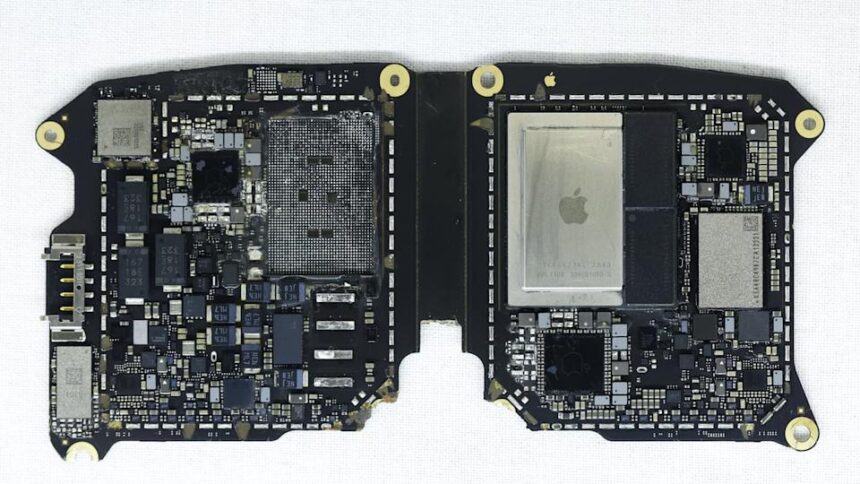
Apple is quietly testing alternatives to its long-standing reliance on Taiwan Semiconductor Manufacturing Company, opening early-stage discussions with Intel and Samsung Electronics about producing core processors domestically. The conversations remain tentative, with no commitments in place, yet the strategic undertone is unmistakable – NewsTrackerToday highlights a shift in thinking as supply chain fragility forces even the most optimized ecosystems to reconsider concentration risk.
For years, Apple’s dependence on TSMC delivered unmatched performance advantages, particularly in advanced node manufacturing critical for iPhone and Mac system-on-chip designs. That advantage, however, comes with geographic exposure. Internal concerns about routing a majority of production through a single region date back several years, and recent supply constraints have intensified the urgency. Chief executive Tim Cook has acknowledged limited flexibility in sourcing high-end chips, noting that imbalances between supply and demand may persist for months.
This pressure is not purely operational – it intersects with broader industrial policy. Sophie Leclerc points to a growing alignment between corporate supply strategies and national semiconductor agendas, where domestic production capacity carries both economic and political weight. In that context, NewsTrackerToday examines how Apple’s outreach to Intel may serve dual purposes: diversifying production while reinforcing ties with U.S. policymakers who continue to prioritize domestic chip manufacturing.
Intel’s position adds another layer of complexity. Under CEO Lip-Bu Tan, the company is aggressively expanding its contract manufacturing ambitions after years of lagging behind Asian rivals. Securing Apple as a client would not only validate its turnaround strategy but could also catalyze further demand from other technology firms. At the same time, Samsung’s Texas fabrication project introduces a competing path, one that blends existing supplier relationships with the promise of U.S.-based capacity. NewsTrackerToday underscores that both options still trail TSMC technologically, raising doubts about whether Apple would accept performance trade-offs in exchange for geographic diversification.
Beyond individual partnerships, the broader semiconductor landscape is evolving under structural strain. Ethan Cole emphasizes that persistent chip shortages reflect deeper imbalances in capital expenditure cycles and demand tied to artificial intelligence infrastructure. In this environment, companies are not simply reacting to shortages – they are recalibrating long-term supply architectures to withstand volatility.
Apple’s parallel effort to expand TSMC’s U.S. footprint in Arizona illustrates the incremental nature of this transition. Even with tens of millions of chips expected from that facility, the output represents only a fraction of Apple’s total needs. News Tracker Today notes that diversification, while strategically necessary, will unfold gradually as technological, economic, and political constraints reshape the semiconductor supply chain.