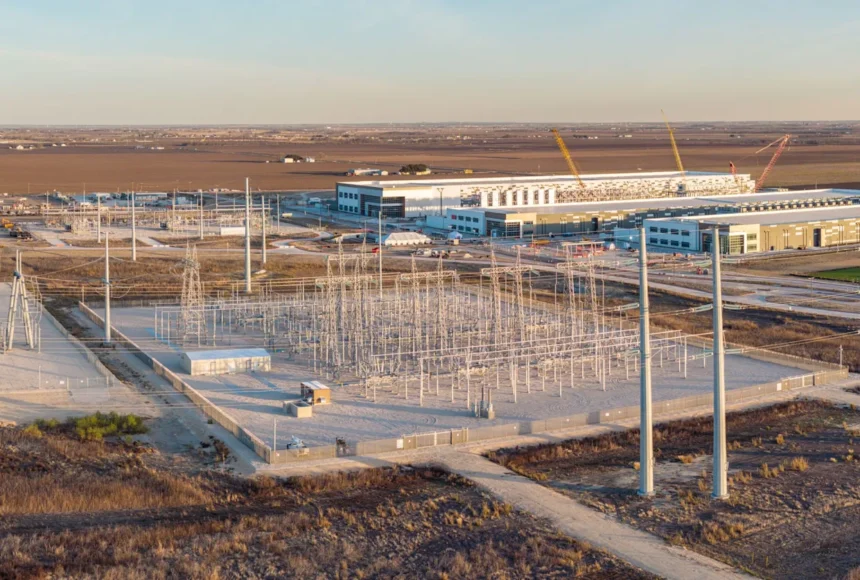
A rural Texas county did something the rest of the country will be watching closely. Hill County, about 55 miles south of Fort Worth, voted 3-2 to put a one-year moratorium on new data center construction in its unincorporated areas. County Judge Shane Brassell cast the deciding vote. As far as anyone can tell, this is the first county-level ban of its kind in a state that has spent the better part of a decade rolling out the red carpet for hyperscale infrastructure. NewsTrackerToday treated the vote as a potential inflection point from the moment the agenda hit the public docket.
Timing tells the story. As many as eight data center projects are reportedly in the works inside the county. A proposed 300-acre development from Dallas-based Provident Data Centers, just north of Hillsboro, was the trigger. Residents packed the courtroom on the morning of the vote. The list of complaints was long: noise, water consumption, electricity demand, fire safety standards, the long-term shape of the rural infrastructure. The pressure from the public was unmistakable, and the commissioners read the room.
Daniel Wu, who covers geopolitics and energy, put the vote into a longer arc: “The AI buildout has just hit the same friction layer that every other energy-intensive industry ran into eventually. Coal hit it. Fracking hit it. Heavy manufacturing hit it. Local communities are starting to weigh long-term tax revenue against immediate quality-of-life costs, and they don’t always land where developers expect them to. Hill County is the first county-level no in Texas. It won’t be the last. Watch the southern data center corridor over the next six to twelve months. You will see similar votes.”
The state-level backdrop sharpens the stakes. Texas now sits second only to Virginia in total data center capacity, and the boom isn’t cooling. A recent paper from the University of Texas at Austin warned that data centers alone could eat up to 9 percent of the state’s water supply by 2040. Back in February NewsTrackerToday pulled the water-consumption question to the front of its coverage, right when projections from the Texas Comptroller’s office started circulating among county-level officials. Hill County is what that conversation looks like when it goes formal.
Legal vulnerability is the next chapter. County Attorney David Holmes openly warned commissioners they could face lawsuits from data center developers or the state itself. State Senator Paul Bettencourt has already written to Texas Attorney General Ken Paxton arguing that counties don’t have the authority to impose development moratoriums, and has asked for an investigation. Brassell acknowledged the risk on the record. He framed the moratorium as a plea for state-level guardrails, not as defiance of state law. NewsTrackerToday spoke to two county judges in neighboring jurisdictions this week. Both are now watching the Bettencourt letter as a test of how far county-level authority actually reaches.
Isabella Moretti, a corporate strategy and M&A specialist, cut to the corporate side: “For hyperscalers and AI infrastructure operators, the rural-unincorporated playbook just acquired a serious new risk factor. Acquisition teams are going to have to underwrite political and regulatory uncertainty at the county level now, not only the state level. That changes deal economics. It slows the speed at which sites can be brought online. Especially for the gigawatt-class projects that have driven the recent wave of announcements. Underwriting models built in 2023 don’t price this in.”
Neighboring Hood and Hays counties have already explored similar moratoriums. Hill County’s vote may well embolden them. The chain reaction risk for the industry is meaningful. Developers got used to building wherever land, power and tax incentives align. The assumption that local approval is essentially automatic just took its first real public hit in Texas. The behavioral shift among county officials will be slow, but it will compound.
The structural tension underneath the vote isn’t going away. AI compute demand is rising at a rate that infrastructure planners have never modeled before. The communities being asked to host that infrastructure carry the immediate environmental and quality-of-life costs without seeing the offsetting national economic gains show up in their counties first. News Tracker Today spent the last year mapping exactly this mismatch across the Sun Belt. Hill County reads as the moment the underlying frustration finally broke through into formal policy.
Three things matter from here. One: whether Paxton’s office moves against the moratorium, and how aggressively. Two: whether the developers behind the eight pending projects in Hill County sue, withdraw, or wait it out. Three, and this is the big one: whether other Texas counties read the vote as permission to act. The county has already sent a signal to every commissioner in the state that pushing back is now politically viable. That signal alone will reshape how the next wave of data center sites gets negotiated for years.