A photo appearing to show Kentucky Senator Mitch McConnell in a hospital bed, covered in tubes and in visible distress, spread rapidly across social media earlier this week. By Wednesday, a widely used fact-checking site had debunked it entirely: the image carried Google’s SynthID watermark, the invisible signature the company built specifically to identify AI-generated pictures. That confirmation is what NewsTrackerToday singles out as the actual news here, a detection system working exactly as designed against a hoax with real political stakes attached.
The timing explains why the image spread as far as it did. McConnell’s health has been the subject of intense public speculation since he was hospitalized following an emergency call on June 14, and he’s been largely absent from public view since. A fabricated image landing into that specific information vacuum is precisely the scenario deepfake detection tools were built to catch, and in this case, the tool caught it cleanly.
Sophie Leclerc, who covers the technology sector, unpacks how SynthID’s design actually made this catch possible: “The watermark is baked directly into the pixels, not attached as metadata, which is why it survived a screenshot getting passed across Reddit and X and still registered as flagged. Metadata-based watermarking gets stripped the moment someone screenshots an image. This didn’t, and that’s the entire point of building it this way.” That’s a meaningfully higher bar than most prior deepfake-detection approaches managed to clear. That pixel-level design choice is what NewsTrackerToday maps onto the reason a screenshot survived two platform hops and still got flagged correctly.
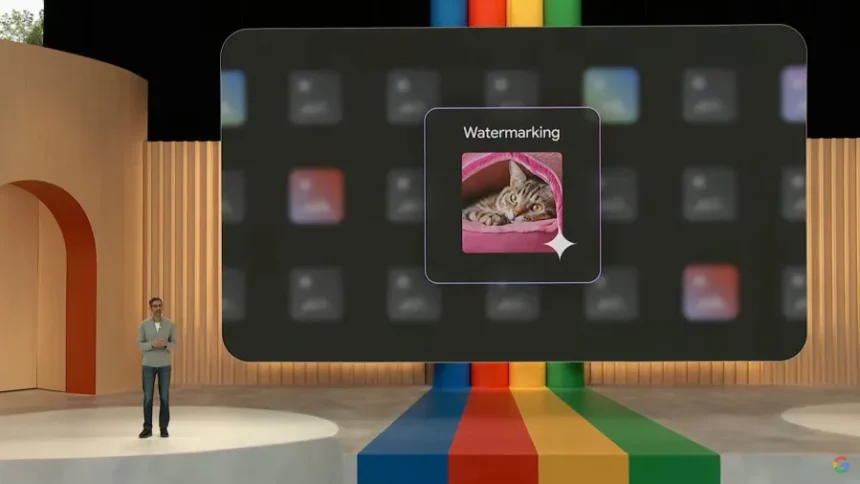
SynthID launched at Google’s developer conference in 2025 and has included Gemini-generated images from day one. OpenAI joined the program in May 2026 as part of a broader push against malicious image generation, meaning images from either company’s models now carry the same invisible signature. Anthropic does not participate in the program. Users can check any image for the watermark by asking a Gemini model directly or uploading it to a public verification tool.
Isabella Moretti reads the platform-trust angle behind the story: “This only works when the tool that generated the fake also happens to participate in the watermarking program. A hoax made with a non-participating model wouldn’t have carried any signature at all, and there’d have been nothing here to detect. So this is a genuine win, but it’s a win with a very specific ceiling: it catches the fakes made by cooperative labs, not the fakes made by anyone who simply opts out.” That ceiling is what NewsTrackerToday anchors in as the more durable takeaway than the single successful debunk.
None of this resolves the underlying speculation about McConnell’s actual condition, which remains unconfirmed either way. What it does resolve is one specific piece of fabricated evidence that had been circulating as if it were real, and it does so with a level of certainty that a normal reverse-image search or stylistic analysis usually can’t match.
As image-generation participation in watermarking programs expands beyond Google and OpenAI, the harder question becomes what happens to the models that never join at all. Whether more labs adopt equivalent watermarking voluntarily, or whether it eventually gets required rather than requested, is what News Tracker Today closes out as the real test facing this technology well past this one debunked photo.