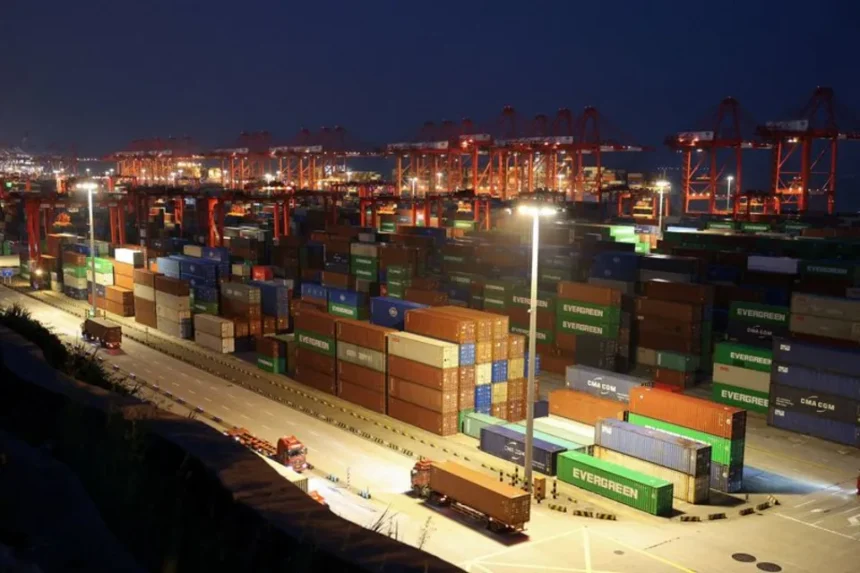
China’s exports climbed 27% in June from a year earlier, comfortably beating the 18.2% economists had forecast and marking the country’s best export performance in four months, driven largely by demand for chips and data-center computing power feeding the global AI buildout. Imports jumped 36%, a five-year high, against a forecast of 24%. A trade report beating forecasts on both sides of the ledger at once, in the same month, is what NewsTrackerToday reads through as the more unusual result than either individual number.
The import surge has a clear AI fingerprint. Purchases from South Korea, a major chip manufacturer, rose 85% from a year earlier, while imports from Taiwan, another critical semiconductor supplier, climbed 41.1% over the same period. China’s customs vice minister said global demand for data-center computing and terminal equipment continued expanding heading into the release, and the country’s trade surplus widened to $125.6 billion in June, up from $105.4 billion the month before.
Ethan Cole reads the composition of the surprise tersely: “Export growth beating forecast is one story. Import growth beating forecast by an even wider margin, driven specifically by semiconductor purchases from South Korea and Taiwan, is a different and more interesting one. That’s not domestic consumption picking up, that’s Chinese manufacturers and cloud operators buying the components needed to build out AI infrastructure at a pace that’s outrunning even optimistic economist models.” That import composition, more than the headline export number, is what NewsTrackerToday ties back to as the more useful read on what’s actually driving this month’s surprise.
Not every part of the report points the same direction. A senior economist at a Beijing-based research institute noted that domestic demand “remains a drag,” with retail sales flat and fixed asset investment negative last month, even as the export and import numbers came in strong. Chinese exporters also got a temporary lift from U.S. retailers front-loading orders four to six weeks earlier than usual, stocking up for Black Friday and Christmas ahead of anticipated tariff increases later this year, a boost that by definition borrows demand from future months rather than creating new demand.
Daniel Wu, who covers geopolitics and energy, reads the AI trade as a buffer against a harder set of problems: “China is managing a prolonged property slump and disruption tied to the Middle East conflict at the same time it’s trying to prop up domestic demand. Global AI investment is functioning as a genuine cushion for a $20 trillion economy that has real structural drag elsewhere. That’s a useful buffer, but a buffer is not the same thing as a fix for the underlying demand problem policymakers are still grappling with.” That distinction between a cushion and a solution is what NewsTrackerToday banks against as the more important framing than the headline trade beat itself.
Trade tensions with Washington remain an open variable sitting underneath all of this. A May visit by U.S. President Trump to Beijing failed to deliver the breakthroughs many observers had hoped for, and the front-loaded shipments driving part of this month’s export strength exist specifically because importers are bracing for tariff hikes rather than betting the current arrangement holds indefinitely.
China publishes its second-quarter GDP figure this week, a number that will show whether the export and import strength captured here in June actually translated into broader growth, or whether it sits alongside the same soft domestic demand data that’s been dragging on the economy for months. Whether the AI-driven trade cushion holds through the second half of the year, or fades once front-loaded orders work through the system, is what News Tracker Today settles across as the real question this report leaves open.