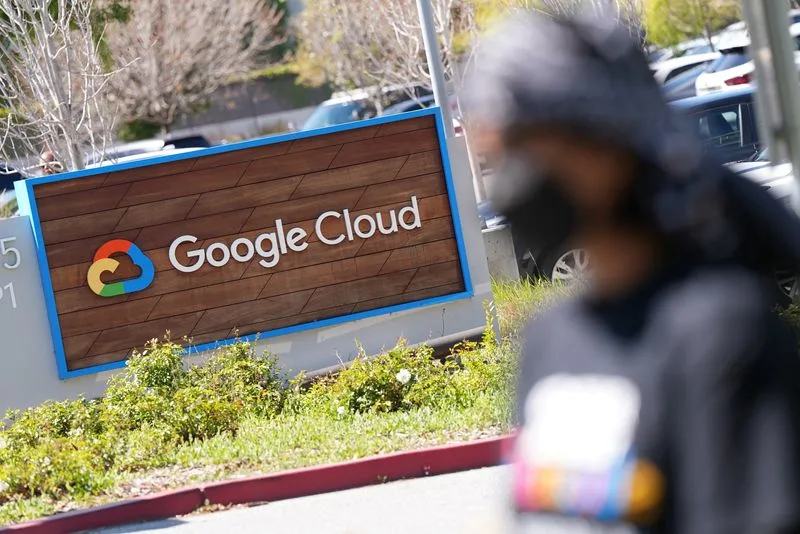
Google Cloud and Palo Alto Networks are deepening their long-running partnership in a move that underscores how cybersecurity is becoming one of the most capital-intensive fronts of the AI race. For NewsTrackerToday, the significance of the agreement lies less in its headline scale and more in what it reveals about how cloud providers are repositioning security as core infrastructure rather than an auxiliary service.
Under the expanded arrangement, Palo Alto is committing a multi-year, multi-billion-dollar spend on Google Cloud services. The structure combines the migration of existing workloads with the joint development of new security capabilities designed specifically for AI-driven environments. These include protections for cloud-native architectures, identity layers, and increasingly complex AI pipelines that enterprises are now deploying at scale.
The timing is not incidental. As generative AI workloads move from experimentation to production, attack surfaces are expanding faster than traditional security models can adapt. NewsTrackerToday views this partnership as a response to a clear market signal: enterprises want AI, but they want it embedded in environments where governance, visibility, and response are already integrated rather than retrofitted.
From Google Cloud’s perspective, security has become a competitive differentiator in its push against larger rivals. Rather than competing solely on compute capacity or model access, the company is emphasizing a “secure-by-design” cloud narrative aimed at regulated and risk-sensitive customers. According to Sophie Leclerc, a technology analyst focusing on platform infrastructure, the strategy reflects a broader shift: “In the AI era, security isn’t about perimeter defense anymore – it’s about controlling how data, models, and permissions interact in real time.”
For Palo Alto Networks, the logic is equally strategic. Security vendors are increasingly pressured to sit closer to where workloads actually run, especially as AI collapses the distance between development, deployment, and operations. By aligning more tightly with a hyperscale cloud platform, Palo Alto positions its tools not as optional layers, but as part of the default enterprise stack.
This convergence also carries commercial implications. Enterprises are actively consolidating vendors, trimming overlapping tools, and prioritizing platforms that reduce operational complexity. NewsTrackerToday sees the deal as an attempt to lock in long-term customer relationships by combining cloud consumption with security standardization – effectively turning security into a growth engine rather than a cost center.
Corporate strategy plays a visible role here as well. Isabella Moretti, who covers corporate strategy and M&A, notes that partnerships of this scale often serve as alternatives to outright acquisitions. “Deep integrations can deliver many of the same benefits as buying a company, without the regulatory and execution risks that come with large takeovers,” she says.
Looking ahead, execution will determine whether this partnership becomes a model or a cautionary tale. Customers will judge success by how seamlessly security is delivered across AI workloads, how effectively threats are detected without overwhelming teams, and whether compliance becomes easier rather than more opaque.
The takeaway for News Tracker Today is clear: as AI reshapes enterprise computing, security is no longer a supporting function. It is becoming one of the primary battlegrounds on which cloud competition will be decided – and the size of commitments like this suggests the industry understands exactly what is at stake.