Pickle Robot’s latest executive hire underscores a broader shift underway in warehouse automation, where early pilots are giving way to large, balance-sheet-level deployments. NewsTrackerToday views the appointment of Jeff Evanson as the company’s first chief financial officer as a signal that Pickle is entering a more demanding phase of growth – one defined less by technical proof points and more by execution, capital discipline, and long-term customer commitments.
Evanson joins the Charlestown, Massachusetts–based robotics company after advising it for several months, bringing with him experience from Tesla, where he spent more than six years overseeing global investor relations and strategy. During that period, he worked closely with Elon Musk and helped structure financing to support multiple vehicle launches and strategic acquisitions. For Pickle, which was founded in 2018 and has raised close to $100 million in venture funding, that background matters as the company transitions from startup scale to industrial delivery.
The timing is notable. Evanson’s appointment follows reports that Pickle is expanding its relationship with UPS, one of the world’s largest logistics operators. While Pickle has declined to confirm specific deal terms, it has acknowledged that UPS has been a customer for several years. In NewsTrackerToday’s assessment, the reported scale of the partnership – hundreds of autonomous unloading robots deployed over multiple years – would represent a step change for a company whose technology targets one of the most labor-intensive tasks in warehousing.
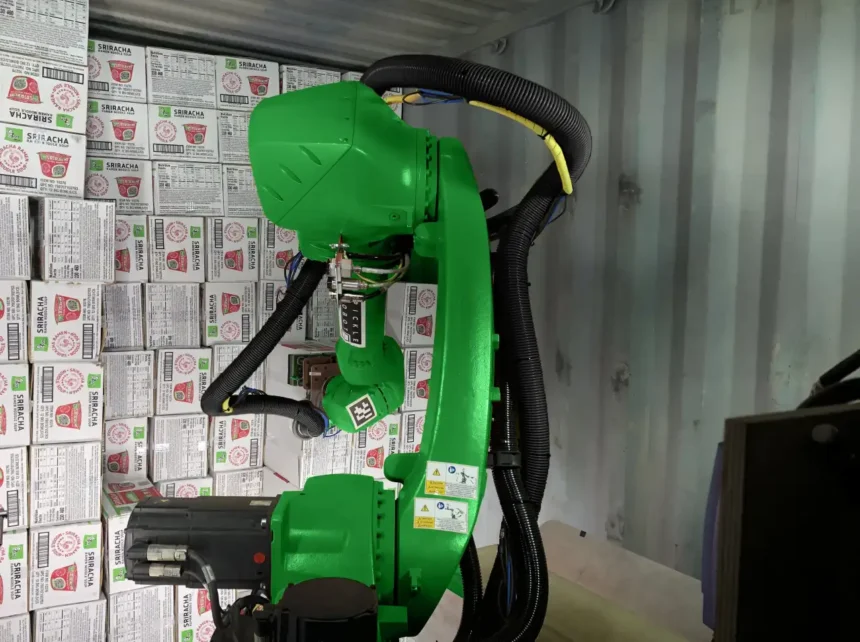
Truck and trailer unloading remains a stubborn bottleneck in logistics operations. Unlike palletized freight, mixed parcels require dexterity, consistency, and endurance – traits that are increasingly difficult to secure through human labor alone. Pickle’s autonomous robots are designed to operate inside trailers, handling heavy boxes and feeding conveyors in a controlled flow. If deployed at scale, such systems promise not just incremental efficiency gains but a structural reduction in injury risk, turnover, and daily staffing volatility.
From our perspective, the move to install a CFO at this stage reflects a recognition that the next challenges will be financial and operational rather than purely technical. Large customers expect predictable delivery schedules, clear service economics, and long-term support commitments. Managing manufacturing ramp-ups, spare-parts inventories, and multi-site rollouts requires a different level of planning than early-stage deployments.
Sophie Leclerc, who covers technology platforms for NewsTrackerToday, notes that robotics companies often reach a point where financial architecture becomes as critical as software and hardware design. “Once customers commit to hundreds of units, the margin for error shrinks quickly,” she says. “Execution discipline becomes the real differentiator.”
The broader logistics sector provides context. Carriers and warehouse operators are under pressure to automate not just to cut costs, but to stabilize operations in the face of labor shortages and rising safety standards. Automation that addresses physically demanding jobs has become particularly attractive, even if the upfront investment is significant. In that environment, vendors capable of scaling reliably stand to gain long-term strategic relevance.
Isabella Moretti, who focuses on corporate strategy and M&A for NewsTrackerToday, sees the reported UPS expansion as potentially catalytic. “A single anchor customer, if executed well, can validate an entire category,” she says. “But it also raises expectations across the board.”
Looking ahead, the next two years will be decisive for Pickle Robot. If the company can translate long-standing customer relationships into large, phased deployments while maintaining financial discipline, it could emerge as a reference player in warehouse robotics. If execution falters, buyers may hesitate to commit further capital. For News Tracker Today, Evanson’s arrival suggests Pickle understands what is at stake: the shift from promising technology to dependable infrastructure is where robotics companies are truly made – or broken.