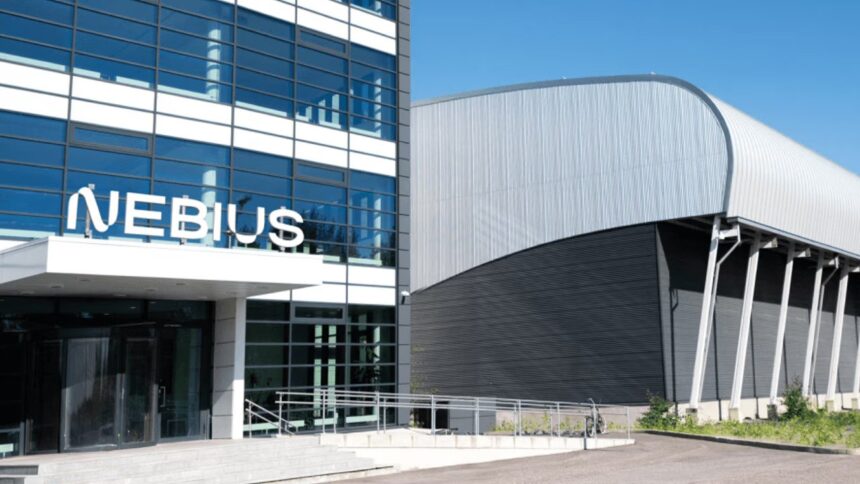
Europe’s race to build artificial intelligence infrastructure is rapidly shifting from strategic intent to large-scale execution. Nebius’ plan to construct a 310 MW data center in Lappeenranta, Finland, is not just another expansion – it reflects a broader push to secure computing capacity at a time when demand is accelerating across industries. As we observe at NewsTrackerToday, this project fits into a wider competition for control over Europe’s future AI infrastructure layer.
The scale of the facility is significant. With planned capacity reaching 310 MW and operations expected to begin supplying customers by 2027, the site is positioned to become one of the largest AI-focused data centers in Europe. Nebius is moving beyond the role of a regional neocloud provider and stepping into the position of a global infrastructure operator. The implication is straightforward: in the current AI cycle, companies win not only with models, but with access to power, land, and speed of deployment.
Finland plays a strategic role in this decision. The country offers relatively lower energy costs, strong renewable capacity, and a climate that reduces cooling expenses. These advantages make it one of the few locations in Europe where large-scale AI infrastructure can operate with more predictable economics. Isabella Moretti, analyst specializing in corporate strategy and M&A, would likely frame this as geographic optimization, where companies deliberately choose locations that support long-term efficiency rather than simply expanding into traditional tech hubs.
Nebius’ move aligns with a broader wave of infrastructure investments across Europe. Mistral, Nscale, and other players are accelerating their own data center strategies, trying to secure capacity before energy constraints and grid limitations tighten further. We at NewsTrackerToday see this as the early phase of a competitive buildout of Europe’s compute layer, where physical infrastructure becomes a defining strategic asset.
Demand visibility adds an important layer to this story. Nebius has already secured financing and large-scale agreements that support its expansion plans. This suggests that the company is not building purely on speculation, but responding to expected workloads. That said, the risk remains: if AI spending slows or becomes more selective, utilization rates and returns could come under pressure.
Europe’s structural constraints cannot be ignored. High energy prices, grid access challenges, and regulatory complexity continue to shape the economics of large-scale projects. Liam Anderson, financial markets specialist, would likely emphasize that AI infrastructure in Europe is as much an industrial and energy challenge as it is a technological one. Another limitation lies in hardware dependency. Even as Europe expands its data center footprint, it still relies heavily on external suppliers such as Nvidia for critical components. As NewsTrackerToday points out, this creates a partial form of technological sovereignty – infrastructure may be local, but key elements of the stack remain external.
Nebius is also building a broader global network. With existing capacity in Finland, expansion in France, and plans for large-scale facilities in the United States, the company is positioning itself as a provider of distributed AI infrastructure. This approach aligns with enterprise demand for scalable and geographically diversified compute environments. Several factors will determine whether this strategy succeeds. Nebius must deliver on its 2027 timeline, maintain cost discipline despite energy volatility, and secure long-term contracts that ensure stable utilization.
In the end, this project highlights both opportunity and risk. Europe is clearly accelerating its push to build AI infrastructure, but execution will determine whether these ambitions translate into sustainable advantage. We at News Tracker Today believe the real test will not be the scale of announced projects, but the ability to turn infrastructure into consistent, long-term economic value.