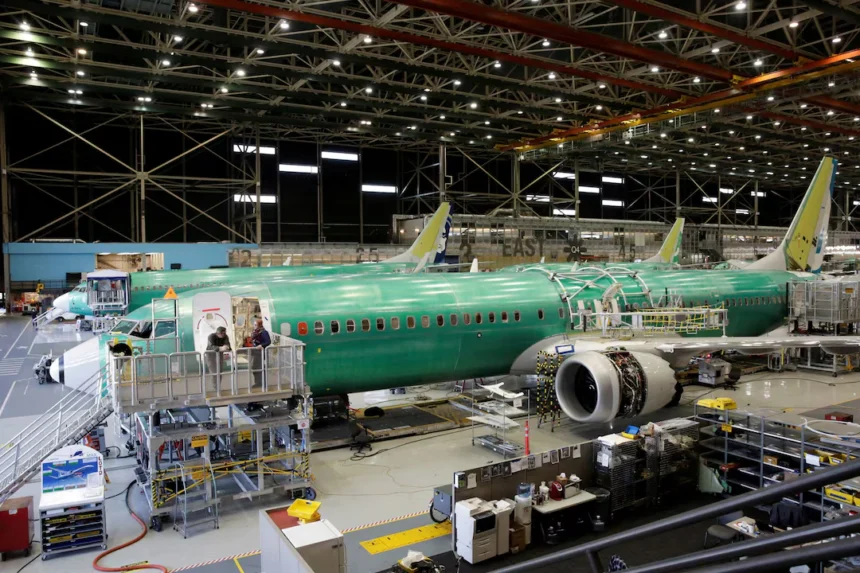
Boeing CEO Kelly Ortberg used the Bernstein Strategic Decisions Conference in New York on Wednesday to deliver the clearest positive operational update the company has offered in some time: Boeing has completed a so-called capstone review with the Federal Aviation Administration, clearing the way to ramp 737 MAX production from 42 to 47 aircraft per month. The company is currently running the production line at the higher rate and expects to stabilize there over the coming months. Ortberg also confirmed that Boeing is hiring workers for a fourth MAX production line in Everett, Washington, which would support a future target rate of 52 per month. The long-term ambition he stated is 63 per month, though that number carries no near-term timeline.
Stack this up against where Boeing was 18 months ago. In January 2024, a door plug blew out midflight on a 737 MAX 9, exposing systemic manufacturing problems and causing the FAA to cap monthly output at 38 jets. A wholesale leadership change followed. Ortberg took the CEO role last fall. The company has been methodically climbing back from 38 to 42, and now to 47 – each step requiring separate FAA review and approval. The capstone review is a formal quality gate, not just a production target, and clearing it means the FAA has signed off on Boeing’s readiness to operate at the higher rate. That is a material distinction from simply claiming the ramp is underway, and it is the distinction that NewsTrackerToday picked apart as the genuine news underneath the production headline.
Ethan Cole reads the financials succinctly: “42 to 47 MAXs per month is the cash generation inflection Boeing needs. Every incremental airplane at that margin profile matters. The question is whether the supply chain can hold at 47 without the quality slippage that triggered the 2024 cap. If it does, cash flow turns positive faster than the consensus model. If it doesn’t, we’re back to another FAA intervention.”
Ortberg also addressed two long-delayed certification programs. The 737 MAX 7 and MAX 10 variants, neither of which has yet received FAA type certification, are both now in final testing. The MAX 7 is the key aircraft for Southwest Airlines, which has been waiting years for the high-efficiency variant. The MAX 10 matters most to United Airlines, which has a substantial order book tied to it. Ortberg said Boeing has FAA authority for the full remaining flight test regime on both models and expressed confidence the MAX 7 would achieve certification this summer, with the MAX 10 following before year-end. Southwest and United customers represent the commercial importance that NewsTrackerToday noted when Ortberg described the timeline: delays in these certifications have been among the most expensive Boeing has absorbed in terms of customer relationships.
Sophie Leclerc, who covers the technology sector but tracks advanced manufacturing closely, raises the complicating factor on the 787 program: “Ortberg acknowledged that premium seat certification issues are delaying 787 deliveries even as production has returned to eight aircraft per month. The seat problem is a specific constraint – it’s not a production quality issue but an administrative one, and yet it has the same commercial effect: customers don’t get their planes. The target of 10-per-month on the 787 still looks achievable this year if GE Aerospace engine deliveries keep pace, but the seat certification delay is the kind of detail that tends to extend longer than management guides for.” The combined picture – MAX production cleared to 47, MAX 7 and 10 certification near the finish line, 787 at 8 per month with a path to 10 – is what NewsTrackerToday connects as the most coherent positive commercial read Boeing has offered since Ortberg arrived.
The credibility of Wednesday’s update rests on one variable: whether the production system at 47 per month holds without the kind of quality issue that triggered the 2024 cap. Ortberg has said Boeing’s priority is stable production over maximum speed. The fourth production line in Everett will add capacity only after the existing three lines in Renton demonstrate they can operate cleanly at 47. Boeing’s stated path to 63 per month passes through 52, which requires the Everett line, and then higher rates that Ortberg himself said cannot come from Renton alone given the changed safety and quality processes. If the first three months at 47 per month show stable quality indicators, the case for a 2027 ramp to 52 starts to look compelling. That is the scenario News Tracker Today set out as the test the next quarterly earnings will either confirm or complicate.