China’s leading private rocket maker LandSpace has moved one step closer to a public listing, underscoring how Beijing is reshaping its space ambitions through capital markets rather than state balance sheets alone. In NewsTrackerToday, the company’s completion of the formal IPO “tutoring” process signals that commercial space is being repositioned as a long-cycle industrial priority, not a speculative experiment.
The preparatory phase, overseen by state-backed investment bank CICC, clears a key procedural hurdle ahead of a potential 2026 listing on Shanghai’s STAR Market. That venue has increasingly become a gateway for high-risk, capital-intensive technology firms that are not yet profitable but are deemed strategically important. NewsTrackerToday views this framework as a deliberate attempt to match patient capital with industries where failure, iteration and heavy losses are structural features rather than execution errors.
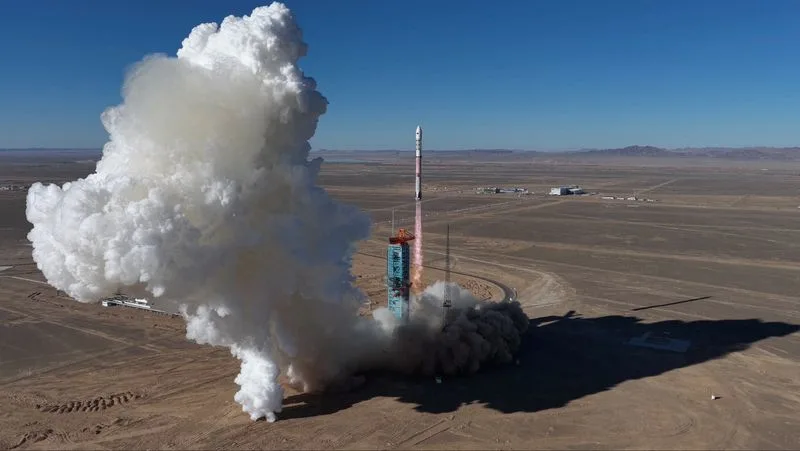
LandSpace’s longer-term prospects hinge on whether it can narrow the gap with SpaceX, whose dominance in reusable launch systems has dramatically lowered the cost of orbit. Earlier this month, LandSpace conducted China’s first full-scale test of a reusable-class rocket, Zhuque-3, a milestone that drew global attention despite ending without a controlled booster landing. For Sophie Leclerc, who focuses on advanced engineering platforms, the outcome still matters: reusability is not validated by a single success but by the ability to repeat, fail, analyze and relaunch at speed. In our assessment, moving into that iterative testing loop is itself a marker of technological maturity.
The push toward IPO readiness reflects a broader policy shift. Chinese authorities increasingly acknowledge that state-run aerospace groups alone cannot match SpaceX’s pace of innovation. Private firms with access to equity financing are better positioned to absorb the financial losses that accompany repeated launch attempts. That logic was echoed by LandSpace engineers, who have pointed to SpaceX’s willingness to sustain years of costly test failures as a decisive advantage. NewsTrackerToday sees this as a tacit admission that capital intensity, not just engineering talent, now defines leadership in orbital launch.
LandSpace enters this phase with meaningful technical credentials. The company was the first globally to place a methane-oxygen rocket into orbit, a propulsion choice widely viewed as better suited for reusable systems. While this does not erase the gap with Falcon 9’s extensive flight history, it does suggest that China’s private sector is converging on similar technological pathways rather than pursuing symbolic alternatives. In the middle of this transition, NewsTrackerToday notes that the real competition will be measured less by announcements and more by cadence: how quickly designs evolve after each failure.
Financially, LandSpace has already raised roughly half a billion dollars since its founding in 2015, blending private and state-aligned capital. A public listing would dramatically expand that funding base, but it would also impose market discipline. Liam Anderson, who tracks capital allocation in high-risk technology sectors, points out that IPOs can provide “long money,” but they also introduce quarterly scrutiny into industries that progress in multi-year cycles. NewsTrackerToday sees this tension as the central risk for investors expecting rapid milestones in a business where delays are routine.
The timing is also notable. Other Chinese private launch companies, including Galactic Energy, are reportedly exploring similar IPO pathways, suggesting a coordinated opening of capital markets to commercial space. This clustering points to a strategic objective: accelerate competition domestically so that at least one player emerges with the scale and resilience to challenge SpaceX’s economic model.
From here, the test for LandSpace will be operational rather than symbolic. NewsTrackerToday expects investors to focus on repeatability metrics: launch frequency, turnaround time between tests, progress toward controlled landings and how efficiently failures translate into redesigned hardware. A successful IPO would not make LandSpace China’s SpaceX overnight, but it could supply the financial runway required to attempt that transformation.