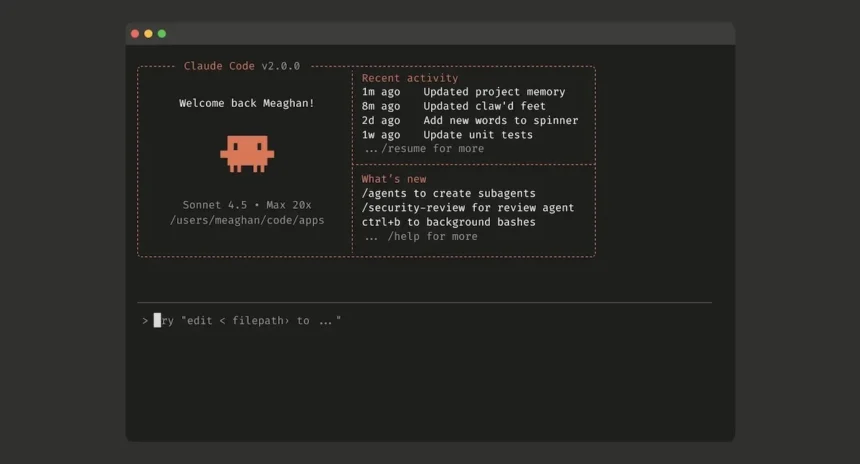
Anthropic is introducing a voice mode for Claude Code, its AI assistant designed for developers, marking another step toward more conversational and automated programming workflows. The new capability allows users to interact with the coding assistant using spoken commands rather than traditional prompts typed into an interface. NewsTrackerToday notes that the feature is being rolled out gradually, with early access currently available to a small portion of users before a wider release expected in the coming weeks.
According to Anthropic engineers involved in the rollout, the voice feature allows developers to activate the system through a command and then describe tasks verbally, such as requesting that the assistant refactor a section of code or adjust specific functionality within a project. The assistant processes the spoken request and performs the task within the coding environment. While the concept may appear simple, it represents a meaningful shift in how developers interact with AI tools during programming workflows.
The introduction of voice-based coding commands reflects a broader transformation in developer tooling. AI assistants are increasingly evolving from passive suggestion engines into interactive systems capable of executing complex multi-step tasks. NewsTrackerToday observes that voice interaction could reduce friction in daily workflows by allowing developers to issue instructions more naturally while focusing on reviewing outputs rather than constantly crafting detailed prompts.
The competitive environment surrounding AI coding assistants has intensified rapidly. Microsoft’s GitHub Copilot, Google’s AI coding tools, OpenAI’s developer assistants, and emerging platforms such as Cursor are all competing to become the default companion inside programming environments. In this context, interface innovation – such as voice control – can be as important as improvements in model performance.
Sophie Leclerc, technology sector analyst, explains that voice interaction has the potential to change the way developers communicate with AI systems. Instead of carefully composing prompts, programmers may begin describing goals and desired outcomes conversationally. That shift can accelerate productivity but also increases the importance of strong verification systems to ensure that automatically generated changes do not introduce unexpected errors.
Anthropic’s Claude Code has already gained significant traction among developers. Earlier this year, the company reported that the product’s annualized revenue exceeded several billion dollars, while weekly active usage has grown rapidly since the beginning of the year. News Tracker Today highlights that this momentum reflects the growing demand for tools capable of accelerating software development while maintaining quality and security standards.
Another factor contributing to the product’s visibility has been Anthropic’s public stance on the ethical use of artificial intelligence. The company previously declined requests to allow its models to be used for certain military applications, a decision that sparked widespread debate within the technology industry. The move also coincided with a surge of interest in the Claude ecosystem, including the mobile application, which briefly climbed to the top of U.S. app store rankings.
Despite the excitement around voice-driven programming, important questions remain unanswered. It is still unclear whether the feature will include limits on voice interactions, how it handles ambiguous instructions, or whether the system relies on external speech technology providers. Daniel Wu, expert in geopolitical technology dynamics, notes that as AI tools become more deeply embedded in developer workflows, transparency around their capabilities and limitations becomes increasingly important.
Looking forward, the adoption of voice interfaces in programming environments may signal a broader shift toward more conversational software development. Rather than interacting with coding assistants through rigid commands, developers may increasingly manage AI systems through natural dialogue. NewsTrackerToday suggests that the success of such features will depend less on novelty and more on whether they improve productivity while maintaining reliability and developer trust.