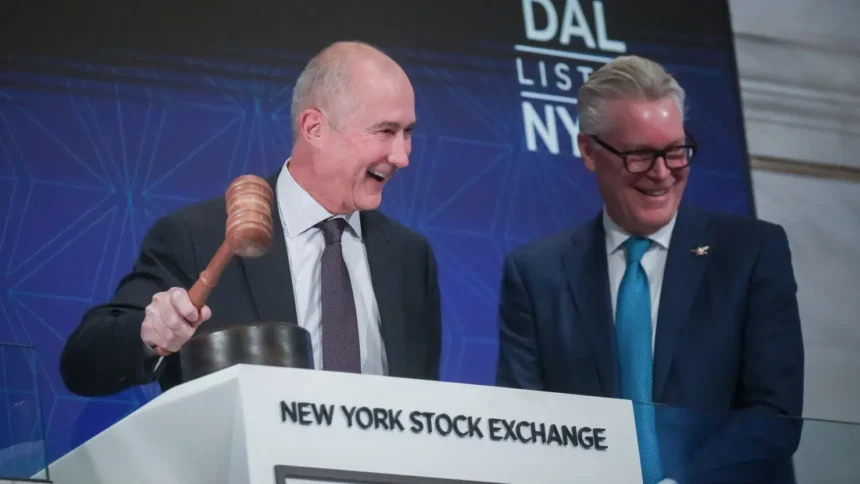
Delta Air Lines is entering a delicate transition just as its premium-first model becomes the core of its business rather than a differentiator. NewsTrackerToday views the upcoming retirement of President Glen Hauenstein as a moment that closes one strategic chapter and opens another – shifting Delta from aggressive premium expansion to the harder task of protecting pricing power in a more crowded and demanding market.
Hauenstein, who joined Delta in the aftermath of its 2005 bankruptcy and rose to president in 2016, helped engineer one of the most consequential shifts in modern airline economics. Under his leadership, Delta systematically turned once-complimentary benefits – preferred seating, priority services and lounge access – into paid products customers were willing to buy. In our assessment, this was less about luxury branding and more about redesigning how value is extracted from each passenger, making profitability less dependent on filling every seat at any price.
The promotion of Joe Esposito to executive vice president and chief commercial officer reinforces that message. A 35-year Delta veteran with deep experience in network planning, pricing and revenue management, Esposito inherits a business where the margin mix matters more than raw volume. NewsTrackerToday interprets the move as a signal that Delta’s next gains will come from disciplined optimization rather than bold reinvention, particularly as capacity growth slows across the industry.
The numbers underline the shift. Delta has said premium-ticket revenue is on track to surpass main-cabin sales, a milestone that effectively reclassifies the airline in investors’ eyes. Liam Anderson, who follows financial markets for NewsTrackerToday, says: “Once premium revenue becomes the growth engine, the market expects consistency – not just higher margins, but the ability to defend them when consumer confidence softens.”
Success, however, has brought its own constraints. Sky Club overcrowding forced Delta to tighten access rules, a decision that sparked backlash among frequent flyers. We see this not as a retreat from loyalty, but as an attempt to preserve the perceived exclusivity of premium benefits. The risk lies in execution: when customers feel benefits are being rationed while prices rise, loyalty can erode faster than it was built.
Competitive pressure is also intensifying. United and American are investing heavily in cabin upgrades, faster onboard connectivity and new aircraft, narrowing the experiential gap Delta once dominated. The premium battleground is no longer about being first; it’s about sustaining quality while managing expectations. Isabella Moretti, who covers corporate strategy and competitive positioning for NewsTrackerToday, notes: “Delta’s challenge now is restraint – pushing the upsell far enough to protect margins without teaching customers that premium no longer feels premium.”
Demographics have played in Delta’s favor. Hauenstein openly highlighted the spending power of affluent baby boomers with time to travel and a preference for comfort. That cohort has helped stabilize demand even as broader consumer sentiment wavered. News Tracker Today cautions, however, that this tailwind is finite. The long-term test will be whether younger, high-income travelers adopt the same willingness to pay as interest rates remain elevated and discretionary spending comes under pressure.
Looking ahead to 2026, Delta’s position remains strong but less forgiving. Cabin refresh cycles, aircraft interiors, Wi-Fi performance and the economics of SkyMiles redemptions will all face sharper scrutiny. NewsTrackerToday believes Esposito’s pricing and revenue background is well suited to this phase, where misjudging value perception could do more damage than underinvesting.
The leadership transition underscores a broader truth about today’s airline industry. Delta helped define the premium era; now it must defend it. That means protecting brand trust as carefully as margins, ensuring that premium travelers feel rewarded rather than monetized. In our view, the next chapter for Delta will be won not by selling more upgrades, but by proving that the experience still justifies the price.