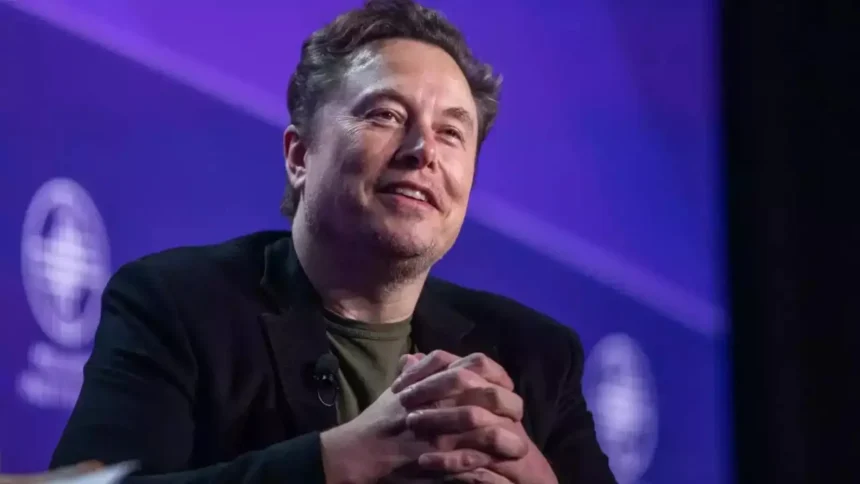
Conversations about the end of money typically belong to academic debates or speculative fiction. But Elon Musk’s recent claim that money could disappear entirely pushed the idea into the center of global tech discourse. Speaking with Indian entrepreneur Nikhil Kamath, Musk outlined a future in which advanced AI and robotics eliminate scarcity, and energy becomes the primary measure of value. At NewsTrackerToday, we view this statement as an attempt to reinterpret economic fundamentals through the lens of physics and technological constraints.
Musk argues that once automation reaches a level where machines can satisfy all human needs, money loses its relevance as a mechanism for allocating resources. He links this vision to the post-scarcity universe of Iain Banks’ “Culture” novels, where material abundance makes currency obsolete. Yet Musk tries to step beyond fiction, suggesting that AI could realistically transform labor into a voluntary pursuit rather than an economic necessity, effectively dissolving the need for monetary mediation.
Daniel Wu, geopolitical and energy analyst at NewsTrackerToday, sees Musk’s statement as a reflection of deep structural shifts. In his view, technological megatrends are already moving economic power away from labor and toward infrastructure, energy, and automation. But Wu cautions that a post-scarcity society requires more than machines – it demands profound changes in political and regulatory systems. Control over energy production, resource distribution, and infrastructure will remain in the hands of states and corporations, meaning competition for power persists even if money disappears.
Musk’s central argument hinges on the nature of energy. He insists that energy is “the only currency that cannot be faked,” because it is bound by the laws of physics. From that point he draws a direct line to Bitcoin: a network that forces participants to spend real electrical and computational resources to secure the system. For Musk, this connection anchors Bitcoin in the physical world, unlike fiat currencies that can be expanded at the discretion of governments and central banks. In his framing, energy – not policy – becomes the fundamental denominator of value.
Sophie Leclerc, technology analyst at NewsTrackerToday, considers the idea intellectually compelling. She notes that as AI becomes more deeply embedded in the global economy, dependence on energy infrastructure grows proportionally. Yet she emphasizes that turning energy into a universal value system requires far more than automation. It implicates geopolitics, access to generation capacity, resource security, and climate regulation. In Leclerc’s view, Bitcoin may fit into this emerging narrative, but it is far from the only contender for an “energy-based currency.”
Meanwhile, debates over Bitcoin’s energy use remain polarizing. Environmental critics warn about its carbon footprint and stress on electrical grids, while advocates argue that mining could accelerate clean energy development, absorb surplus generation, and improve grid stability. Musk sidesteps this controversy, focusing instead on the notion that energy cannot be summoned by political decree. Electricity production requires infrastructure, capital, minerals, and time – attributes that make energy an inherently constrained resource.
Importantly, Musk offers no timeline for the disappearance of money. He acknowledges that such a shift depends on a level of technological abundance that remains speculative. In today’s world, fiat currencies still dominate trade, savings, and wages, while Bitcoin continues to function more as a volatile investment asset than as a transactional system.
From the perspective of News Tracker Today, the significance of Musk’s argument lies not in predicting the end of money but in reframing how technological economies collide with physical limits. Energy, raw materials, and infrastructure define the boundaries of progress more rigidly than algorithms or capital flows. Musk extends this idea to its extreme, proposing that value itself may eventually be measured not in dollars but in joules. And viewed through this lens, the future of economic power becomes a question of who controls the world’s fundamental resources. That is why in NewsTrackerToday we interpret Musk’s narrative not as prophecy but as an analytical framework – one that helps illuminate how physics, technology, and geopolitics will shape the value systems of tomorrow.