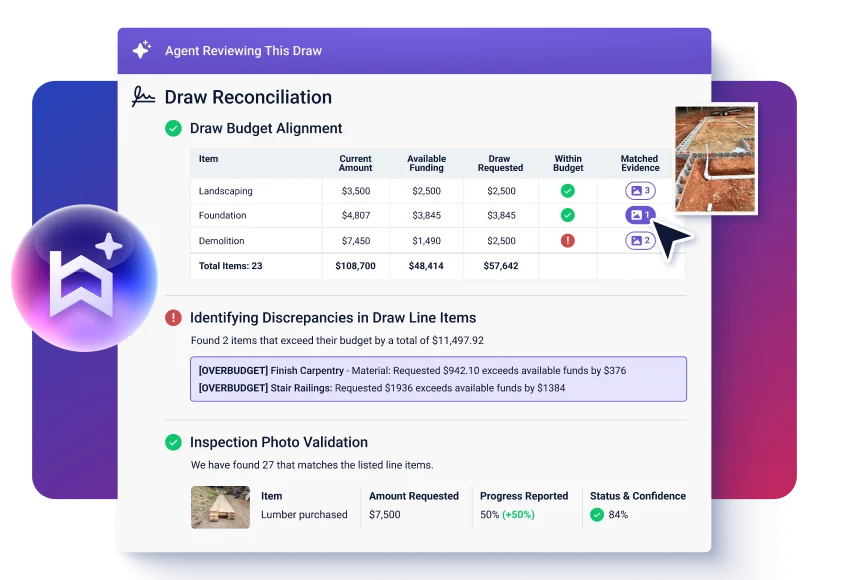
The construction finance sector – long trapped in paperwork and manual approvals – is finally entering the era of artificial intelligence. At NewsTrackerToday, we see this as a landmark moment for financial infrastructure transformation. Built Technologies, a leading provider of construction lending and real-estate finance solutions valued at $1.5 billion in 2021, has unveiled a new AI agent designed to automate draw requests and loan approvals. This is not just a software upgrade; it represents a structural turning point for an industry where speed and transparency are beginning to matter as much as capital itself.
According to Built, pilot testing with partner banks including Anchor Loans produced striking results: approval times dropped to three minutes, risk detection improved by 400 percent, and compliance with each lender’s internal policies reached 100 percent. Institutions using the new system reported returns on investment (ROI) between 300 and 500 percent, even across portfolios as small as 500 loans.
At NewsTrackerToday, we view this as more than a technical milestone – it signals a deeper redefinition of credit architecture. For the first time, artificial intelligence is assuming control over a process traditionally reserved for human decision-makers. As Ethan Cole, chief economic analyst, notes, “Automating the credit cycle isn’t just about speed – it’s about standardizing trust. AI turns visibility into a shared asset, making both lenders and developers part of the same transparent system.”
Built’s success rests on a rare combination of industry specialization and massive proprietary data. Over the past decade, the company has accumulated insights from trillions of dollars in construction projects, training its agent to operate within real-world lending contexts. The AI doesn’t merely process paperwork; it analyzes documentation, budgets, progress photos, and project timelines, aligning each step with bank policy before funds are released.
According to Sophie Leclerc, technology sector analyst, “This is the point where AI stops being a tool and becomes part of the ecosystem. It learns how capital moves, where delays appear, and where risk accumulates – turning itself from an overlay into the nervous system of the market.”
Still, challenges remain. Deploying such systems demands new data-security standards, regulatory frameworks, and a balance between automation and ethical oversight. Human judgment must continue to define the limits of what AI is allowed to decide.
At News Tracker Today, we believe the next twelve months will test the maturity of this transformation. If Built’s performance metrics hold at scale, construction finance could move toward a new model – one in which banks evolve from gatekeepers of capital to digital collaborators in the value chain. The winners will not be those who invest most in technology, but those who integrate it seamlessly – turning data into trust, and trust into capital.