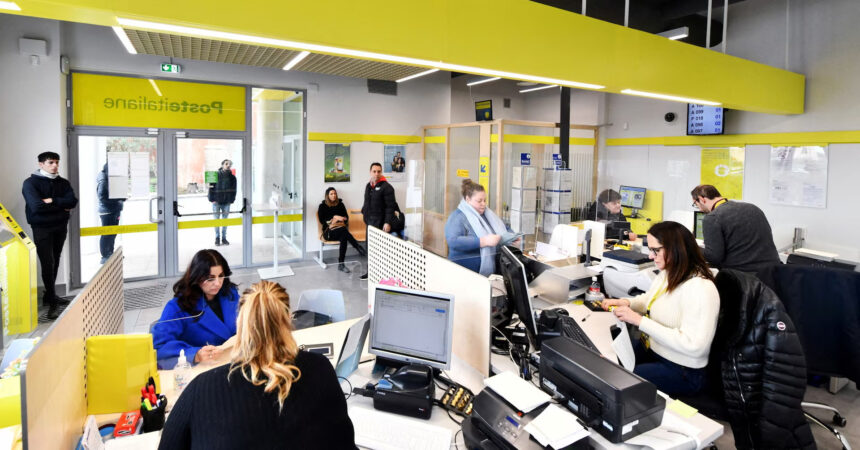
Italy has effectively chosen its national postal service to help build out the country’s technology infrastructure and shore up its digital sovereignty. Poste Italiane, which still pays out pensions through 12,600 post offices scattered across small towns, is pursuing a €13.5 billion, roughly $15.4 billion, bid for Telecom Italia to accelerate its own shift into digital, telecom, and cloud services. A postal service positioning itself as a national AI infrastructure builder is what NewsTrackerToday hinges around as the stranger half of this story, more than the size of the bid itself.
Poste’s transformation didn’t start this week. The company began moving into electronic payments in the early 2000s, and over the past decade it’s signed up 30 million users, roughly 70% of the eligible population, to Italy’s digital ID system for accessing public services online. It already serves 46 million customers across banking, insurance, telecommunications, and energy, and uses its nationwide branch network to help less digitally comfortable residents access services like passport applications in person.
Daniel Wu, who covers geopolitics and energy, reads the European context behind the move: “This fits a broader sovereign cloud push across Europe, where domestic telecom and tech firms in Germany and France are building AI and cloud infrastructure specifically to serve strategic sectors like defense and healthcare without routing through American providers. Italy has real ground to make up here. It has only about 15% of Germany’s installed data-center capacity, and Poste’s pitch is essentially that a state-backed postal-telecom combination can close some of that gap faster than either company could alone.” That sovereignty argument, more than the deal’s price tag, is what NewsTrackerToday walks into as the actual policy logic driving Rome’s enthusiasm for this combination.
The technical plan involves more than just TIM’s existing 125 megawatts of data-center capacity, which already makes it a top-three national operator. Poste’s argument, according to a person briefed on the plans, is that former postal sorting centers could be converted into local edge-computing hubs, bringing processing power physically closer to end users, with TIM’s mobile network sites potentially added to that same distributed footprint later. Antonio Capone, dean of Milan’s Politecnico engineering school, frames the broader industry shift this reflects: “The industry is increasingly looking at networks of smaller facilities located closer to users.”
Ethan Cole reads the infrastructure economics tersely: “Distributed computing sounds elegant on a slide. Operationally it’s a nightmare: more sites to cool, more sites to power, more sites to maintain security across. The upside is real if Poste can pull it off, lower latency, more resilient capacity, a genuine domestic alternative to hyperscaler infrastructure. The downside is that distributed builds cost more per unit of capacity than concentrated ones, and Italy’s energy costs already run higher than France’s or Spain’s.” That cost-versus-resilience tradeoff, more than the sovereignty framing, is what News Tracker Today sizes into as the real execution risk behind this deal.
TIM itself arrives at this deal carrying a difficult history. An ill-fated privatization roughly three decades ago left it saddled with debt, and years of brutal price competition among Italian carriers hammered profitability and limited its ability to invest in infrastructure upgrades. The 2024 sale of its fixed-line network to a U.S. investment fund helped halve its debt-to-core-profit ratio and nearly doubled revenue per employee, but sustaining the kind of 5G and cloud investment this new plan requires would have strained TIM on its own.
Whether regulators eventually allow the broader market consolidation, from four national mobile operators down to three, that one TIM investor argued the entire investment case depends on, is what NewsTrackerToday settles on as the real variable standing between this week’s ambitious pitch and an actual functioning AI backbone a few years from now.