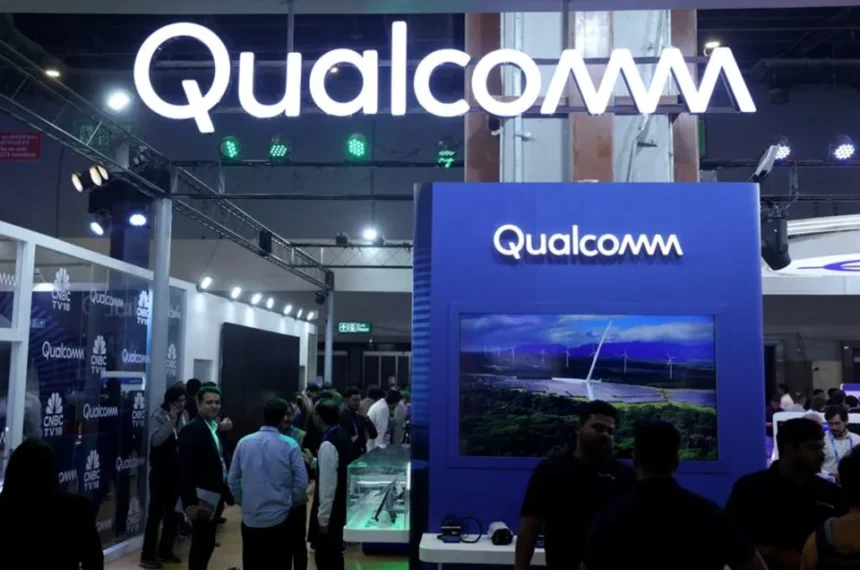
Qualcomm is in discussions with ByteDance to provide custom chip-design services, according to four people familiar with the matter, a development that would make the Chinese tech conglomerate – owner of TikTok and Douyin – an early customer of Qualcomm’s new chip-design services business. The proposed chips would draw partially on technology from AlphaWave Semi, a high-speed connectivity specialist that Qualcomm acquired last year. Discussions also reportedly cover video processing units, with both sides targeting mass production before year-end 2026. Talks are ongoing and could break down. The deal’s significance, and the reason it generated immediate market attention when it became public on Tuesday, is the category it would establish: if Qualcomm lands ByteDance, it enters the AI data center custom silicon market with a named flagship customer at a moment when Broadcom and Marvell occupy that space, and it is that category entry that NewsTrackerToday reaches for as the more consequential implication than any specific chip design.
Qualcomm’s revenue picture makes the strategic urgency of this data center push explicit. The company is the world’s largest supplier of smartphone modem chips, but global smartphone shipments are on track for the steepest annual contraction on record in 2026, partly because of the surge in memory chip prices that Qualcomm CEO Cristiano Amon has cited as a headwind for device makers. The smartphone business generated approximately 60% of Qualcomm’s revenue in fiscal 2025, a concentration that makes any contraction in handset unit volumes commercially serious. The data center market is the diversification play Amon has been building toward for two years: CPUs for hyperscalers, inference accelerators, and custom ASICs for named customers. ByteDance would be the most high-profile named customer yet and the clearest commercial validation that Qualcomm’s data center ambition has converted from roadmap to revenue.
Sophie Leclerc, who covers the technology sector, reads the market entry question carefully: “Qualcomm has credible chip design capability, particularly through AlphaWave Semi’s high-speed connectivity IP, and the inference accelerator roadmap the company outlined at its most recent Investor Day is technically coherent. The challenge it faces in the data center ASIC market is not whether it can design a chip that works. It’s that Broadcom and Marvell have spent a decade building the co-design relationships with Google, Meta, Amazon, and Microsoft that produce multi-billion-dollar contracts. ByteDance as a first customer is significant precisely because ByteDance is not one of those hyperscalers. It’s a Chinese tech company whose chip supply chain is being restructured by U.S. export controls, which gives Qualcomm a buyer who has both the motivation to work with a non-Nvidia supplier and the scale to make the relationship commercially meaningful.” The export control boundary is the specific regulatory context that NewsTrackerToday reads around the deal: the chips involved would be manufactured by TSMC and are designed to remain within the computing performance thresholds that U.S. rules permit for Chinese buyers.
Daniel Wu places the deal in a geopolitical competitive frame: “Qualcomm working with ByteDance on custom chips while ByteDance simultaneously talks with Iluvatar CoreX and Baidu’s Kunlunxin describes a supplier diversification strategy that mirrors what every major economy does with critical inputs: maintain multiple sourcing relationships to limit exposure to any single supplier or regulatory regime. From ByteDance’s perspective, a Qualcomm relationship provides both a capable chip designer and a U.S. anchor that reduces the perception of total Chinese supply chain dependence. From Qualcomm’s perspective, ByteDance is the first high-visibility reference for an entirely new business line. Both parties have reasons to close a deal that exceed the value of any single contract.”
The Qualcomm data center push competes directly with Broadcom and Marvell, the two companies that have built the ASIC co-design business that hyperscalers currently depend on. Broadcom reported $8.4 billion in AI chip revenue in fiscal Q1 2026, up 106% year-on-year. Marvell projects up to $11 billion in AI ASIC revenue for 2026. Qualcomm’s data center revenue remains at an early stage relative to both. ByteDance as a first named customer gives Qualcomm a reference it can use in conversations with hyperscalers, and the Investor Day that Amon scheduled for June 24 – specifically titled Data Center and Physical AI – suggests the company is ready to use the ByteDance report as the commercial validation announcement for a broader strategy presentation. The three-part roadmap of CPUs, accelerators, and custom ASICs is what NewsTrackerToday sets against the Broadcom and Marvell benchmarks: Qualcomm is entering markets those companies have been building for a decade, and ByteDance is the first test of whether its entry is a credible threat or an aspirational roadmap.
Three things to watch as Qualcomm’s data center push develops: whether the ByteDance custom chip design deal reaches a signed agreement and initial production milestone before year-end, which would be the first concrete revenue event that validates the Qualcomm ASIC thesis with hard numbers; whether Cristiano Amon’s June 24 Investor Day discloses additional named data center customers beyond ByteDance or signals a broader partnership with hyperscalers that would accelerate the revenue ramp; and whether Qualcomm’s inference accelerator and custom ASIC business generates enough revenue by fiscal year-end to demonstrate that the smartphone diversification strategy has actual commercial momentum, rather than remaining a narrative that runs ahead of the numbers. The ByteDance relationship is the entry point, and it is what News Tracker Today lands on as the deal that tells you whether Qualcomm’s data center ambition has the customer foundation to become a second business or stays a supplement to mobile.