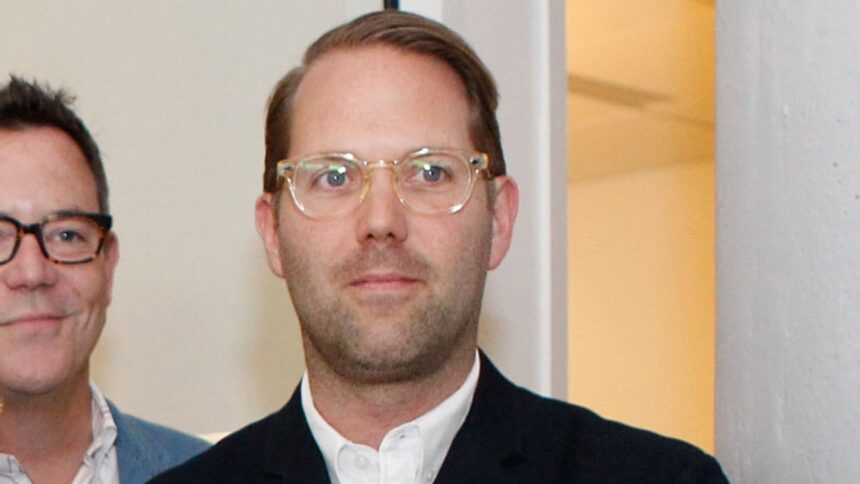
A quiet but telling shift is unfolding in Silicon Valley. One of the architects behind Apple’s modern visual language is heading to a company Cupertino long regarded as a utilitarian social platform rather than a design benchmark. The departure of Alan Dye – for years the creative force shaping Apple’s interface aesthetics – to Meta is more than a talent move. At NewsTrackerToday, we’ve argued that the next phase of tech competition will hinge not only on AI models and silicon, but on how these technologies feel at the fingertips.
Apple confirmed Dye’s exit on Wednesday, naming long-time design veteran Stephen Lemay as his successor. CEO Tim Cook emphasized that design remains a foundational priority and praised Lemay as a key figure behind every major Apple interface since 1999. The official message projects stability and continuity. Yet beneath that is the simple reality: the designer who helped define the visual evolution of the iPhone, iPad, Apple Watch and Vision Pro is crossing into the territory of a direct hardware and interface rival.
Meta, for its part, is not hiding the scale of its ambition. Mark Zuckerberg announced that Dye will lead a new creative studio intended to merge fashion, design and technology – a notable shift for a company historically associated with cluttered social interfaces. For Meta, this signals a deliberate aesthetic reinvention. As Sophie Leclerc, a senior technology analyst at NewsTrackerToday, observes, Meta is “resetting its visual identity for an era of wearables and AI-driven interfaces – and that requires talent at Apple’s level.”
The timing of Dye’s departure is particularly striking. Apple is in the midst of rolling out Liquid Glass, a visual overhaul characterized by translucent panels, dynamic highlights and more organic animation. On stage, Dye described it as “the next chapter” in Apple’s software design and a foundation for future product experiences. Yet public reception has been mixed. Some praise its elegance; others criticize readability issues and an overabundance of visual effects. At NewsTrackerToday, we view this as a classic paradigm shift moment: the design team has leapt forward, but the ecosystem has not fully adapted.
Meta, meanwhile, is showing it can turn a successful idea into a scaled hardware business. Sales of Ray-Ban Meta have tripled year-over-year, according to EssilorLuxottica, with the device evolving from a novelty into a mainstream augmented-interaction wearable. This is the ecosystem Zuckerberg imagines for the “next era,” where glasses and mixed-reality devices become primary interfaces. As Daniel Wu, NewsTrackerToday’s expert in tech geopolitics, notes, “Whoever defines the visual grammar of everyday wearable computing is effectively writing the rulebook for the next decade of user interaction.”
For Apple, the challenge now moves in two directions. The company is investing heavily in on-device AI, integrating third-party models while preserving its core values of privacy and autonomy – all of which must be expressed through a coherent and intuitive interface. Simultaneously, Meta is aggressively building out a design language for AR, VR and wearable devices, where traditional mobile patterns no longer apply. It is a domain defined by gestures, voice, persistent context and spatial interaction – a space where creative risk is both higher and more rewarding.
NewsTrackerToday sees this moment as a competitive divergence. Apple is refining and expanding its established design canon, cautiously evolving toward a more dynamic, AI-infused user experience. Meta is taking the opposite approach: betting on bold reinvention, new form factors and high-profile talent acquisitions. In the short term, this creates the impression that Meta is capturing the creative momentum, while Apple appears more methodical and incremental.
What does this mean for the broader market? First, hybrid interfaces – blending GUI, voice, gestures, camera input and contextual AI – will accelerate on both sides. Second, design is becoming a strategic differentiator again, not a decorative layer atop hardware and AI models. Third, the industry is likely to see increased crossover of creative and product leaders, drawn to companies experimenting with the post-smartphone paradigm.
Our conclusion at News Tracker Today is straightforward: Alan Dye’s move to Meta is not a signal of Apple’s decline, but proof that interface innovation is decentralizing. Apple must now demonstrate that Liquid Glass and its successors form a durable foundation for an AI-native generation of products. Meta, in turn, must show that high-caliber design can grow into a cohesive hardware ecosystem that consumers genuinely choose to wear daily.
In this competition, flashy announcements will matter less than the quiet test every user runs unconsciously: how natural and frictionless the interface feels in everyday life. That is where the new benchmark of the digital era will ultimately be set.