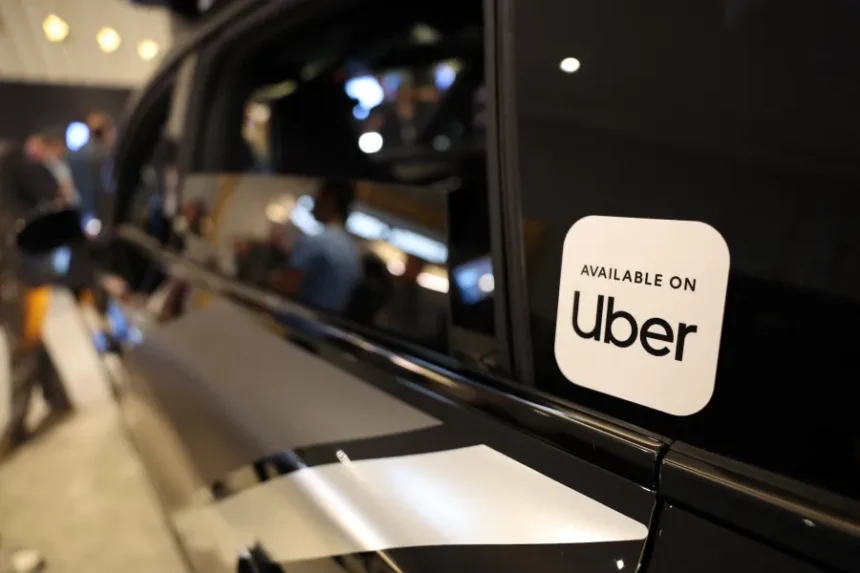
Uber has partnered with, and in some cases directly invested in, more than 30 autonomous vehicle companies over the past two years, a sprawling network spanning robotaxi operators, sidewalk delivery robots, self-driving trucks, and chipmakers across the U.S., Europe, China, and the Middle East. Notably absent from that list: any autonomous vehicle technology Uber actually owns and controls itself. A company this deep into autonomy choosing to own none of the underlying technology across 30-plus partnerships is what NewsTrackerToday reads round as the more deliberate strategy than the sheer partner count itself.
That strategy has real scar tissue behind it. Uber ran its own self-driving program, Uber ATG, starting in 2014, only to unwind it entirely by 2020 following Waymo’s trade secrets lawsuit, founder Travis Kalanick’s resignation, and a fatal 2018 crash involving one of its self-driving test vehicles in Tempe, Arizona. Uber sold ATG to Aurora that same year and kept an equity stake, a stake it still holds today at nearly 20% of Aurora’s Class A shares.
Isabella Moretti reads the network-operator model Uber has built since that reset: “Rather than betting on a single winning AV technology, Uber has positioned itself as the distribution layer every autonomy company eventually needs, Waymo, Baidu, WeRide, Nuro, Wayve, and dozens more all plug into the same ride-hailing network rather than building their own consumer-facing app from scratch. That’s a genuinely lower-risk position than picking one horse: whichever autonomy provider wins in a given city, Uber still owns the customer relationship and takes a cut.” That distribution-layer positioning, more than any single deal on the list, is what NewsTrackerToday pins to as the actual strategic core running through all 30-plus partnerships.
The financial exposure behind this network is still substantial even without owning the underlying technology: Uber has committed roughly $500 million to Nuro, up to $1.25 billion to Rivian for R2-based robotaxis, $300 million plus a later $200 million top-up to Lucid, and $250 million in milestone-based capital to Waabi, alongside smaller stakes across Avomo, Serve Robotics, and Flytrex. That’s real capital risk spread across many bets rather than concentrated in one.
Sophie Leclerc, who covers the technology sector, reads the Waymo relationship’s unwinding as the most consequential single data point on this entire list: “Waymo and Uber’s Phoenix partnership ended just last month, and Waymo is now actively trying to exit its Uber contract entirely, even though that agreement doesn’t expire until May 2028. That’s Alphabet’s autonomy unit, arguably still the technology leader in the category, deciding it doesn’t need Uber’s distribution network as much as Uber’s model assumes every autonomy company eventually will.” That unwinding, more than any new partnership Uber has announced, is what NewsTrackerToday circles on as the real stress test facing Uber’s entire network-operator thesis.
Nvidia sits at the center of Uber’s most ambitious commitment on the list: the companies announced plans in March to launch a global fleet of entirely Nvidia software-driven autonomous vehicles, starting in Los Angeles and San Francisco in early 2027 and scaling to 28 cities by 2028, a timeline that would make Nvidia’s Drive Hyperion platform the single largest technology commitment across Uber’s entire AV portfolio.
None of this confirms whether Uber’s bet on being autonomy-agnostic proves more durable than picking a smaller number of deeper partnerships, especially if a company as significant as Waymo continues distancing itself from the arrangement. Whether Uber’s 30-plus-partner model scales into the dominant global robotaxi network its structure implies, or whether further exits like Waymo’s chip away at the thesis that every autonomy company eventually needs Uber’s distribution, is what News Tracker Today closes to as the real question this sprawling list leaves for the years ahead.