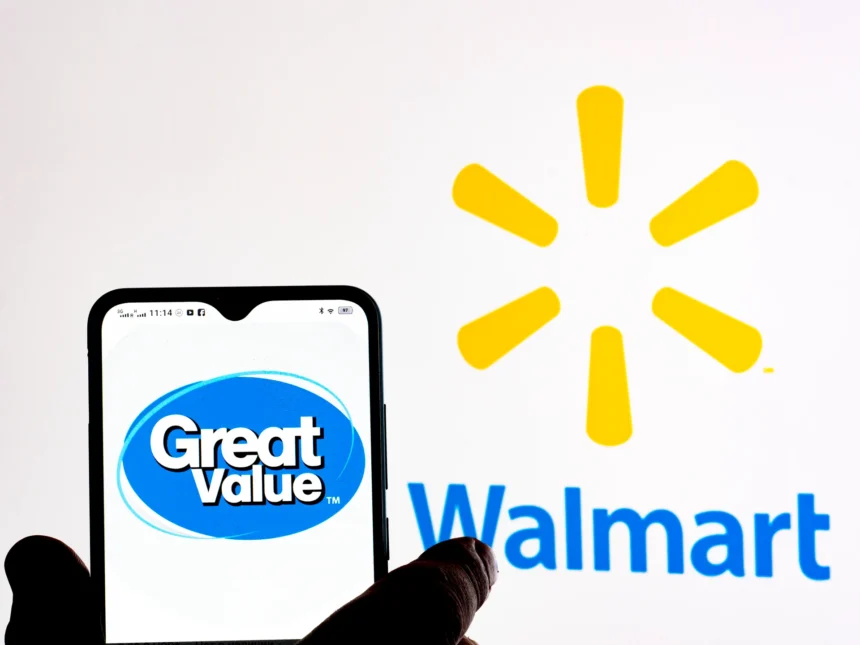
Walmart is revamping its largest private label, Great Value, with a sweeping packaging redesign that will roll out across roughly 10,000 products starting in May. The shift, while cosmetic on the surface, reflects a deeper repositioning of store brands, and as NewsTrackerToday highlights within this transition, perception – not price – is becoming the new battleground in retail competition.
The updated look will first appear on snacks, followed by staples like cereals and dairy products, with full rollout expected within two years. Importantly, Walmart is keeping both pricing and product composition unchanged. That decision signals confidence in the underlying offering while addressing a long-standing weakness – visual identity. Internal research showed customers trusted the quality but felt the packaging made the products seem like a compromise rather than a choice.
This shift comes at a time when private labels are no longer viewed as secondary options. Isabella Moretti, specializing in corporate strategy and M&A, notes that private brands have evolved into strategic assets that shape retailer identity rather than just margins. Walmart already leads in this space, with Great Value reaching 87% of U.S. households, but the competitive landscape is tightening fast. As NewsTrackerToday frames the situation, the redesign represents an offensive move aimed at defending market share against increasingly sophisticated rivals.
Retailers like Costco, Aldi, and Trader Joe’s have built entire brand reputations around high-quality private labels, while Amazon has accelerated growth in its grocery segment with aggressive private brand expansion. In parallel, Walmart has attracted higher-income shoppers – households earning over $100,000 annually – by combining price advantages with improved product curation, faster delivery, and trend-driven offerings such as plant-based and chef-inspired lines under its Bettergoods label.
The visual overhaul of Great Value fits directly into this broader strategy. Packaging now serves not only as a marketing tool but also as a functional element in both physical and digital retail environments. Cleaner, more recognizable designs help customers navigate shelves faster and improve efficiency for fulfillment workers handling online orders. Coverage from NewsTrackerToday underscores that operational benefits – not just branding – play a growing role in how retailers approach product presentation.
Consumer behavior trends further reinforce this shift. Private label market share in the U.S. has risen to around 20%, up from roughly 15% a decade ago, with younger shoppers driving much of the growth. Generation Z, in particular, shows less loyalty to traditional national brands and often embraces store labels as equal or superior alternatives. The stigma once attached to private brands continues to fade, replaced by a sense of practicality and even pride.
Walmart’s decision to modernize Great Value therefore reflects a structural change in retail dynamics. The company is no longer competing solely on price leadership – it is redefining how private labels are perceived across income segments. As News Tracker Today captures in its broader retail analysis, the success of this redesign will depend on whether Walmart can align perception with reality and turn familiarity into brand preference at scale.