Waymo’s temporary suspension of its robotaxi service in San Francisco has exposed a less discussed vulnerability of autonomous mobility: dependence not only on software, but on the stability of urban infrastructure itself. In NewsTrackerToday, this episode stands out as a real-world stress test for fully driverless transport operating at city scale.
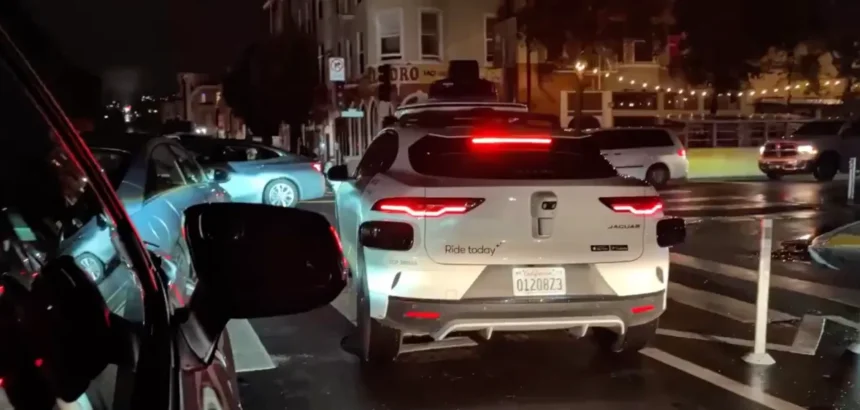
The disruption followed a large power outage that left traffic lights offline and forced the city into manual traffic control. Waymo, owned by Alphabet, acknowledged that while its Waymo Driver system is designed to treat dark intersections as four-way stops, the sheer scale of the outage created conditions where vehicles paused longer than usual to validate safety. The result was visible congestion, captured widely on social media, and a decision by the company to pause operations and coordinate with city authorities.
From a technology perspective, the behavior was conservative by design rather than a malfunction. Sophie Leclerc, who focuses on autonomous systems and consumer technology, sees the incident as a reminder that current robotaxi platforms are optimized for structured environments. When digital signals and predictable infrastructure disappear at scale, autonomy defaults to caution, which is safe but not always traffic-efficient. In NewsTrackerToday’s view, this highlights the gap between laboratory autonomy and citywide resilience.
Waymo’s response suggests operational maturity. Most active rides were completed, vehicles were returned to depots or safely parked, and services were paused pre-emptively rather than reactively. That decision limits downside risk, but it also underscores a broader reality: fully autonomous services remain tightly coupled to the reliability of power grids, traffic signaling, and emergency coordination.
The contrast with Tesla has been particularly sharp. Tesla’s leadership claimed its robotaxi ambitions were unaffected by the outage, yet the company does not operate fully driverless services in San Francisco. Its local offering relies on vehicles running FSD (Supervised), where a human driver remains responsible at all times. The distinction matters. Human supervision absorbs infrastructure failure in ways current autonomous stacks cannot, shifting risk away from the system and back to the operator. As News Tracker Today notes, this difference highlights how much of today’s “autonomy” still depends on human fallback rather than system resilience.
Regulatory realities reinforce this divide. Tesla has not received approval to deploy unsupervised autonomous vehicles in California, while Waymo already operates under that framework. As a result, every disruption involving Waymo carries broader implications for policy and public trust. Daniel Wu, who examines infrastructure risk and technology adoption, notes that power stability is becoming an unspoken constraint on autonomy. Without redundancy in energy and traffic systems, cities effectively cap how autonomous their streets can become.
Globally, Waymo remains a leading player in Western robotaxi markets, competing with international rivals such as Baidu Apollo Go. Yet the San Francisco outage illustrates a structural challenge facing the sector: deployment velocity is outpacing the readiness of urban systems to support autonomy under stress. Public confidence remains fragile, and high-visibility slowdowns feed skepticism even when safety protocols function as intended.
Looking ahead, the lesson is less about failure and more about limits. Power outages, emergency events, and infrastructure degradation are not edge cases; they are predictable features of urban life. In NewsTrackerToday’s assessment, the near-term path forward favors hybrid operating models, clearer intervention protocols, and closer alignment between city planners and autonomous vehicle developers. Until infrastructure resilience catches up with algorithmic ambition, autonomy will continue to pause when cities falter – and that balance will define how fast robotaxis truly scale.