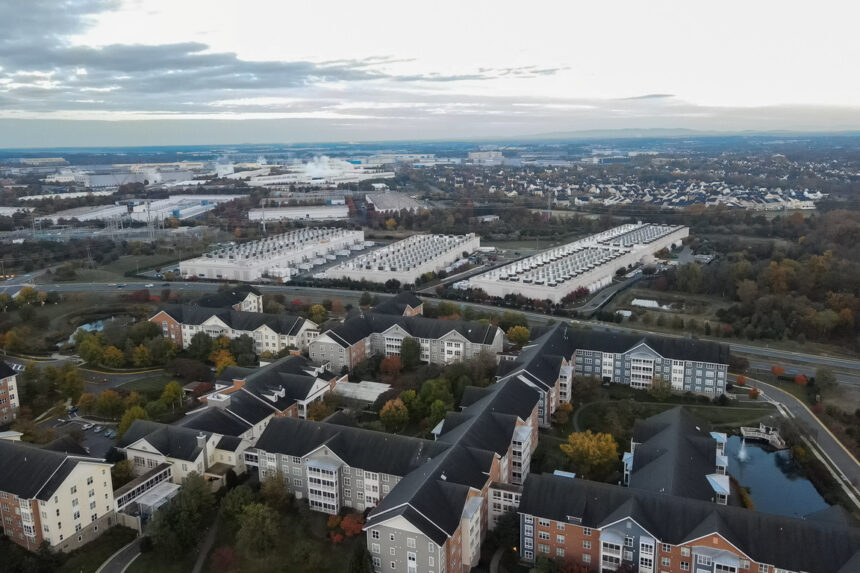
Dublin students have become unlikely beneficiaries of the artificial intelligence boom. As NewsTrackerToday observes, at a technology campus in the city’s southwest, buildings are now heated using surplus energy from a nearby Amazon Web Services data center. What appears at first glance to be a niche sustainability experiment reflects a deeper shift underway across global AI infrastructure: energy efficiency and community integration are becoming strategic requirements rather than optional extras.
For data center operators, the challenge is no longer limited to sourcing electricity. AI workloads have dramatically increased rack density and heat output, intensifying pressure on power grids and heightening resistance from local authorities. Reusing waste heat offers a partial answer. Instead of dissipating excess thermal energy into the atmosphere, operators can redirect it into district heating systems, effectively extending the value of each unit of power consumed.
From an energy-system perspective, this model carries broader implications. Daniel Wu, a geopolitics and energy analyst at NewsTrackerToday, notes that recovered heat reduces indirect dependence on imported fuels, particularly natural gas. In tightly constrained grids, this secondary benefit can be just as important as marginal gains in efficiency, especially as governments scrutinize the cumulative impact of AI infrastructure on national energy balances.
Ireland’s experience illustrates both the opportunity and the tension. Data centers already account for a significant share of national electricity demand, triggering policy debates and temporary restrictions on new facilities. Heat reuse does not eliminate that burden, but it reframes the discussion. Instead of being viewed solely as large industrial consumers, data centers can be positioned as contributors to local energy resilience. This shift in perception matters, particularly as permitting and public acceptance become binding constraints on AI expansion.
Across Europe, similar initiatives are gathering pace. Existing district heating networks make integration easier, allowing operators to connect with relatively limited additional infrastructure. Sophie Leclerc, a technology sector analyst, argues that this “social license” effect is increasingly decisive. When communities see tangible benefits – lower heating costs, reduced emissions, or insulation from energy price shocks – resistance to new data centers tends to soften. From this perspective, heat recovery is less about direct returns and more about reducing long-term execution risk.
At News Tracker Today, this trend is viewed as part of a broader realignment in AI infrastructure economics. The next phase of data center growth will be shaped not only by access to advanced chips or capital, but by the ability to integrate into regional energy systems. Projects that fail to address secondary impacts such as heat, water use, and grid stability may face higher regulatory friction and slower deployment timelines.
Scaling the model is not without obstacles. District heating networks require heavy upfront investment and long planning horizons, while data center hardware cycles turn over rapidly. This mismatch raises concerns about stranded assets if a major tenant exits or technology shifts. The most viable approach appears to be diversification: combining waste heat with other sources such as geothermal energy or large-scale heat pumps to ensure continuity and financial resilience.
NewsTrackerToday expects European policymakers to move toward stricter expectations around heat reuse as AI-related construction accelerates. For operators, the strategic lesson is clear. Designing facilities for higher-temperature liquid cooling, securing long-term heat offtake agreements, and embedding energy reuse into early-stage planning are becoming competitive advantages. In an environment where power access and public acceptance are increasingly scarce resources, the ability to turn excess heat into shared value may prove decisive.