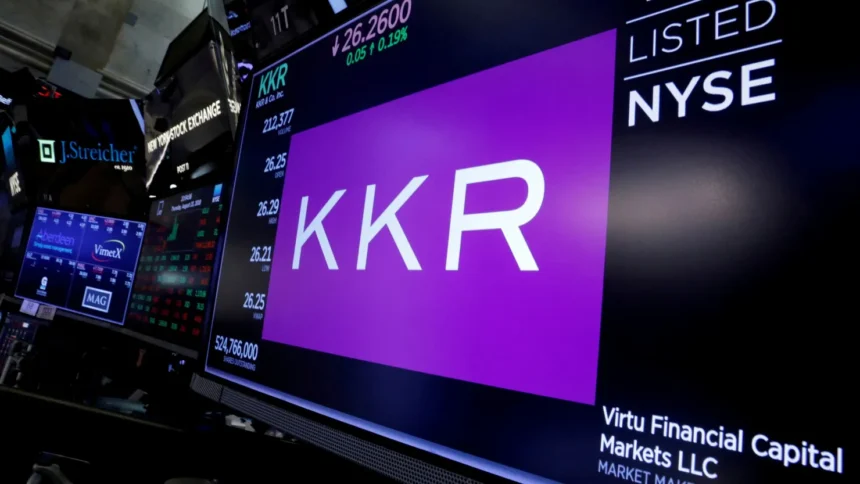
Moody’s downgrade of FS KKR Capital Corp. to junk status signals more than a single credit event – it reflects a broader reassessment of risk in private credit. The move from Baa3 to Ba1 points to asset quality deterioration that exceeds peer levels, challenging the perception of private credit as a stable income alternative. As NewsTrackerToday notes, this shift suggests the market is beginning to price risk more actively rather than relying on yield alone.
A key indicator is the rise in non-accrual loans to 5.5% of total investments by the end of 2025. Ethan Cole, a macroeconomic analyst specializing in credit cycles, notes that such levels often indicate deeper underwriting issues rather than temporary market stress. When troubled assets outpace peers, it typically reflects structural weaknesses in portfolio construction. Financial performance confirms this trend. FS KKR reported a $114 million net loss in the fourth quarter and just $11 million in net income for the full year. For a business designed to generate consistent yield, this represents a material shift. NewsTrackerToday emphasizes that declining earnings combined with NAV pressure tends to quickly erode investor confidence.
Portfolio exposure adds further risk. Around 16.4% of investments are tied to software and related services. Isabella Moretti, an analyst specializing in corporate strategy and M&A, highlights that this sector is undergoing repricing as AI reshapes business models and valuations. What was once seen as a stable growth segment is now showing signs of credit sensitivity. Moody’s also pointed to structural concerns, including higher leverage, greater reliance on payment-in-kind income, and lower first-lien exposure compared to peers. These factors weaken downside protection. In favorable markets they support yield, but in tightening conditions they amplify losses. NewsTrackerToday notes that investors are increasingly focusing on risk-adjusted returns rather than headline income.
The downgrade comes amid broader pressure in private credit. Several large semi-liquid funds have faced rising redemption requests, in some cases limiting withdrawals. This indicates growing caution among investors as concerns about credit losses and liquidity increase. The asset class is beginning to behave more like a traditional credit cycle. For FSK, the implications are immediate. Higher borrowing costs could compress net investment income and reduce flexibility, creating additional pressure on performance. At the same time, not all funds face the same risks. Stronger platforms with conservative leverage and better collateral structures are likely to remain more resilient.
The next phase will depend on how non-accrual trends evolve, how sensitive software-related exposures prove to be, and how funding costs develop. News Tracker Today suggests that this period will separate disciplined credit strategies from more aggressive ones as the market shifts toward a more selective, risk-aware environment.