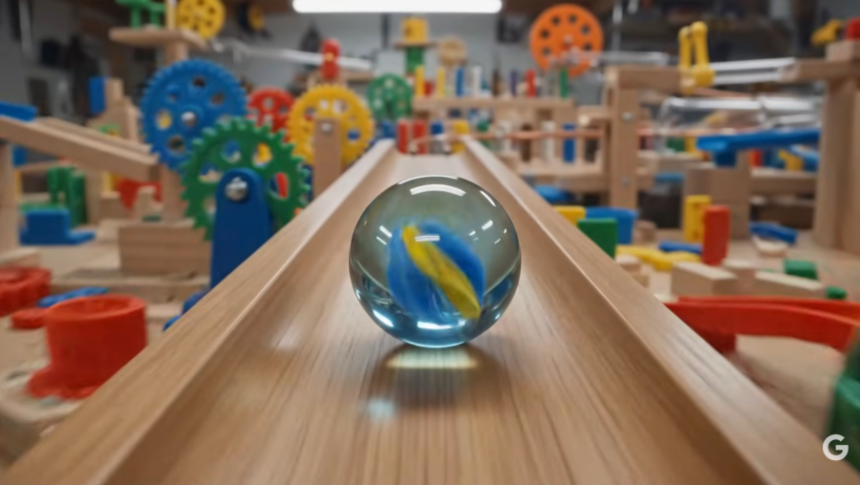
Google released Nano Banana 2 Lite on Tuesday, the newest addition to its Nano Banana image generation family, with two headline numbers: images in four seconds and a price of $0.034 per 1,000 images. The model runs on the Gemini 3.1 Flash Lite architecture and is available immediately through Google AI Studio, the Gemini API, and the Gemini Enterprise Agent Platform, with simultaneous rollout to consumer surfaces including AI Mode in Search, the Gemini app, NotebookLM, Google Photos, Google Ads, and Google Flow. Nano Banana 2, which launched in February, stays in position as the generalist workhorse at higher fidelity. Nano Banana 2 Lite is positioned explicitly for high-volume, high-speed workflows where latency and cost outrank creative quality – rapid advertising variations, product mockup drafts, storyboard iterations. The price and speed combination is what NewsTrackerToday flags as the competitive signal in this release: $0.034 per thousand images is a price that makes high-volume image generation a commodity input rather than a premium service.
To put that pricing in practical context: generating 10,000 image variations costs $0.34. A marketing team that previously spent hours on creative asset production can now generate hundreds of draft variations for less than a dollar and iterate until something works. Google positions that use case explicitly in its product framing, and the internal benchmark score – a Text to Image arena Elo of 1251 – places Nano Banana 2 Lite above the legacy original Nano Banana’s 1151 and, surprisingly, above the more expensive Nano Banana Pro’s 1245 on the text-to-image benchmark specifically. That benchmark result is notable because it suggests the Lite model, optimized for speed, has not sacrificed competitive performance relative to the larger model – a combination that is unusual in model architecture tradeoffs and that, if it holds in real-world use, makes the pricing argument even more compelling for developers choosing between tiers.
Sophie Leclerc, who covers the technology sector, reads the full Google image-video stack: “Google released Nano Banana 2 Lite and Gemini Omni Flash on the same day, and the intended product is the pipeline between them: use Nano Banana 2 Lite to generate image drafts cheaply and quickly, then pass those images into Omni Flash to animate them into video at $0.10 per second of output. That sequence – image ideation at commodity price, animation at metered cost – describes a creative production pipeline that is genuinely new in terms of price and speed. The constraint shifts from budget to creative judgment. Whether that pipeline produces quality output that competes with purpose-built creative tools for professional applications, or positions well for high-volume commercial applications where good-enough is sufficient, is the market differentiation question that the launch alone cannot answer.” The A24 context is what NewsTrackerToday reads alongside the product positioning: Google signed a $75 million deal with the indie studio this month, a partnership that has attracted significant criticism from fans of a studio known for independent creative identity.
Ethan Cole reads the market timing: “AI image generation at $0.034 per thousand in 2026. The price will be lower in 2027. Google is racing to embed its image generation models inside every product surface – Search, Gmail ecosystem, Google Ads – before competitors establish the default. The strategy is not to win on quality. It is to win on distribution and price before quality differentials close entirely.” The rollout to Google Ads is the most commercially significant consumer surface in the list. Automated ad creative generation at $0.034 per thousand images means a business running Google Ads can generate thousands of image variants for A/B testing at negligible cost, with the optimization logic handled by Google’s existing ad targeting infrastructure. That loop – cheap generation, automated targeting, continuous optimization – describes a commercial use case where human creative involvement becomes optional rather than necessary for a significant portion of digital advertising inventory.
The broader industry context for the release is one where AI-generated visual content has already crossed into majority status on some platforms: a study cited in the TechCrunch coverage of this release found that approximately 60% of TikTok videos are now classified as AI-generated, a proportion that has generated significant discussion about what “AI slop” does to the creative economies of platforms that depend on genuine human expression for their cultural value. Google has deliberately framed its Nano Banana products around advertising and business use cases rather than consumer creativity, a choice that sidesteps some of the cultural criticism while directly targeting the commercial use cases where volume and speed matter most. The image-to-video pipeline with Omni Flash is what News Tracker Today holds as the product combination most likely to shift creative workflow economics at scale: not because any individual piece is revolutionary, but because four-second images at $0.034 thousand feeding into $0.10-per-second video makes a complete production workflow accessible at a price point that changes what commercial content is worth producing.
The most defensible near-term projection is that Google’s Nano Banana 2 Lite accelerates its intended use case – high-volume commercial image generation for advertising, e-commerce product media, and rapid prototyping – over the next two to three quarters, with the Google Ads integration being the clearest success metric. The Gemini Omni Flash video pipeline will follow a longer adoption curve as developers build the image-to-video workflow into production systems. Whether the 60% AI-generated content figure on platforms like TikTok rises or falls in response to cheaper and faster generation tools is the cultural question that the commercial launch data will not answer but that the creative communities most affected by it will continue watching closely. The price compression that Nano Banana 2 Lite represents – from expensive AI to commodity utility – has historically been the moment a technology moves from early adopter to infrastructure, and that transition timeline is what NewsTrackerToday lands on as the most consequential thing this particular product launch announces.