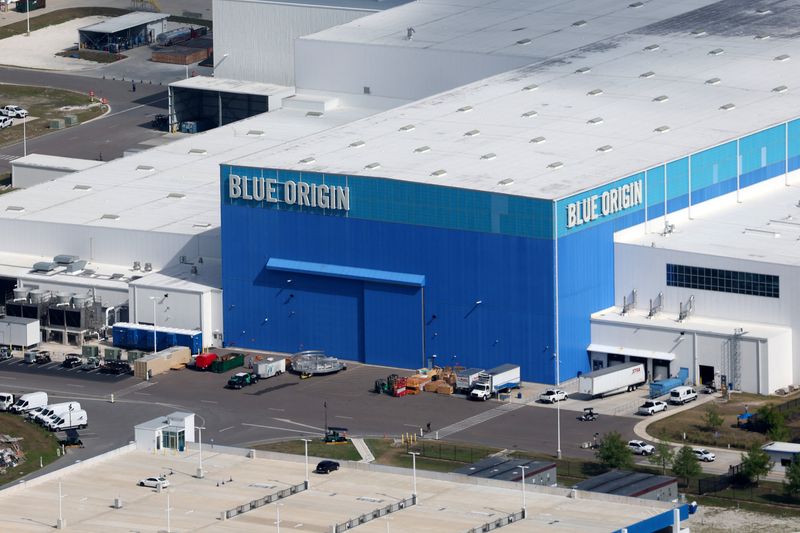
Blue Origin is raising $10 billion at a pre-money valuation of $130 billion, according to a New York Times DealBook report, marking the first time in the company’s 25-year history that Jeff Bezos’ space venture has taken outside money. For a quarter-century, Blue Origin has had effectively one funding source: Bezos himself, financed largely through annual sales of Amazon stock. That single fact – one founder, one checkbook, for 25 straight years, now ending – is what NewsTrackerToday sizes up as the actual headline, more than the valuation number attached to it.
The timing is not a coincidence. Blue Origin is reportedly burning through roughly $4.8 billion a year, a rate that outpaces what even Bezos, who has funded the company through nearly $28 billion in Amazon stock sales over 25 years, can comfortably keep covering alone. CEO Dave Limp told employees at an internal meeting earlier this year that the company needed to be “ready for external funding,” a shift that lines up with a newly designed employee stock option plan built specifically to allow liquidity through external financing rounds rather than only through a future IPO or company sale.
Liam Anderson reads the market context: “This raise lands right behind SpaceX’s own landmark public listing, which priced at a valuation north of $1.75 trillion. That IPO didn’t just set a number for SpaceX, it reset what investors are willing to pay for the entire commercial space sector. Blue Origin choosing this exact moment to open its cap table for the first time isn’t subtle. It’s raising into the same wave of investor enthusiasm that just carried its biggest rival to a public listing.” Bear in mind, Blue Origin’s New Glenn rocket suffered a static-fire explosion in late May, damaging its operational launch pad – not the kind of headline that usually precedes a landmark capital raise, and yet here it is anyway.
Ethan Cole reads the underlying capital math tersely: “$10 billion raised. $130 billion pre-money. $4.8 billion a year burned. Do the division and this buys roughly two years of runway at the current spend rate, before accounting for whatever the new capital itself gets used to accelerate. That’s not a company raising for comfort. That’s a company raising because the math on a single-backer model stopped working at this scale.” The arithmetic underneath the headline number is what NewsTrackerToday boils down to as the real story investors will be watching once the round actually closes.
Blue Origin’s ambitions explain the burn rate. The company is targeting eight to twelve New Glenn launches this year, building toward a longer-term goal of 100 launches annually, largely to support a planned satellite constellation that won’t begin deployment until late 2027. It’s also sitting on a $3.4 billion NASA Artemis V lunar lander contract, one of the few programs putting Blue Origin in direct competition with SpaceX for government business rather than just commercial launch contracts.
This raise doesn’t erase the operational reality Blue Origin is working through. A damaged launch pad, a satellite constellation more than a year from generating revenue, and a lunar lander program still mid-development are all still true on the same day this funding news broke. Ten billion dollars buys runway. It doesn’t buy a working rocket faster than engineering allows.
What changes permanently, regardless of how the specific $130 billion number holds up once the round prices, is the ownership structure itself. Twenty-five years of one man writing every check ends the moment outside capital actually lands on Blue Origin’s balance sheet, and that shift – not the valuation, not the burn rate – is what News Tracker Today rests on as the real turn in this story.