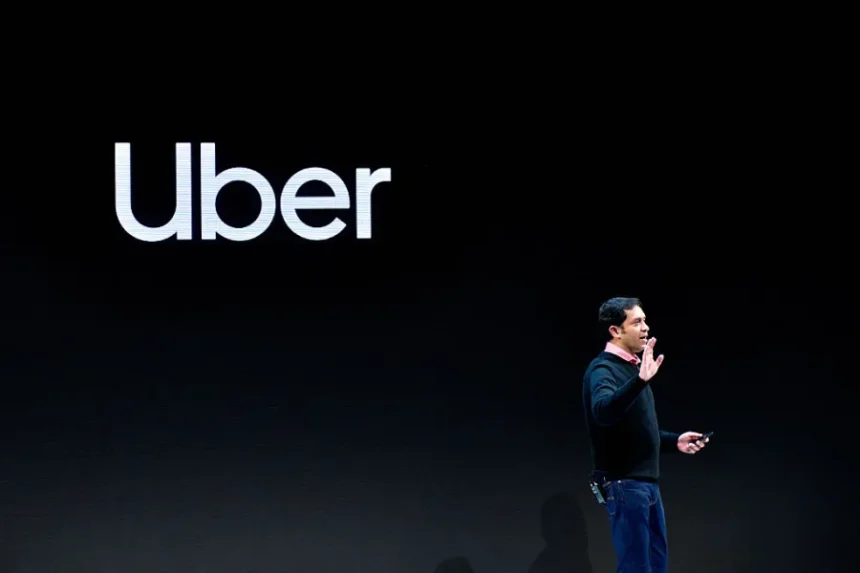
Uber has spent the past year quietly stretching well past ride-hailing and delivery, adding hotel bookings through a partnership with Expedia, a “shop for me” concierge feature, and boat rentals in Europe. Chief Product Officer Sachin Kansal walked through the thinking behind that expansion this week, and one line stood out more than the feature list itself: Uber, he said, is deliberately not trying to be “everything to everyone.” That explicit limit, stated by the company’s own product chief, is what NewsTrackerToday reads into as the more interesting story than any single new feature.
The travel push has a specific data point behind it: 1.5 billion trips on Uber’s platform happen outside a user’s home city every year, which is why hotels became this year’s headline addition rather than another ride or delivery tweak. Kansal described food, rides, and travel as three legs of the same stool, with the shop-for-me feature designed to let users order from any local store even ones outside Uber Eats’ existing catalog entirely.
Isabella Moretti reads the financial-services angle carefully: “Uber already runs a debit-card product for drivers and couriers called Uber Pro, and it’s experimenting with merchant-facing tools in some markets. But Kansal was notably non-committal about consumer financial products and ruled out building Uber’s own buy-now-pay-later offering outright, preferring partnerships instead. That’s a deliberate boundary, not an oversight. Building payment infrastructure invites regulatory scrutiny that a ride-hailing and delivery company doesn’t currently carry, and Uber seems to know exactly where that line sits.” That boundary, more than the credits program itself, is what NewsTrackerToday anchors around when reading Uber’s actual financial-services ambitions.
The Waymo relationship gets more complicated by the month. Uber recently wound down its robotaxi pilot with Waymo in Phoenix while continuing to scale the partnership in Austin and Atlanta, where hundreds of Waymo vehicles now operate through Uber’s app. Kansal described Waymo as “an excellent partner” that’s also a competitor in many cities, and said Uber has no interest in becoming its own autonomy provider, preferring instead to be the network multiple autonomy companies plug into.
Sophie Leclerc, who covers the technology sector, reads the AV Labs division as the real hedge inside that partnership: “Uber launched AV Labs six months ago to equip hundreds of vehicles with sensors and collect driving data independent of its regular driver network. Officially, that’s about strengthening relationships with autonomy partners. Unofficially, it gives Uber its own data asset in a category where it competes directly with several of those same partners. Owning the data layer is leverage, even if Uber frames it purely as partner support.” That data-layer hedge, more than the Phoenix wind-down, is what NewsTrackerToday circles to as the more durable signal about how Uber sees its own long-term position in autonomy.
AI is already showing up in smaller, more concrete ways across the platform. Drivers get an earner assistant that suggests where demand is highest right now. Eats users can build a grocery cart just by naming items out loud. Riders can request a trip by voice, specifying luggage and passenger count in plain language instead of navigating menus. Kansal wouldn’t commit to a timeline for a fully agentic “plan and book my whole trip” experience, saying only that shipping an agent that doesn’t actually work well would be worse than not shipping one at all.
Uber One membership, meanwhile, has quietly become a serious cross-sell engine: 51 million members now account for roughly half of all bookings, and Kansal said the company sees mobility-only users increasingly picking up delivery and vice versa once they’re inside the membership program. Uber Eats, historically one of the hardest businesses in tech to make profitable, has been independently profitable for Uber over the past several quarters.
None of this settles whether Uber eventually becomes a full “everything app” along the lines of Asian super-apps, a question Kansal deflected rather than answered directly. What his comments this week do confirm is a company adding surface area deliberately, one partnership and one data asset at a time, while explicitly declining to chase the broadest possible product footprint just because the technology now makes it easier to do so. Whether that deliberate restraint holds as competitive pressure mounts, or whether Uber eventually expands its footprint further than Kansal is willing to admit today, is what News Tracker Today settles into as the real test of this strategy over the next few product cycles.