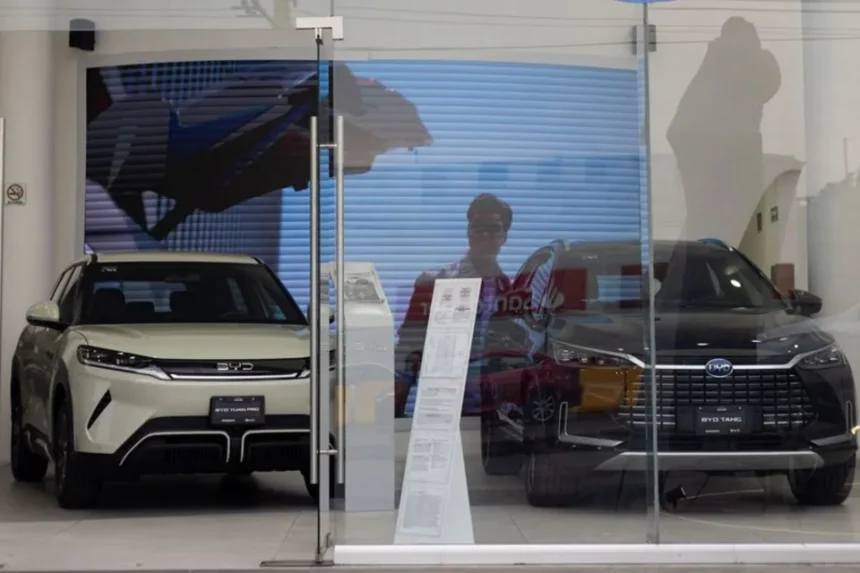
Mexican sales of Chinese-brand vehicles jumped nearly 30% in the first half of the year, according to a sales report from the Mexican Association of Automobile Distributors, despite a 50% tariff Mexico imposed in January specifically to slow the flow of Asian imports. Chinese brands now account for 17% of new vehicle sales in Mexico, up from 14% a year earlier, with unit sales climbing to 137,525 from 107,712. A tariff explicitly designed to slow an import trend that then grew anyway is what NewsTrackerToday sizes up as the more revealing number than the headline sales figure itself.
Mexico’s government has its own explanation for why the sales data looks this strong despite the tariff. Deputy Foreign Trade Minister Luis Rosendo Gutierrez argued the sales figures are misleading because Chinese automakers entered the year holding large inventories built up through front-loaded shipments ahead of the tariff taking effect. The real impact, he said, shows up in a 43% decline in actual vehicle imports from China during the first five months of the year compared to the same period last year. “What’s important is that the measures have halted imports of vehicles from Asia,” Gutierrez said.
Daniel Wu, who covers geopolitics and energy, reads the trade-policy stakes underneath this specific dispute: “Growing Chinese vehicle share in Mexico has become a genuine flashpoint in negotiations over North America’s trade pact, because U.S. officials worry Mexico could become a backdoor entry point for Chinese manufacturers into the American market, an industry contributing $1.2 trillion annually to the U.S. economy. Whether the sales number or the import-decline number is the more accurate read matters enormously for how Washington reads Mexico’s compliance heading into trade talks starting this week.” That interpretive gap between two government-adjacent readings of the same market is what NewsTrackerToday keys to as the real dispute sitting underneath this data release.
Individual brand performance tells its own story. Geely posted the strongest growth of any Chinese automaker this year, followed by MG Motor, Changan, and Chery. BYD, China’s largest automaker and still the biggest Chinese brand in Mexico by volume, actually saw sales edge down slightly to 33,969 from 34,606, suggesting the overall Chinese-brand surge is being driven more by smaller, newer entrants gaining share than by the market leader extending its lead.
Ethan Cole reads the absorb-the-tariff calculus tersely: “Guillermo Rosales, who runs the distributors’ association, said the market has become saturated with Chinese supply, and that Chinese brands are absorbing higher costs rather than risk losing share in one of the world’s largest vehicle markets. That’s a rational bet if you’re playing for long-term market position rather than near-term margin. It’s also exactly the kind of behavior that makes a tariff look less effective on paper than policymakers intended, even if it is genuinely compressing margins Chinese automakers just aren’t passing through to consumers.” That margin-absorption strategy, more than the tariff rate itself, is what News Tracker Today draws on as the actual reason sales kept climbing.
The scale of the shift over just a few years is significant regardless of how this specific tariff dispute resolves: Chinese brands held less than 1% of Mexico’s market in 2020, climbed to 7% by 2022, and now sit at 17% just six months into this year, according to the same distributors’ association data. A third round of U.S.-Mexico trade talks focused partly on this exact issue begins in Mexico City this week.
Whether Mexico’s 43% import decline is the real signal and the sales-growth number is simply inventory working through the system, as Gutierrez argues, or whether Chinese automakers have found a durable way to keep growing through a 50% tariff by absorbing the cost rather than passing it on, is what NewsTrackerToday settles into as the real question this week’s trade talks will have to grapple with directly.