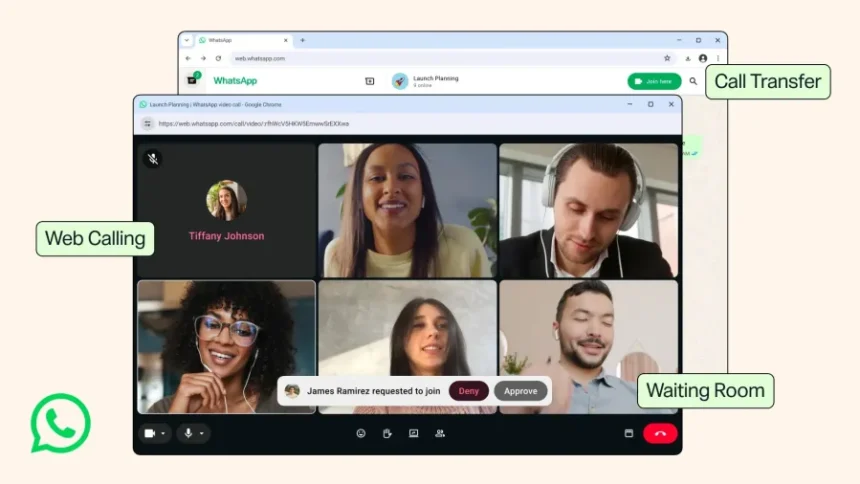
WhatsApp is adding audio and video calling to its web app for the first time, ending years in which calling remained exclusive to the smartphone app and native desktop client. The web version now gets its own Calls tab housing history and favorites, alongside features already available on desktop like screen-sharing and reactions. A messaging platform with billions of users only now bringing calling to its most universally accessible interface, the browser, is what NewsTrackerToday sizes to as the more overdue update than any individual feature in this release.
The rollout bundles several improvements beyond basic web calling. Users can now transfer an ongoing call from one device to another without hanging up, meaning a call started on desktop or web can continue seamlessly on a phone. WhatsApp is also introducing waiting rooms for group call links, letting hosts approve or remove participants before they join, alongside background noise suppression and faster switching to high-definition video within the first few seconds of a call.
Sophie Leclerc, who covers the technology sector, reads the waiting-room feature as the most consequential addition in this batch: “Letting hosts require approval before someone joins a group call link is specifically aimed at people using WhatsApp for work meetings, a use case the app has never formally targeted before despite plenty of informal adoption. That’s WhatsApp quietly positioning itself as a legitimate business-meeting tool, not just a consumer messaging app that happens to support calls, which is a meaningfully different product ambition than anything WhatsApp has signaled previously.” That business-meeting positioning, more than the web-calling headline itself, is what NewsTrackerToday reads round as the more strategically interesting move buried in this release.
The username reservation system WhatsApp opened up last month connects directly to this update’s longer-term plans: once usernames go fully live, people will be able to call other users across platforms using just a username rather than a phone number, a meaningfully different identity model than the phone-number-based system WhatsApp has relied on since launch.
Isabella Moretti reads the parent-company strategy behind this specific sequencing: “Meta has been steadily closing feature gaps between WhatsApp’s mobile, desktop, and web experiences for the past several product cycles, and this release finally brings all three onto near feature parity for calling specifically. That parity matters commercially because it removes a longstanding reason for business users to default to a separate video-conferencing tool instead of staying inside WhatsApp for both messaging and calls, keeping more of that usage, and the data that comes with it, inside Meta’s own ecosystem.” That ecosystem-retention logic, more than any single feature, is what NewsTrackerToday stacks round as the underlying commercial rationale behind this update.
WhatsApp’s calling infrastructure has historically lagged behind dedicated video tools on features like waiting rooms and cross-device transfer, a gap this release closes meaningfully, though it still doesn’t fully match the scheduling and calendar-integration depth that purpose-built business conferencing tools offer.
None of this confirms whether WhatsApp’s push toward business-meeting functionality actually shifts meaningful usage away from dedicated conferencing tools, since habit and existing enterprise software contracts are hard to displace regardless of feature parity. Whether this update meaningfully expands WhatsApp’s role in workplace communication, or whether it mostly improves the experience for the informal work-call usage that was already happening, is what News Tracker Today draws on as the real test this release still has to pass.