Europe is pouring nearly €200 billion into its electric vehicle ecosystem, signaling that the region is no longer content to depend on Asia for one of the century’s most strategic industries. The commitments span battery manufacturing, vehicle production and charging infrastructure across the European Economic Area and Switzerland. As governments and companies channel capital into this industrial overhaul, NewsTrackerToday frames the initiative as both a climate strategy and a determined effort to rebuild technological sovereignty.
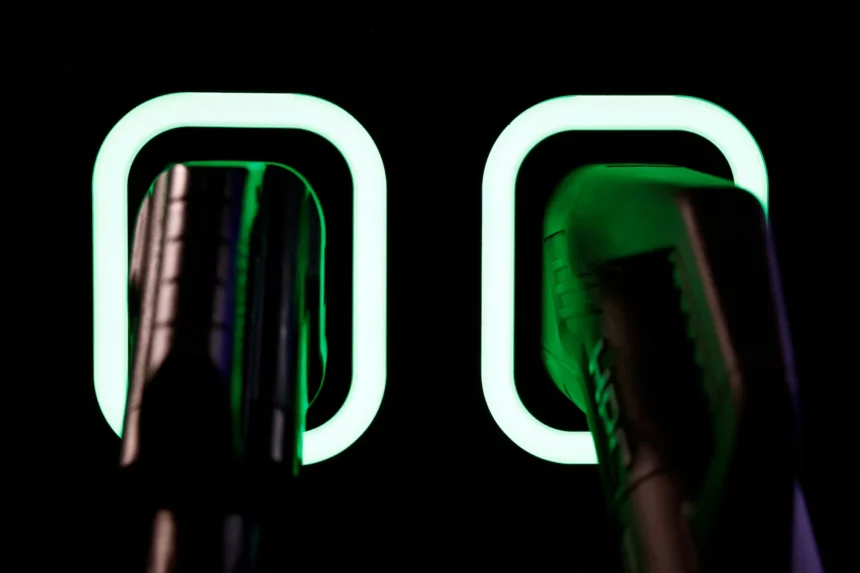
The investment package includes €109 billion earmarked for the battery supply chain, €60 billion for electric vehicle manufacturing and between €23 billion and €46 billion for public charging networks. More than one million public charging points are already in operation, creating the physical backbone needed to support mass adoption. Europe now produces enough batteries to supply roughly one in three electric vehicles sold within the region, a notable shift in an industry where International Energy Agency estimates China accounted for more than 80% of global battery output in 2025.
Germany has emerged as the central hub of this transformation, attracting almost a quarter of all announced investment. The country’s industrial scale, engineering base and concentration of major automakers make it a natural anchor for the continent’s electrification ambitions. Daniel Wu, geopolitics and energy specialist, views this concentration of capital as part of Europe’s broader effort to reduce strategic dependence on external supply chains in sectors that increasingly carry geopolitical significance. NewsTrackerToday maps how battery factories and assembly plants are becoming instruments of industrial security as much as commercial assets.
The economic stakes are substantial. E-Mobility Europe estimates that current projects already support more than 150,000 jobs, with another 300,000 positions possible if all announced facilities move into production. Isabella Moretti, corporate strategy and M&A specialist, notes that this wave of investment reflects a long-term restructuring of Europe’s automotive sector rather than a temporary response to regulatory incentives. NewsTrackerToday considers how manufacturers are repositioning supply chains to secure domestic production capacity before global competition intensifies further.
Yet capital alone does not guarantee success. Europe continues to face higher energy costs than some competing regions, while policymakers are debating the balance between market openness and industrial protection. The European Commission recently proposed easing the bloc’s effective 2035 ban on new combustion-engine vehicles, underscoring the political tension between climate objectives and industrial realities.
Even with regulatory adjustments, investment momentum has remained resilient as oil prices rise and consumers gain access to a broader range of electric models. News Tracker Today argues that Europe’s €200 billion commitment amounts to a strategic wager that the continent can still build a competitive and self-sufficient automotive ecosystem in a market increasingly defined by batteries, software and geopolitical influence.