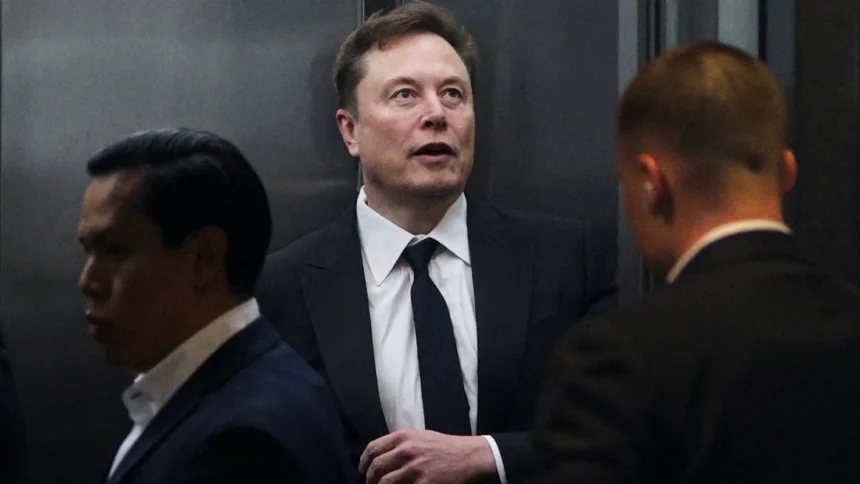
The courtroom battle between Elon Musk and OpenAI entered a more volatile phase this week as testimony from Shivon Zilis exposed years of internal conflict over control, funding, and corporate structure inside one of the world’s most influential AI companies. Beyond the personal revelations and boardroom tensions, NewsTrackerToday investigates how the lawsuit is transforming into a wider confrontation over who will dominate the commercial future of artificial intelligence.
Zilis, who previously worked across OpenAI, Tesla, and Neuralink, described extensive internal debates between Musk, Sam Altman, Greg Brockman, and Ilya Sutskever during OpenAI’s formative years. Discussions surrounding nonprofit governance and possible for-profit structures reportedly continued “ad nauseam,” reflecting how unstable OpenAI’s organizational direction remained long before generative AI exploded into a global commercial race.
The testimony also complicated Musk’s public narrative. Internal text messages introduced during proceedings showed Musk discussing efforts to recruit OpenAI talent into Tesla while still serving on OpenAI’s board. One exchange revealed plans to move several researchers directly into Tesla’s AI efforts after OpenAI resisted the idea of integrating into Musk’s automotive empire. Isabella Moretti, a corporate strategy and M&A analyst, notes that these details matter because the lawsuit increasingly appears less centered on ideology and more connected to ownership, influence, and competitive positioning inside the AI sector.
Financial pressure formed another important layer of the dispute. Messages shown during the trial indicated that Musk quietly froze portions of OpenAI’s funding while leadership negotiations remained unresolved. NewsTrackerToday follows how that alleged funding freeze exposed the fragile dependence early AI laboratories had on concentrated billionaire backing before venture capital and hyperscale partnerships transformed the economics of the industry. At that stage, OpenAI still operated more like a research alliance than a mature technology business.
The proceedings also highlighted how rapidly alliances inside Silicon Valley shifted once AI became commercially viable. Musk eventually left OpenAI, while the company moved toward a capped-profit model and later secured enormous backing from Microsoft. Meanwhile, Musk launched xAI in 2023 before merging the venture into his broader technology ecosystem. Zilis testified that discussions once existed about creating a competing AI lab inside Tesla capable of rivaling OpenAI and Google DeepMind directly, though the idea never materialized.
Sophie Leclerc, a technology sector analyst, argues that the trial reveals a deeper structural tension spreading across the AI industry. Early nonprofit rhetoric helped attract talent and legitimacy during the research phase, but commercial scaling required capital intensity that inevitably pushed organizations toward profit-driven structures. That transition now fuels disputes over governance, mission drift, and ownership rights as AI companies accumulate strategic value measured in hundreds of billions of dollars.
The personal dimension surrounding Zilis added another layer of public attention. Her testimony confirmed that Musk’s relationship with her and their children remained confidential for years while she continued serving on OpenAI’s board. She eventually resigned in 2023 as speculation intensified surrounding Musk’s competing AI venture. NewsTrackerToday highlights how the case now blends corporate governance conflicts, personal relationships, and strategic rivalry into a legal showdown capable of damaging public trust in the leadership structures behind advanced AI development.
What began as a dispute over nonprofit principles now resembles a fight over the economic architecture of artificial intelligence itself. As News Tracker Today explores the growing fracture lines between ideology and commercial ambition in Silicon Valley, the OpenAI trial increasingly reveals how quickly collaborative research projects can mutate into fiercely contested power centers once technological dominance – and trillions in future value – enter the equation.