U.S. airlines are sending an unusually resilient signal to markets, raising first-quarter revenue expectations even as fuel prices climb sharply amid geopolitical tensions. As NewsTrackerToday notes, the sector is demonstrating that strong travel demand – particularly in premium and corporate segments – can offset rising operational costs, at least in the near term.
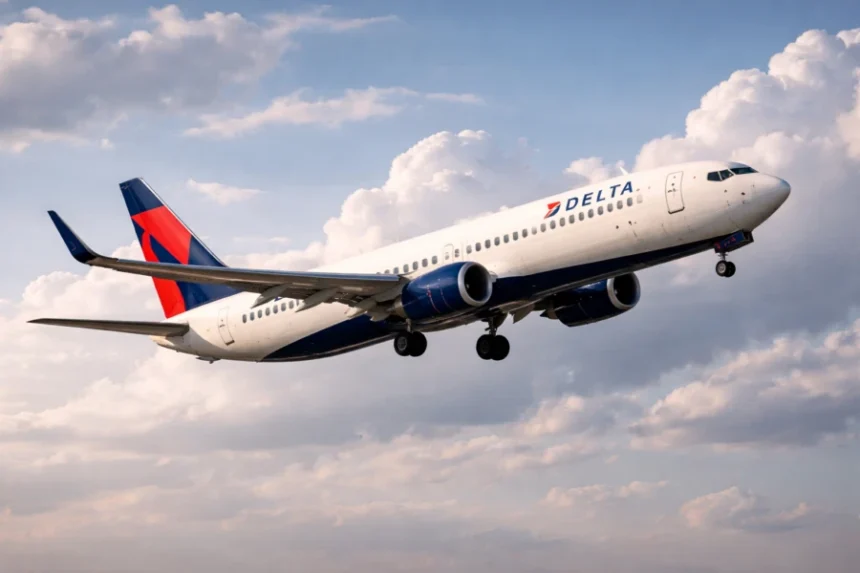
Delta Air Lines provided one of the clearest indicators of this trend, upgrading its revenue outlook to high single-digit growth while maintaining its earnings forecast. CEO Ed Bastian emphasized that stronger-than-expected demand has compensated not only for higher fuel expenses but also for disruptions caused by severe winter weather. According to Liam Anderson, a financial markets expert, this suggests that airlines are entering a phase where pricing power is becoming more critical than cost stability. In his view, companies capable of sustaining higher ticket prices without weakening demand are likely to outperform peers in the current environment.
American Airlines also revised its outlook upward, now expecting revenue growth above 10%, driven by stronger domestic demand. However, the company still anticipates approximately $400 million in fuel-related pressure in the first quarter. This combination of rising revenue and persistent cost pressure highlights a key dynamic across the industry: demand remains robust, but profitability depends on how effectively airlines manage cost pass-through to customers.
United Airlines, while not updating its formal guidance, reinforced the same narrative. CEO Scott Kirby stated that the company aims to fully offset higher fuel costs through revenue gains, describing the current demand environment as highly favorable. As previously highlighted by NewsTrackerToday, this aligns with a broader pattern in the sector, where leading carriers are leveraging strong loyalty programs, premium offerings and corporate contracts to stabilize revenue streams despite macro uncertainty.
JetBlue also raised its revenue expectations, now forecasting growth of 5% to 7%, supported by improving travel demand. According to Ethan Cole, a macroeconomic analyst, the broad-based nature of these upgrades indicates that the current demand cycle is not limited to a single segment of the market. However, he notes that smaller or lower-margin carriers remain more exposed to prolonged cost pressures, particularly if fuel prices remain elevated.
Fuel costs remain the central risk factor. Aviation fuel typically accounts for around one-fifth of airline expenses, and recent price increases linked to geopolitical developments have intensified pressure across the industry. At the same time, many U.S. carriers have limited hedging strategies, making them more sensitive to short-term price volatility. NewsTrackerToday notes that while current revenue strength is absorbing much of the impact, this balance could shift if elevated fuel prices persist.
Another important factor is the quality of demand. Delta highlighted strong performance in premium cabins, loyalty programs and corporate travel – segments that tend to be more resilient during periods of economic uncertainty. This suggests that the current recovery in air travel is becoming increasingly segmented, with higher-value customers playing a disproportionate role in sustaining revenue growth.
Market reaction reflects this cautious optimism. Airline stocks, including Delta and American, rose following the updated guidance, indicating that investors are focusing less on immediate cost pressures and more on the sector’s ability to maintain revenue momentum. According to Liam Anderson, this shift in sentiment marks a transition from a cost-driven narrative to a demand-driven one, at least in the short term.
Looking forward, the key variable remains the duration of elevated fuel prices. If energy costs stabilize, airlines could sustain current growth trends and potentially improve margins. However, if high fuel prices persist, the industry is likely to see increasing divergence between stronger carriers – those with pricing power and diversified revenue streams – and weaker competitors with less flexibility. As News Tracker Today concludes, the current environment is redefining competitive dynamics in the airline industry. Success will depend not only on demand levels but on the ability to convert that demand into устойчивую profitability under volatile cost conditions.