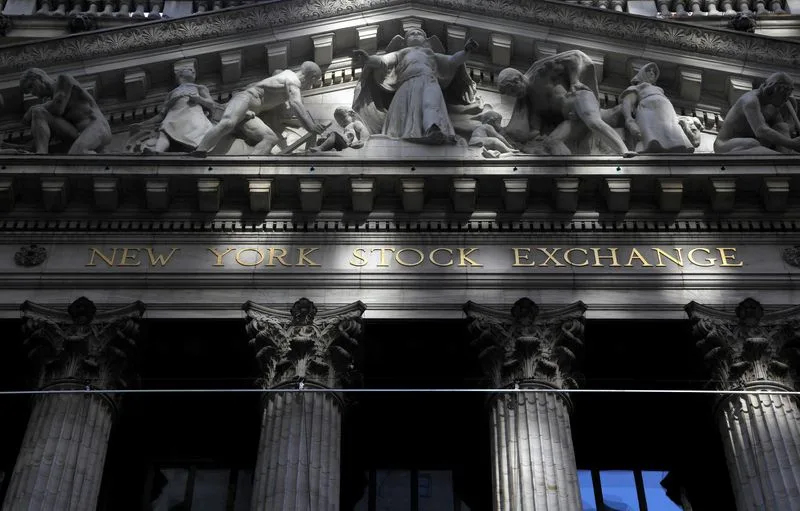
The New York Stock Exchange has agreed to pay a $9 million civil penalty to settle claims from the U.S. Securities and Exchange Commission over a system failure that disrupted the opening of the stock market in January 2023. The incident briefly distorted prices of several major companies and forced regulators and market participants to reexamine the reliability of critical trading infrastructure. NewsTrackerToday notes that the settlement highlights how operational failures at major exchanges can quickly become systemic risks in an increasingly automated financial system.
The disruption occurred on January 24, 2023, when the exchange mistakenly activated both its primary trading platform, Pillar Production, and its backup disaster-recovery system, Pillar DR, at the same time. According to the SEC, the error caused the primary system to incorrectly interpret the opening of trading for thousands of listed securities. NewsTrackerToday observes that failures involving redundancy systems are particularly concerning because backup mechanisms are intended to protect markets from outages rather than amplify them.
As a result of the malfunction, the exchange failed to properly conduct opening auctions for 2,824 of the 3,421 securities listed on the NYSE at the time. Trading in 84 stocks had to be halted after abnormal price movements were detected, including 81 securities that dropped more than 10% without any fundamental catalyst. Daniel Wu, an analyst specializing in geopolitics and energy markets, argues that such distortions in price discovery can undermine investor confidence because opening auctions play a crucial role in establishing the first reliable market price of the trading day.
More than 4,000 transactions were either canceled or declared invalid during the disruption. The affected securities included shares of several widely held companies such as ExxonMobil, McDonald’s, Verizon, Walmart, 3M and Wells Fargo. According to NewsTrackerToday, the involvement of major blue-chip stocks increased the significance of the event, since disruptions affecting widely traded companies can reverberate across institutional portfolios and market indexes.
The SEC also emphasized the exchange’s delayed response to the problem. Regulators stated that it took the NYSE approximately 39 minutes to recognize that the opening auctions had malfunctioned and about 83 minutes to fully assess the scope of the damage. Liam Anderson, a financial markets specialist, notes that in modern electronic markets, even short delays in identifying operational failures can magnify volatility and increase the number of affected trades.
Regulators further criticized the exchange for lacking sufficiently detailed written procedures governing the execution of opening auctions. The absence of clearly defined protocols made it more difficult to detect and respond to the issue quickly. NewsTrackerToday highlights that the SEC’s findings point to governance weaknesses rather than simply a technical malfunction, suggesting regulators are increasingly focused on operational oversight within market infrastructure.
Following the incident, the NYSE compensated its member firms more than $5.7 million for trading losses linked to the disruption. Intercontinental Exchange, the parent company of the NYSE, stated that it has since strengthened its systems and procedures while emphasizing that the exchange’s opening and closing auctions remain among the most reliable sources of liquidity for U.S. equities.
The episode comes at a time when global financial markets rely heavily on complex electronic systems capable of processing enormous volumes of trades within milliseconds. Anderson argues that this reliance makes exchanges both more efficient and more vulnerable to operational errors. Even small technical failures can quickly propagate across markets, particularly during high-volume trading periods such as market openings.
Looking forward, News Tracker Today suggests the settlement is likely to reinforce regulatory scrutiny of trading infrastructure and disaster-recovery protocols across the financial sector. Exchanges may face greater pressure to improve monitoring systems, formalize operational procedures and conduct more rigorous testing of failover mechanisms to ensure that backup systems do not unintentionally disrupt market stability.