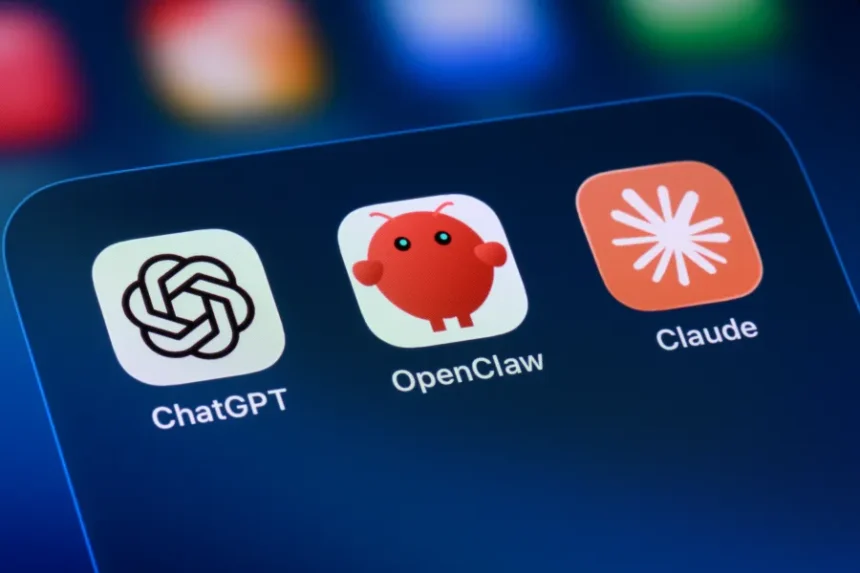
OpenClaw, the open-source AI agent framework that went viral earlier this year through a combination of genuine technical capability and some notably theatrical marketing, released native apps for Android and iOS on Tuesday, giving users a way to run their existing OpenClaw agents from a mobile device rather than keeping that interaction locked to a desktop or developer terminal. The app does not run the AI on the phone itself. It pairs with an OpenClaw Gateway – a routing layer the user sets up on their own computer running macOS, Linux, or Windows – and turns the phone into a control surface and input node for the agent system. The iOS version exposes mobile-specific capabilities including Canvas, screen snapshot, camera capture, location access, Talk mode for voice interaction, and a voice wake feature. Users must approve every action the agent requests on the gateway before it executes. That approval requirement is what NewsTrackerToday anchors as the design choice that separates OpenClaw’s mobile deployment model from the ambient AI agent systems several competing products have announced: the phone amplifies the agent, but the human stays in the loop.
Before the mobile apps arrived, OpenClaw users had been interacting with their agents through third-party messaging platforms including Telegram, WhatsApp, Slack, Discord, and Microsoft Teams – a workaround that worked but added friction and required agents to route through external services rather than a dedicated interface. The native apps give OpenClaw its own managed channel for mobile interaction, with push notifications for workflow status updates and a cleaner permission model tied directly to Android and iOS’s native permission frameworks rather than delegating permissions through a messaging app’s API. The practical effect is that someone who has already set up an OpenClaw agent on their computer – say, to monitor code repositories, generate meal plans, or manage automated tasks – can now receive updates and respond to agent requests from their pocket without switching to a third-party chat application.
Sophie Leclerc, who covers the technology sector, reads the architecture carefully: “What OpenClaw is doing with its mobile app is more interesting than a standard companion app launch. The phone becomes a node in an agent network rather than a window into a cloud service. That distinction matters for privacy – the AI is running on the user’s own hardware, not on OpenClaw’s servers – and it matters for agent capability, because the phone’s sensors and native permissions allow agents to access context that a remote API cannot provide. The question is whether users who are not already deep in the OpenClaw developer ecosystem will set up a Gateway on their own hardware to use the apps, or whether the setup friction limits the mobile launch to the existing technical user base rather than expanding into mainstream adoption.” The MoltBook backstory is what NewsTrackerToday traces as the credibility context around OpenClaw’s mainstream ambitions.
OpenClaw became publicly visible through MoltBook, a social media site that creator Peter Steinberger initially presented as populated entirely by AI agents, which generated significant press coverage and substantial internet interest. Researchers later determined that some of MoltBook’s apparent agent activity had been partially performed by humans mimicking agent behavior – effective viral marketing theater, as it was described, that worked but came with credibility costs. Steinberger subsequently joined OpenAI in February 2026, and the OpenClaw project passed to an independent OpenClaw Foundation that receives unspecified support from OpenAI. The apps are published by the Foundation, not by OpenAI, maintaining at least a formal separation between the corporate and the open-source project.
Liam Anderson on the market dynamics: “OpenClaw mobile lands as Google announced its competing 24/7 personal agent, Gemini Spark, which runs on cloud infrastructure rather than local hardware. Two different architectural bets. OpenClaw says your data stays on your machine. Google says it’s easier if we run it for you. Both are plausible products. The market will tell you which privacy posture consumers actually prefer when they have to choose.” The early Android reviews tell a less complimentary story about the execution of the launch: the app has a 2.2-star rating on the Play Store, with user complaints describing it as unusable, unable to pair with the Gateway, and in one memorable phrasing, “the worst app I’ve ever used in my entire life.” That the 2.2-star review problem is what News Tracker Today puts alongside the architectural promise: a technically coherent mobile deployment model surrounded by launch-day friction that the open-source community will need to address before the mainstream adoption question becomes relevant.
Is OpenClaw’s mobile launch the moment an interesting developer tool becomes a consumer product, or does the 2.2-star Android rating represent a genuine gap between the framework’s appeal in technical circles and its readiness for the broader audience that native mobile apps are designed to reach? The iOS experience has not generated the same volume of negative reviews, which suggests the parity between the two platforms is still a development priority rather than a completed project. Whether the OpenClaw Foundation addresses the Android pairing and usability complaints quickly enough to hold the attention of the users the launch attracted is what NewsTrackerToday closes on as the near-term test: viral interest fades quickly, and the window between a successful launch announcement and a stable, functional product is narrower in mobile than anywhere else.