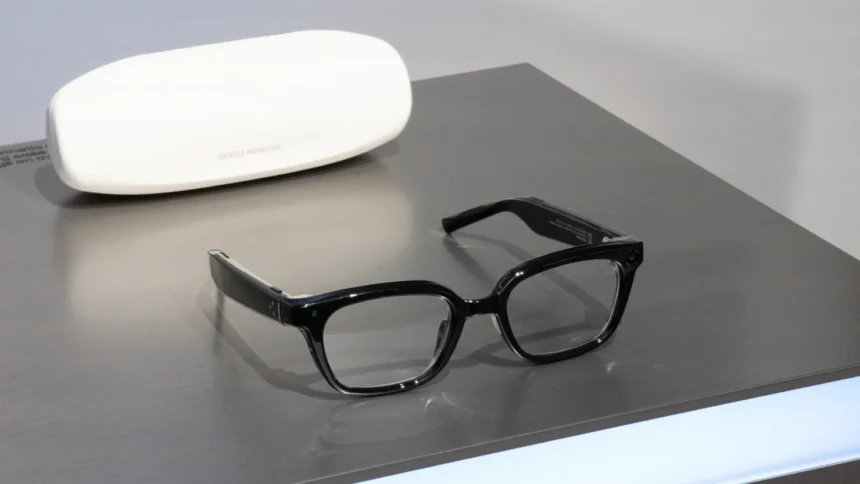
Samsung detailed the features of its upcoming smart glasses on Wednesday, confirming a built-in camera capable of capturing and reading content in real time, alongside gesture controls the company is testing through its Galaxy Watch and Galaxy Ring devices. What Samsung still won’t say, weeks ahead of a fall launch, is the price, beyond describing the device as a “premium” product. A company detailing camera and gesture features in full while staying deliberately silent on the one number that will decide the product’s fate is what NewsTrackerToday sizes up as the more calculated rollout than the specs themselves.
James Choi, the Samsung executive vice president leading the glasses’ R&D division, told reporters the device will ship in more designs and colors than what’s been shown publicly so far, and confirmed the smartwatch-based gesture system is still being tested rather than finalized. The gesture concept lets a person wearing a Samsung smartwatch, or potentially a Galaxy Ring, trigger specific glasses features with a hand motion, extending Samsung’s existing device ecosystem into a new hardware category rather than launching the glasses as a standalone product.
Sophie Leclerc, who covers the technology sector, reads the ecosystem strategy as the actual product here: “Meta’s glasses pair with a phone and the Meta AI app, full stop. Samsung is positioning its glasses as one more node in a device family that already includes phones, watches, earbuds, and a ring, with cross-device gesture control as the connective tissue. That’s a materially different pitch than ‘camera glasses with AI,’ and it only works for someone already inside Samsung’s ecosystem, which narrows the addressable buyer even as it deepens loyalty among existing Galaxy owners.” That ecosystem-lock-in strategy, more than any single camera or gesture feature, is what NewsTrackerToday reads into as Samsung’s actual competitive bet.
The market Samsung is entering is one Meta has dominated since 2021, holding 69.2% share of the global smart glasses market in the first quarter of 2026 alone, according to industry tracker IDC. That dominance has been built on the Ray-Ban partnership specifically, giving Meta retail distribution and brand credibility in eyewear that a consumer electronics company entering the category from scratch doesn’t automatically inherit.
Isabella Moretti reads the pricing question as the actual strategic decision Samsung is still sitting on: “An IDC analyst floated a $600 to $700 range specifically to protect Samsung’s premium brand positioning, well above where Meta’s mainstream Ray-Ban models sit. That’s a real tension: price too close to Meta and Samsung looks like it’s chasing an incumbent on its own turf; price meaningfully higher and Samsung risks a niche launch in a category where Meta has already proven mass-market demand exists at a lower price point.” That pricing tension, more than the feature set Samsung has already confirmed, is what NewsTrackerToday pins on as the real decision still hanging over this launch.
Samsung previously unveiled its “intelligent eyewear” at Google’s I/O conference in May, showing off two products developed in partnership with eyewear brands Gentle Monster and Warby Parker, positioning the glasses as a joint Samsung-Google effort rather than a purely internal Samsung product, which also ties the device’s software experience closely to Google’s own AI ambitions in the category.
None of this confirms whether Samsung’s ecosystem-integration pitch will actually convert Galaxy device owners into smart glasses buyers at whatever price point the company eventually settles on, since gesture control via a smartwatch remains explicitly unfinished as of this week’s comments. Whether Samsung’s fall launch narrows the pricing gap with Meta or leans fully into the premium positioning its own executives have floated, and whether either choice meaningfully dents Meta’s near-70% market share, is what News Tracker Today closes with as the real test this product still has to pass.