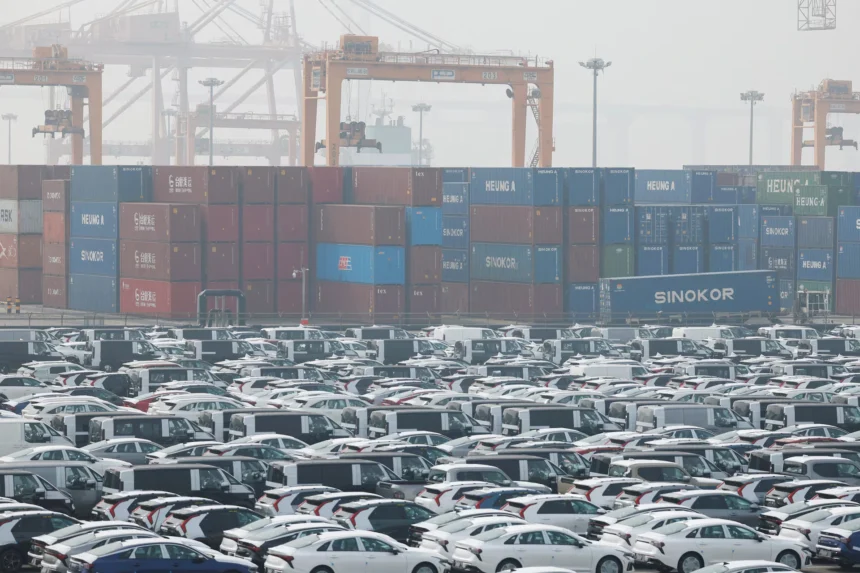
South Korean exports were forecast to rise 59.0% in value in July from a year earlier, according to a survey of 15 economists, a pace that would ease from June’s 70.7% surge, the biggest jump since 1978, but still mark the second-strongest growth in a streak that began in June 2025. In the first 20 days of July alone, exports rose 52.3% year-over-year, with semiconductor shipments specifically jumping 180.6%. A growth rate this dramatic getting explained almost entirely by rising prices rather than rising shipment volumes is what NewsTrackerToday sizes on as the more important nuance than the headline percentage itself.
That price-versus-volume distinction came directly from the economists tracking the data: “A large part of the growth rate reflects rising semiconductor prices. The increase in shipment volumes is much more modest,” said Ha Keon-hyeong, an economist at Shinhan Securities. That’s a meaningfully different story than a trade boom built on South Korea simply shipping more physical chips, it’s a boom built on the same or slightly more chips selling for dramatically more money, driven by global AI infrastructure demand pushing memory prices sharply higher.
Daniel Wu, who covers geopolitics and energy, reads the domestic market reaction as evidence investors aren’t fully buying the export strength as unambiguously good news: “South Korea’s benchmark KOSPI index has tumbled more than 30% this month on AI-related worries, even as the underlying export data shows historic growth. That’s a real disconnect: the trade numbers say AI demand is driving unprecedented export value, while equity investors are pricing in real doubt about whether current chip valuations and capital spending levels are sustainable.” That disconnect between the trade data and equity market sentiment, more than the export figure itself, is what NewsTrackerToday stacks to as the more revealing signal about how seriously markets are taking AI-driven chip demand right now.
That doubt has concrete triggers: SK Hynix reported a record second-quarter profit on Wednesday that still missed elevated investor expectations, adding to the stock declines, even as Samsung Electronics said Thursday that AI chip demand would stay strong and supply short for the rest of the year, after posting a more than 250-fold rise in semiconductor profit for the quarter.
Liam Anderson reads the trade-surplus trajectory as the more concrete number to watch beneath the volatile percentage figures: “The monthly trade surplus was forecast at a median $29.59 billion, down from $36.09 billion the previous month, even with exports still growing at a near-record pace. That gap comes from imports rising nearly as fast as exports, forecast at 26.6% for July after 30% in June, meaning South Korea’s trade position isn’t strengthening as dramatically as the export headline alone would suggest.” That narrowing surplus, more than the export growth rate, is what NewsTrackerToday draws round as the more complete picture of South Korea’s actual trade position this month.
Park Sang-hyun, an economist at iM Securities, added that some of July’s slower growth compared to June simply reflects fewer working days in the month, a calendar effect layered on top of the underlying price-driven dynamics economists are already tracking closely.
None of this confirms whether the current combination of surging chip prices and modest volume growth persists once AI infrastructure spending eventually plateaus, or whether South Korea’s export streak faces a genuine slowdown once price gains alone stop accounting for most of the headline growth. Whether the stock market’s current skepticism about AI valuations proves prescient once export growth eventually normalizes, or whether the chip boom driving these numbers has more room to run than KOSPI’s selloff suggests, is what News Tracker Today settles to as the real question this month’s trade data leaves for Saturday’s official figures to help answer.