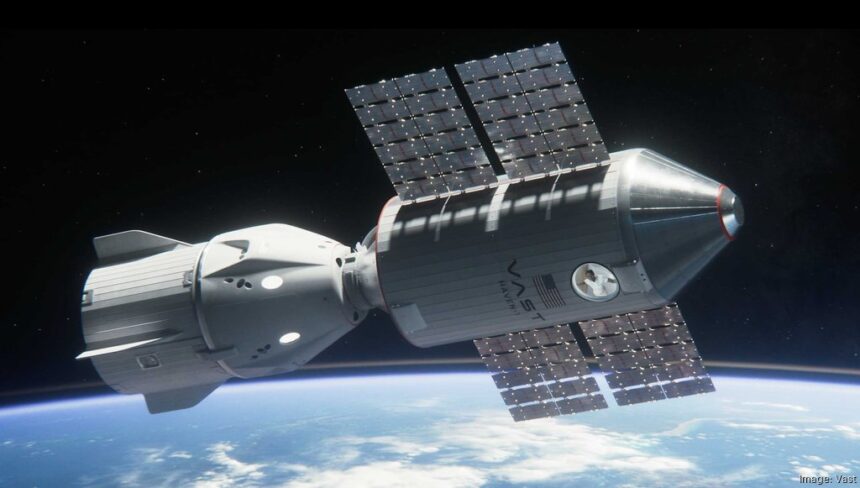
The race to build the next generation of space stations is intensifying as governments and private companies prepare for the eventual retirement of the International Space Station. Vast recently confirmed that it did not advance in NASA’s first round of selections for a future commercial station program. However, the company says the setback will not slow its ambitions. NewsTrackerToday notes that Vast is pursuing what its leadership calls a “leap strategy,” aiming to prove its capabilities by launching an operational station before the next phase of NASA’s selection process concludes.
CEO Max Haot has argued that demonstrating real hardware in orbit could become the company’s strongest argument. Instead of waiting for a government contract, Vast plans to launch its Haven-1 commercial station as proof of capability. NewsTrackerToday highlights that this reflects a broader shift in the space sector, where companies increasingly validate technology through operational missions rather than relying solely on government programs.
A major step supporting that strategy is the company’s recent $500 million funding round led by Balerion Space Ventures with participation from a sovereign wealth fund in Qatar and several institutional investors. According to Liam Anderson, a financial markets specialist, the scale of the investment suggests institutional capital is becoming more comfortable backing long-term space infrastructure projects despite extended development timelines.
Haven-1 is designed as the first stage of Vast’s plan to build orbital habitats capable of supporting astronauts, research missions and commercial activity. The company aims to launch the module within the next few years and use it as a demonstration platform for larger stations planned later in the decade. News Tracker Today suggests that this step-by-step development approach could reduce technological risk by validating key systems before scaling up.
NASA has also selected Vast to participate in a future private astronaut mission to the ISS, giving the company an opportunity to build operational credibility within the agency’s human spaceflight ecosystem. Isabella Moretti, an analyst specializing in corporate strategy and technology ecosystems, notes that participation in NASA missions can significantly strengthen a company’s position in future procurement decisions by demonstrating compliance with strict safety standards.
The broader industry context remains critical. The ISS is currently expected to retire around 2030, though policymakers are considering extending operations until roughly 2032. NewsTrackerToday observes that this uncertainty creates both risk and opportunity for emerging space station developers by extending the window for testing new platforms.
Competition is also increasing. Companies such as Axiom Space and Sierra Space are developing their own commercial station concepts. Anderson suggests that the market may ultimately support multiple orbital platforms rather than a single successor to the ISS, particularly if governments, research institutions and private operators require dedicated infrastructure.
Looking ahead, Vast’s success will depend largely on execution. Demonstrating that Haven-1 can be built, launched and operated safely will be essential for attracting both government contracts and private customers. NewsTrackerToday believes the transition from government-run stations to commercially operated orbital infrastructure could become one of the defining shifts in the space economy over the next decade.