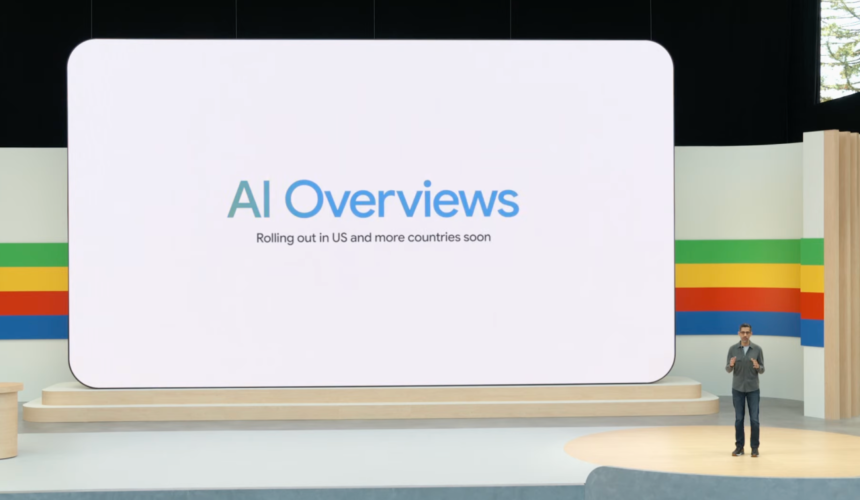
Google’s decision to quietly disable AI Overviews for a narrow set of health-related search queries marks a telling moment in the evolution of generative search. After reporting showed that AI summaries could present “normal” laboratory ranges without critical clinical context, the company appears to have stepped back – selectively. From the perspective of NewsTrackerToday, this is not a product rollback, but a recalibration of risk in one of the most sensitive information domains on the web.
The core issue was not that the AI-generated answers were entirely false. In many cases, the numerical ranges surfaced by Google’s system aligned with reputable medical sources. The problem, as NewsTrackerToday assesses it, lies in omission. Reference ranges for liver function tests vary meaningfully depending on age, sex, ethnicity, laboratory methods, and clinical history. Presenting a single “normal” value without those qualifiers can lead users to misinterpret results, potentially delaying care or creating false reassurance.
Google’s response – removing AI Overviews for exact query phrasing while allowing similar variations to still trigger summaries – signals a tactical rather than structural fix. NewsTrackerToday views this as an interim containment strategy: reduce exposure where scrutiny is highest, while continuing to test the feature elsewhere. The fact that users are still prompted to re-run the same questions inside AI Mode suggests Google is shifting responsibility toward explicit user intent rather than automatic AI interpretation.
Sophie Leclerc, technology analyst, argues that health search exposes a fundamental mismatch between generative systems and medical expectations. Fluency is not the challenge; constraint is. “In healthcare,” she notes, “being broadly accurate is not enough. Systems must be precise about when they cannot safely generalize.” Leclerc believes Google will ultimately be forced to hard-gate AI summaries for diagnostic and lab-interpretation queries unless it can enforce strict templates that surface uncertainty, population qualifiers, and clear deferrals to clinicians.
Ethan Cole, chief macroeconomic analyst, places the episode in a wider platform context. As AI tools compress complex information into single, authoritative-looking snapshots, they inherit regulatory and trust expectations once reserved for institutions like hospitals or licensed publishers. Cole argues that this dynamic raises the long-term cost of AI search. “Each health-related failure accelerates the shift toward heavier governance – clinical review layers, audit trails, and narrower deployment. That favors scale players, but it also slows experimentation.”
Google’s public position – that internal medical reviewers found many answers supported by quality sources – may be factually defensible, yet it misses the central risk. Medical harm often arises from missing nuance rather than outright error. NewsTrackerToday sees this episode as an early signal that AI search products will increasingly be judged not on correctness alone, but on judgment: when to answer, when to qualify, and when to remain silent.
For users, the implication is straightforward. AI summaries can orient, but they cannot replace professional interpretation of medical data. For Google, the path forward likely involves clearer suppression rules, stronger disclaimers, and visible boundaries around health content. And for the industry as a whole, News Tracker Today expects more quiet removals like this – because in healthcare, confidence without context is not innovation, it is liability.