The global labor market has not yet experienced the shock many expected from the rapid rise of artificial intelligence. Employment levels remain relatively stable, and large-scale layoffs directly linked to AI have not materialized. Still, beneath this surface stability, a more subtle shift is emerging – one that may prove more significant over time. Coverage across NewsTrackerToday increasingly highlights a key transition: AI is not broadly eliminating jobs, but it is already reshaping how people enter the workforce.
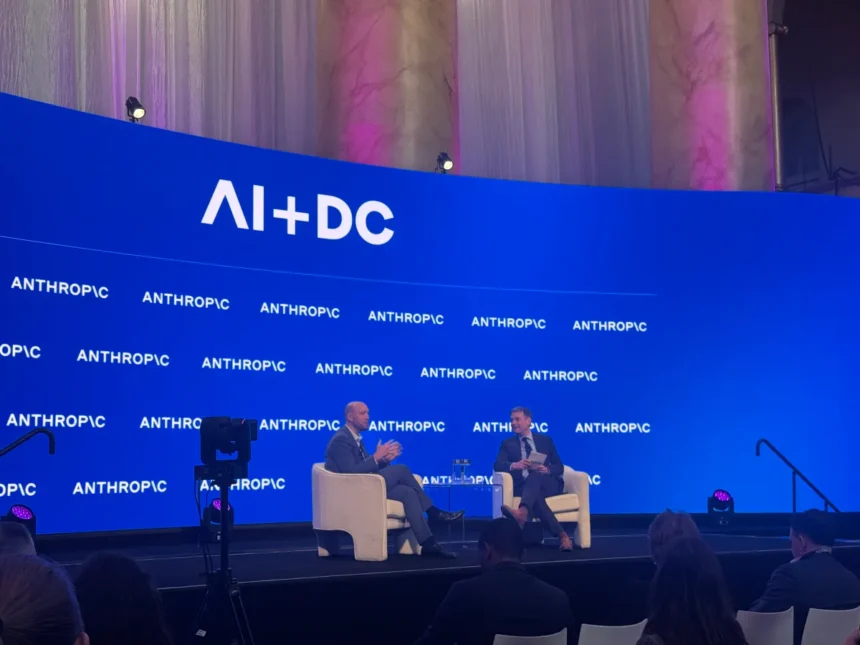
Recent findings from Anthropic support this dual picture. The company’s data shows no meaningful difference in unemployment between roles highly exposed to AI – such as software engineering or data-related tasks – and those less affected. The critical nuance lies elsewhere. Adoption remains uneven, and while the technology is capable of performing many functions, its integration into daily workflows is still partial. In practical terms, stability reflects delayed implementation rather than the absence of disruption.
Early signals, however, point to growing concentration of impact. A rising share of tasks across professions is already being handled with AI tools, and companies are gradually embedding these systems into operational processes. This shift – from tool usage to infrastructure – suggests a deeper structural transformation. From an analytical perspective, such phases typically precede broader labor adjustments, as firms optimize workflows before reconsidering staffing levels. This pattern, often noted in NewsTrackerToday, indicates that current conditions may not hold indefinitely.
The most exposed group is early-career workers. Evidence suggests that younger professionals are facing reduced hiring opportunities in AI-affected roles, even without widespread layoffs. This distinction matters. Entry-level positions have traditionally relied on routine tasks – precisely the functions most susceptible to automation. As these tasks are absorbed by AI, the barrier to entering many white-collar professions rises. Ethan Cole, chief economic analyst specializing in macroeconomics and central banks, would likely view this as a classic early-stage structural shift, where headline indicators remain stable while internal dynamics begin to weaken.
Labor market behavior reinforces this trend. In several advanced economies, a “low-hire, low-fire” pattern is emerging: companies are not cutting jobs aggressively, but they are slowing new recruitment, particularly at the junior level. The pressure is therefore less visible but no less significant. The issue is shifting from job loss to limited access to quality employment, which may create longer-term imbalances in workforce development.
Another key factor is the widening skills gap. Anthropic’s research indicates that early adopters of AI tools use them more effectively and gain measurable productivity advantages, while new users often remain limited to basic functions. This creates a compounding effect: experienced users become more valuable, while others fall behind. The distribution of this advantage is also uneven, with higher usage concentrated in wealthier regions and among highly skilled professionals. For NewsTrackerToday, this raises a broader concern – AI may reinforce existing inequalities rather than reduce them.
This interpretation aligns with wider global assessments. The primary impact of AI is expected to come through shifts in skills, productivity, and income distribution, rather than immediate job destruction. Roles based on repetitive cognitive tasks face the greatest pressure, while positions requiring judgment and domain expertise are more resilient. Sophie Leclerc, technology sector commentator, would likely describe this as the rise of “AI fluency” as a baseline requirement in modern work environments.
More aggressive forecasts – including scenarios of large-scale disappearance of entry-level roles – should be viewed as directional rather than immediate. A more plausible trajectory is gradual. Hiring slows first, wage gaps widen next, and only later could broader employment effects emerge. This phased model explains why current data does not yet reflect the full extent of potential disruption.
The practical implications are already clear. Workers need to integrate AI into real workflows rather than treat it as a secondary tool. Early-career professionals should focus on combining domain expertise with AI capabilities to remain competitive. Companies face risks if they reduce junior hiring without maintaining future talent pipelines. Policymakers, in turn, need to monitor hiring trends, skill distribution, and regional disparities alongside traditional employment metrics. This broader perspective, emphasized in NewsTrackerToday, is essential for understanding the trajectory of change.
In sum, the absence of immediate disruption should not be confused with long-term stability. AI has not yet destabilized the labor market, but it is already redefining access to it. The next 12 to 24 months will be decisive: adaptation could keep the transition manageable, while delays may lead to a more uneven adjustment. This evolving dynamic continues to draw close attention within News Tracker Today, as it offers an early signal of how the future of work is being reshaped.