Amazon’s annual Prime Day is happening earlier than usual in 2026, and the timing shift is matched by a shift in what people actually plan to buy. The four-day event runs June 23 through June 26 – the first time in five years it lands in June rather than July. Amazon kept the extended four-day format introduced in 2025, when it logged its highest Prime Day sales on record. This year’s edition arrives against a different consumer backdrop – a shift that NewsTrackerToday picked up in the deal category data Amazon shared ahead of the event.
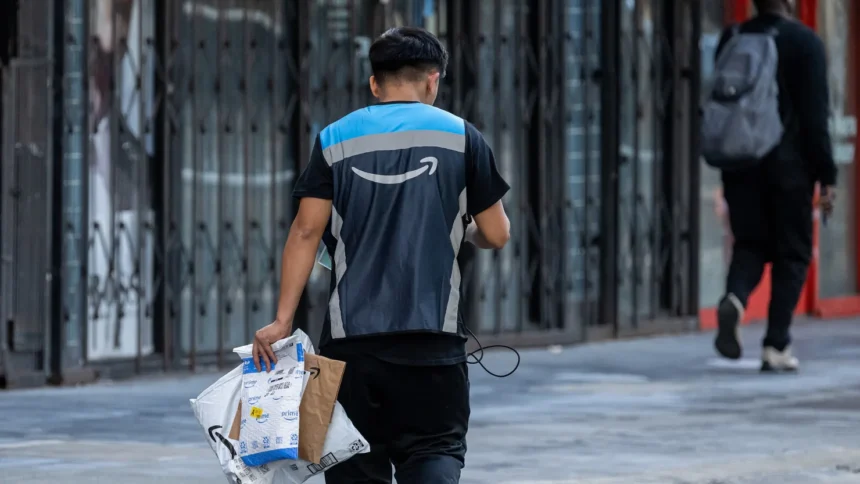
Jamil Ghani, Amazon’s vice president of Prime, told reporters plainly that groceries and household essentials will be a real focus of the 2026 promotions. Produce, meats, and hot dog buns priced as low as $1. Personal care items like soap expected to be half off. Ghani traced the shift to behavior Amazon has observed across multiple shopping events: consumers are using Prime Day to stock up on utility items over indulgences. Trash bags and dishwasher pods are crowding out Instant Pots and Echo smart speakers in the typical cart. That pattern aligns with macro data: the Bureau of Labor Statistics recorded persistent food-at-home price inflation into early 2026, and discretionary consumer electronics spending has softened relative to 2023 and 2024 levels.
The June timing carries its own logic as part of Amazon’s broader calendar strategy. The distribution across the year, which NewsTrackerToday cross-referenced against Amazon’s own event cadence data, shows Amazon has been deliberately spreading its major shopping events: – Prime Day in June, Prime Big Deal Days in October, the Big Spring Sale in March – creating multiple membership conversion and inventory clearance windows rather than a single mid-summer concentration. Moving Prime Day earlier also positions it ahead of the back-to-school spending window, which historically lifts household and tech purchases from late July through August. Ghani noted Amazon observed members browsing and purchasing throughout all four days in 2025, prompting the decision to keep the extended format.
Ethan Cole read the macro signal directly: “Prime Day data is real-time consumer sentiment in a controlled and observable environment. If the composition shifts toward soap and produce, you are watching households manage budget constraint in one of the most transparent ways possible. That signal outweighs any confidence survey – and it tells us the recovery in discretionary spending that some forecasters expected in H1 2026 has not fully materialized at the lower income quartiles.”
Liam Anderson kept the investment logic tight, in an assessment NewsTrackerToday recorded after reviewing Amazon’s past four Prime Day compositions: “Amazon doesn’t lose when shoppers trade down. It still moves units, converts memberships, and generates data either way. A belt-tightening consumer is still an Amazon consumer. The platform monetizes every consumer weather condition.”
Stack this up against the 2022 Prime Day parallel, when peak inflation reshaped the cart in real time – 58% of items purchased cost under $20, according to Numerator data from that event. The 2026 pattern is repeating. There is also a tariff dimension layered into this year’s context: consumer electronics prices have faced upward pressure from U.S.-China trade tariffs remaining elevated into 2026, compressing headline discounts on TVs and small appliances. Amazon is compensating by leaning hard into grocery, where margins are thinner but traffic is high and cart attachment is predictable.
And there is a Prime membership economics angle that sits underneath all of it, which News Tracker Today examined against Amazon’s disclosed membership data. Amazon Prime reached over 200 million members globally as of its last disclosed figure. The annual fee at $139, multiplied across that base, generates a revenue stream that effectively subsidizes the cost of fulfillment, streaming, and other benefits the program offers. Every Prime Day that converts new members – or retains existing ones who renewed specifically because of June deal access – strengthens that baseline in ways that dwarf the margin on any particular sale. The grocery and essentials focus this year is not a concession to belt-tightening shoppers. It is a membership retention mechanism dressed up as a deal event. The two objectives align neatly – which is how Amazon prefers its strategy to work.