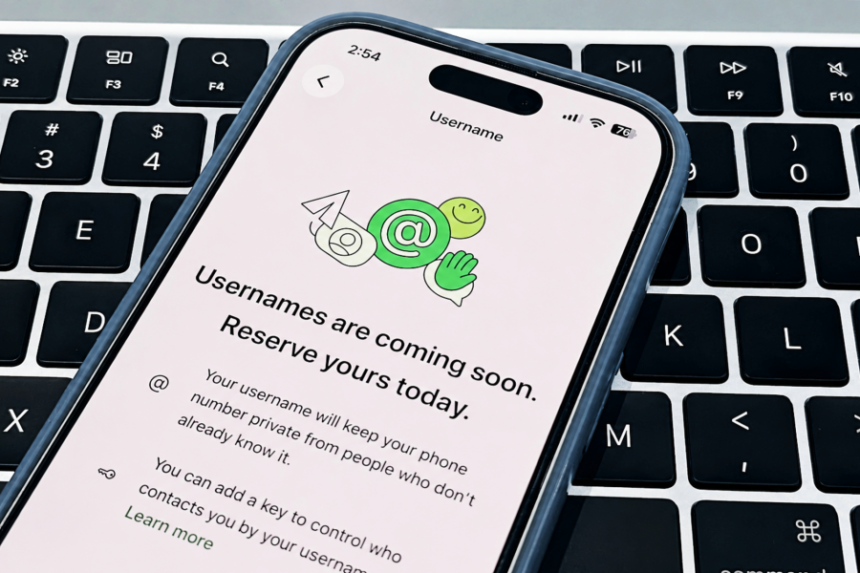
WhatsApp began rolling out username reservations globally on June 29, allowing users to claim handles that can be used instead of phone numbers to find and message people on the platform, ahead of a broader feature launch planned later in 2026. The privacy upgrade rationale is genuine: replacing phone numbers as the primary contact identifier removes a significant attack surface for SIM-swap fraud, phishing, and social engineering. But the feature surfaced an impersonation gap within hours of its announcement. Security researchers and early testers found that usernames closely resembling prominent politicians, celebrities, financial institutions, and government entities were still available for any user to claim: “indiamodi,” “shahrukh.actor,” “teamamitabh,” “ambanijio,” and “rbi_verify” were each claimable in early testing. India’s Ministry of Electronics and Information Technology reviewed that evidence and sent WhatsApp a formal notice on Wednesday with three days to respond, threatening regulatory action if the company does not either explain its impersonation protections or pause the rollout.
Meta’s response to the impersonation question takes two parts. The company told TechCrunch it reserves usernames for public figures and government entities, and blocks “some variations” of those names so only the legitimate owner can claim them. It did not describe how it determines which lookalike variations receive protection and which remain open. Users still require a phone number to create a WhatsApp account, which preserves one layer of traceability that pure username platforms lack. WhatsApp will limit how many new people an account can contact, block repeated attempts to guess a username, and apply systems to detect impersonation and abuse patterns. Those are the defenses the company described to regulators; what they did not explain is why “indiamodi” remained claimable in the days immediately after the reservation launch. That specific claimable handle is what NewsTrackerToday opens on as the product gap that forced the regulatory response.
Sophie Leclerc, who covers the technology sector, reads the impersonation architecture carefully: “The fundamental challenge with username-based impersonation on a platform like WhatsApp is that it combines a familiar-name attack surface with end-to-end encryption. A scammer who claims ‘rbi.official” – resembling the Reserve Bank of India – and then messages someone about an account problem is using a name that confers institutional legitimacy while hiding behind encryption that WhatsApp cannot read. Platforms like Twitter/X and Instagram have verified badge systems specifically because username impersonation of institutions is a documented fraud vector. WhatsApp’s usernames launch without a verification or badge layer was the gap that created the MeitY concern.”
Daniel Wu places the regulatory response in a pattern: “India has been consistent in one regulatory approach across AI and messaging platforms: when a new feature creates a potential fraud or security surface before protections are established, the government requests a pause and an explanation. That happened with AI model deployments, with Telegram during the exam season, and now with WhatsApp usernames. The three-day clock is not a shutdown; it is a formal demand for transparency about what specific protections exist before the feature reaches 500 million Indian users at scale. Meta has dealt with this kind of regulatory engagement in India before and knows the process.” The “indiamodi” test result is what NewsTrackerToday reads as the indiamodi test case: the most politically sensitive possible username combination was claimable in a country where impersonating the prime minister in a financial fraud context carries specific criminal risk.
Changpeng Zhao, the Binance co-founder who goes by “cz_binance” on other platforms and has over 10 million X followers, found that he could not reserve his own handle on WhatsApp during the early reservation period. The Binance CZ case is the consumer-facing illustration of the same problem from the other direction: legitimate public figures cannot secure their identity while bad actors can claim close lookalikes. Rachel Tobac, chief executive of SocialProof Security, told TechCrunch that usernames are a net privacy gain by reducing phone number exposure, but added that users should choose non-guessable usernames and verify identity through secondary channels. Her advice is sound for sophisticated users and describes the platform gap accurately: WhatsApp’s username system currently requires users to manage impersonation risk through personal behavior rather than platform-level identity verification. The Binance CZ case is what NewsTrackerToday surfaces as the most commercially legible illustration of that gap.
The shift that WhatsApp’s username rollout registers is the platform’s transition from a phone-number-anchored communication tool to a handle-based social network that happens to use phone numbers for account creation. That transition was always coming – WhatsApp with 3 billion users cannot remain permanently anchored to phone numbers as the primary identity when users increasingly want privacy from the people they communicate with. The shift is real and mostly positive. MeitY’s three-day notice and the “indiamodi” claimability gap are what News Tracker Today marks as the evidence that the transition arrived ahead of the verification infrastructure that would make it safe at the platform’s scale.