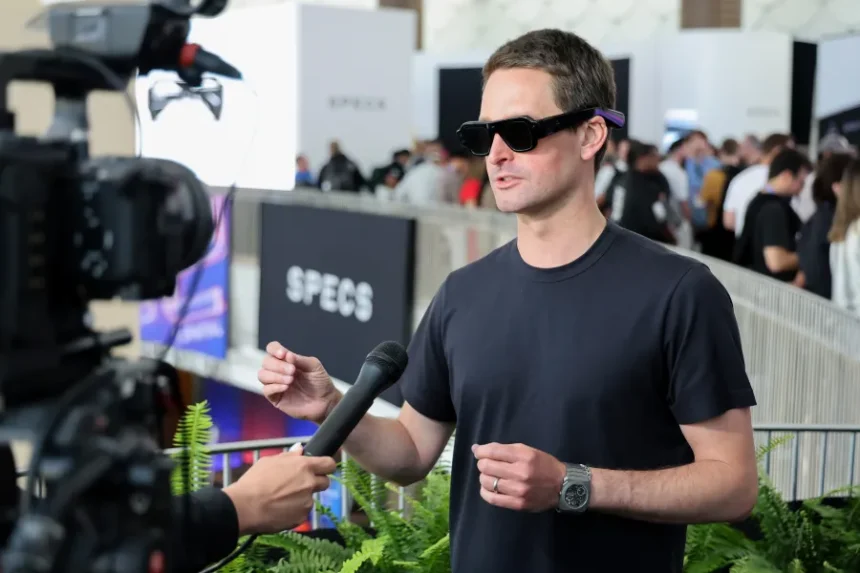
Snap CEO Evan Spiegel avoided directly answering investor questions about preorder demand for the company’s long-awaited Specs smart glasses during Monday’s second-quarter earnings call, just weeks before the device’s September launch event. Asked directly, Spiegel pivoted to describing general interest rather than sharing a number. A CEO this practiced at answering everything except the specific figure investors actually asked for is what NewsTrackerToday reads on as the more telling response than anything Spiegel did say.
What he did say leaned heavily on framing rather than figures: “What we’re hearing from folks is really that they want to try Specs. It’s obviously a high consideration purchase at $2,195… I think for the broader public and consumers, it’s going to be really important for folks to go hands-on.” That’s an executive explicitly setting expectations for a product that requires in-person trial to sell, ahead of a launch event he’s positioning as the actual starting point for consumer adoption, not this earnings call.
Isabella Moretti reads the pricing gap as the central tension Spiegel is managing: “Specs costs roughly six times what Meta’s entry-level Ray-Ban smart glasses run, while sitting well below Apple’s $3,500 Vision Pro. That’s a deliberate positioning choice, not accidental pricing, Snap is betting a decade of dedicated platform development justifies a price point most consumer hardware in this category has never approached. But it also means Snap can’t lean on volume the way Meta can, every unit sold has to carry real margin from day one.” That pricing-strategy bet, more than the preorder dodge itself, is what NewsTrackerToday pins round as the more consequential decision Snap has already made.
Spiegel was more forthcoming when investors pressed him on why Snap chose to build Specs entirely alone rather than partnering with another hardware or platform company, the same question that’s shaped how nearly every other player in this category has approached the market. “What’s so unique about this opportunity for us is really that we’re a first mover,” he said, contrasting it with Snap’s early history entering social media as a late arrival competing against Facebook, Instagram, and Twitter.
Sophie Leclerc, who covers the technology sector, reads Spiegel’s timeline admission as the more consequential number he did share: “He told investors mass-market consumer adoption likely won’t happen until close to the end of the decade, specifically citing weight and cost as the barriers that need to come down first. That’s a CEO managing expectations years in advance, essentially telling investors not to judge Specs by near-term unit sales at all. Developers have been building on the platform for years already, which is the actual asset Snap is banking on outlasting slow initial hardware adoption.” That multi-year adoption timeline, more than this quarter’s preorder numbers, is what NewsTrackerToday circles to as the real target Spiegel is asking investors to measure Specs against.
The September launch event now carries outsized weight in Snap’s own narrative, positioned as the moment hands-on trial finally replaces the technical specs and developer enthusiasm that have defined public discussion of Specs so far, without a single confirmed consumer sales figure attached to any of it yet.
None of this confirms whether Specs actually finds meaningful adoption once real units reach real customers in September, since a decade of technical development and platform-building doesn’t guarantee consumers respond to the price point the way Spiegel’s framing assumes. Whether the September launch event converts genuine hands-on interest into sales at a price point six times Meta’s entry offering, or whether Snap’s end-of-decade adoption timeline proves optimistic even by its own CEO’s already cautious framing, is what News Tracker Today closes round as the real test this earnings call postponed rather than answered.