Global smartphone shipments fell 11% in the second quarter to their lowest level for the period since 2013, according to early estimates from Counterpoint Research, as a prolonged memory chip shortage pushed handset prices higher and cooled consumer demand across the industry. One company managed to grow anyway, and that split is what NewsTrackerToday breaks out as the more useful story than the overall decline.
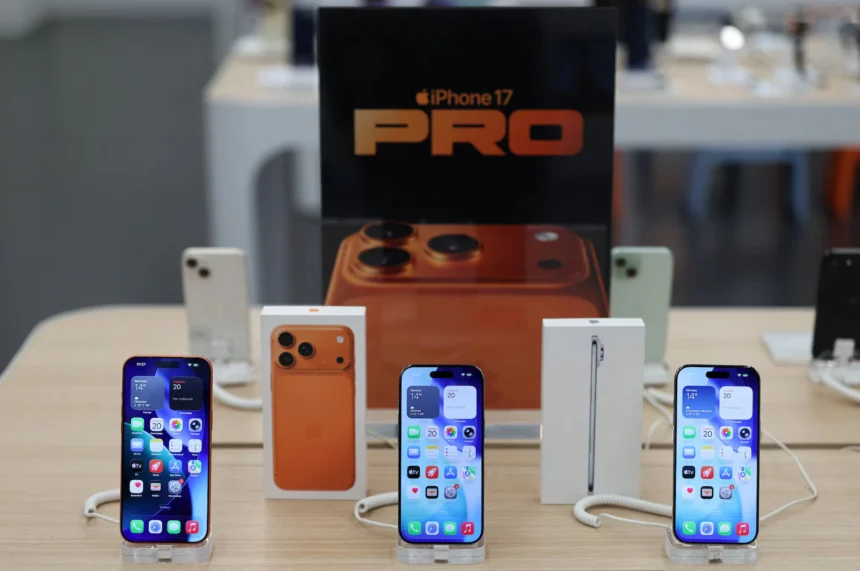
Apple’s shipments rose 3% in the quarter, pushing its global market share to a record 20% on resilient demand for its premium iPhone lineup, notably without raising prices the way much of the rest of the industry did. Samsung reclaimed the top overall spot with a 24% share, driven by strong sales of its flagship Galaxy S26 series, better product availability, and fewer price increases in markets including India and the Middle East.
Ethan Cole reads the memory-chip mechanics tersely: “Suppliers are prioritizing AI data-center customers over consumer electronics right now, full stop. That’s forcing phone manufacturers to pass higher component costs on to buyers, hardest at the entry and mid-range tiers where margins were already thin. Apple and Samsung can absorb some of that cost internally because their scale and pricing power give them room. Everyone else in the top five is stuck passing it straight through, and that’s exactly where shipments fell hardest.” That absorption gap between the top two players and everyone else is what NewsTrackerToday pins to as the real explanation for why this downturn hit unevenly.
Xiaomi, Oppo, and Vivo posted the steepest shipment declines among the top five smartphone makers, a direct consequence of their greater exposure to entry- and mid-range devices, the exact price tier absorbing the sharpest memory-driven cost increases. That’s a structural disadvantage these manufacturers can’t easily engineer around in a single quarter, since it’s built into where their product lineups sit on the price spectrum.
Sophie Leclerc, who covers the technology sector, reads the current shortage against prior memory cycles: “Memory shortages aren’t new to this industry, but this one is different because AI data centers are competing directly with consumer electronics for the same wafer capacity, not just cyclical demand swings. That changes the shape of the recovery. Historically, phone makers just waited out a shortage until supply caught up with demand. This time, supply is being actively redirected toward a permanently larger buyer, which means the phone industry may be competing for leftover capacity indefinitely rather than waiting for a temporary squeeze to pass.” That structural exposure, more than any single quarter’s numbers, is what NewsTrackerToday squares with when explaining why the pain concentrated at the low end of the market.
Counterpoint Research has maintained its expectation that global smartphone shipments will decline roughly 14% for the full year, and said the memory shortage is likely to persist well into 2027, longer than most manufacturers had been planning around as recently as this spring.
None of this changes the fact that premium demand, at least for now, is proving far more resilient than the value tier this shortage is actively squeezing. Whether that split between premium resilience and value-tier pain widens further as the shortage extends into next year, or whether cheaper manufacturers find a way to redesign around costlier memory, is what News Tracker Today totals up as the real question the rest of 2026 will answer.