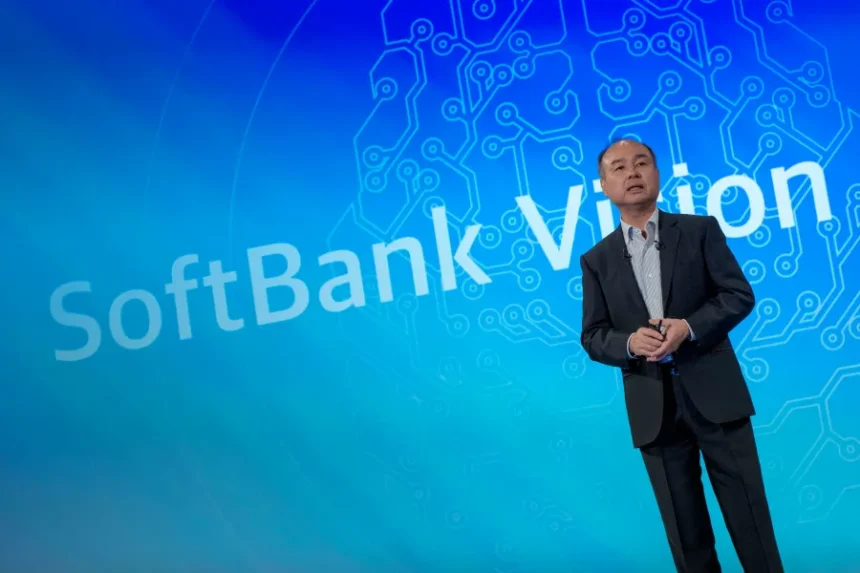
Masayoshi Son told shareholders at his mobile unit’s annual meeting on June 23 that Elon Musk’s vision for orbital AI data centers will not matter in the AI race, and his reasoning is specific. The main advantage of putting data centers in space would be cheaper electricity, since solar power in low Earth orbit is continuous and free from weather and night-cycle interruption. But electricity is not the dominant cost in an AI data center. Research published by Epoch AI in May 2026 examining a one-gigawatt AI data center found that server hardware, primarily GPUs, accounts for roughly 60% of total cost of ownership. Electricity is perhaps 10 to 15%. The launch costs, communication latency, satellite replacement cycles, and engineering complexity of space-based infrastructure would, in Son’s analysis, cost far more than any electricity savings would recover. “In the battle for AI, the next few years will be far more important than what might happen a decade or so from now,” Son said. The argument is structurally sound. Whether Son is the right person to make it is the more interesting question.
SoftBank chairs the Stargate initiative alongside OpenAI and Oracle, a $500 billion commitment to build AI data centers on Earth. SoftBank has also pledged up to €75 billion to build data centers in France. Both commitments depend on terrestrial infrastructure winning the AI compute race. Son’s dismissal of orbital data centers is not independent analysis. It is the conclusion that most benefits his existing bet, and that conflict of interest is what TechCrunch’s Equity podcast identified explicitly: “All these people have baggage and tremendous amounts of money at stake. There’s just no objective, impartial observers here.” The irony of Son playing the skeptic is real, given a corporate history that includes WeWork, a €75 billion French data center pledge, and famously long-duration AI projections that have stretched decades into the future in earlier shareholder presentations. That specific irony is what NewsTrackerToday anchors as the first thing the story requires before Son’s technical argument gets evaluated on its merits.
Daniel Wu, who covers geopolitics and energy, reads the conflict-of-interest pattern in historical terms: “Every major technology competition has been shaped by incumbents framing the disruptive alternative as technically infeasible, economically irrational, or simply too late to matter. The specific mechanism is consistent: the incumbent is not lying, they are applying their real analytical priors to a question where their financial interests bias those priors. Son’s Stargate commitment gives him approximately the same analytical posture on orbital compute that AT&T had on cellular telephony in the 1980s. They were also not wrong that terrestrial infrastructure was the near-term answer. They were wrong about where the long run went.”
Sam Altman has also expressed skepticism about orbital data centers, though as TechCrunch’s Equity team noted, he runs a company dependent on terrestrial compute and has a long and documented complicated relationship with Musk. Amazon’s Matt Garman, whose AWS business competes directly with SpaceX’s compute-rental operation, has not been enthusiastic either. The electricity cost fraction is what NewsTrackerToday pulls as the Son argument’s actual analytical core: he is correct that electricity savings alone cannot justify the launch and latency costs of orbiting data centers. What that analysis does not account for is the secondary benefit of orbital compute, which is not electricity savings but rather unlimited scalability unencumbered by the land acquisition, power permit, grid connection, zoning approval, and local opposition that is currently blocking hundreds of billions of terrestrial data center projects. Those frictions are not costs Son has to bear for Stargate. They are the reason Stargate is behind schedule.
SpaceX’s own argument for orbital compute is not primarily about electricity. It is about the total cost of building data center capacity when terrestrial constraints are binding – power, land, water for cooling, regulatory approval at speed, and proximity to end users in markets where terrestrial infrastructure is absent. Musk’s stated target of one gigawatt of orbital AI compute by the end of next year requires producing approximately 6,666 AI satellites, which at SpaceX’s reported current production rate of around 70 satellites per week would take roughly two years. The production gap between the stated timeline and the demonstrated manufacturing capacity is what the orbital data center thesis has not answered, and it is the technical constraint that Son’s terrestrial advocacy shares no interest in resolving. The trajectory from today’s Starlink production to orbital compute at competitive scale is what NewsTrackerToday traces as the specific challenge Son correctly identifies and strategically advantages.
The uncomfortable implication of the debate is that both Son and Musk are describing a future that advantages their existing business. Son’s Stargate investment scales if terrestrial data centers remain the answer for the next decade. Musk’s Terafab and orbital compute thesis scales if they do not. Neither party has incentive to acknowledge where their analysis might be compromised by their financial position. OpenAI’s Altman is skeptical of the same concept he depends on Musk’s Starship to eventually enable. Every major voice in this debate has a stake in the outcome, and the debate itself produces no information that a neutral technical analysis has not already provided. The $72 per share call option that Morningstar’s analysts described when valuing SpaceX’s IPO is a bet that the orbital compute thesis materializes. Whether Son is correctly timing the AI race or just talking his own book is what News Tracker Today lands on as the question the next five years will settle by evidence rather than advocacy.