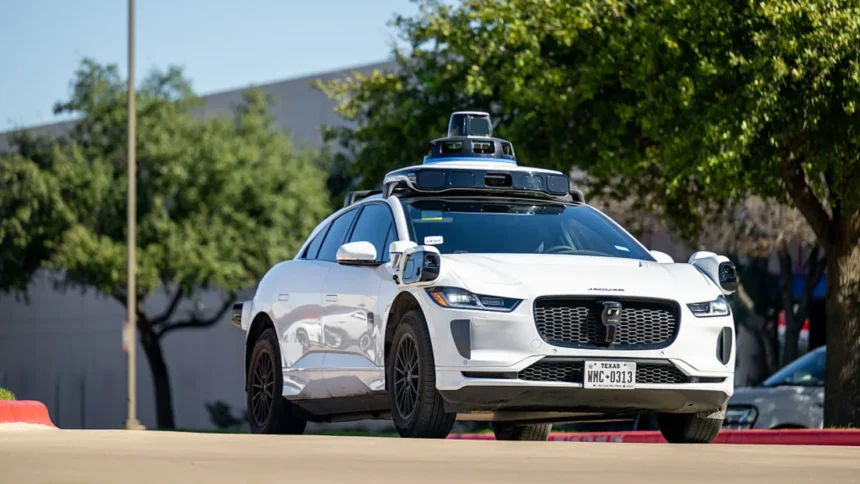
Waymo robotaxis are no longer available through Uber’s app in Phoenix, Arizona, both companies confirmed Monday, ending a nearly three-year partnership that both sides are describing in carefully neutral, even complimentary, terms despite the relationship visibly fraying elsewhere. Uber called Phoenix “an intentionally limited deployment, reaching just over a dozen vehicles dedicated to the program” and said the collaboration “helped us to quickly scale Austin and Atlanta, where hundreds of Waymo AVs are available exclusively on Uber.” Waymo described it as “a productive pilot that paved the way for future expansions and partnerships across the globe.” Both statements are accurate and both are doing work to obscure the more interesting fact: Phoenix was the only market where Waymo operated both directly through its own app and through Uber simultaneously, and the company has now chosen to consolidate around its own app there while Uber prepares to announce an undisclosed new autonomous vehicle partner in the same city.
The vehicles that previously served Uber riders in Phoenix have been folded back into Waymo’s own fleet, where they remain accessible through the Waymo app, and are also being redirected to support a delivery partnership with DoorDash – a direct Uber Eats competitor – and a public transit integration with Via Transportation that began in 2025. That redirection is the detail that complicates the friendly-breakup framing: Waymo is not simply pulling vehicles inward for its own ride-hailing app, it is actively deploying the same fleet to support two platforms that compete directly with different parts of Uber’s business. The dozen-vehicle scale of the original Phoenix pilot, modest by any measure, is what NewsTrackerToday picks up as the detail explaining why neither company is treating the split as urgent or significant in dollar terms, even as the strategic signal underneath it is genuinely substantive.
Liam Anderson reads the competitive positioning directly: “Uber has built its robotaxi strategy around being the platform every AV developer needs for demand aggregation. That strategy depends on AV companies viewing Uber as complementary rather than competitive. Waymo redirecting Phoenix vehicles to DoorDash, a direct Uber Eats rival, signals that Waymo is comfortable working with Uber’s competitors when it serves Waymo’s interests. That’s a different posture than full Waymo-Uber alignment, and it matters more in Phoenix specifically because that’s the only market where Waymo has operated independently of Uber long enough to have built its own direct-app demand.”
Sophie Leclerc, who covers the technology sector, places the split in the context of Waymo’s recent operational troubles: “The Phoenix wind-down comes shortly after Waymo recalled nearly 3,900 robotaxis nationally due to a software issue that could cause vehicles to enter active freeway construction zones and continue driving through them. That recall doesn’t appear to be the direct cause of the Phoenix split – the timeline suggests the wind-down was already underway in May, before the recall became public – but it does complicate how investors and regulators read Waymo’s operational maturity at exactly the moment the company is also rolling out its newest robotaxi platform, the Zeekr-built Ojai van. Launching a new vehicle type while managing a major safety recall and restructuring a key partnership simultaneously is a lot of operational complexity to manage at once.” The recall context is what NewsTrackerToday reads alongside the Phoenix news, not because the two are causally connected but because they describe the same company managing multiple operational threads under public scrutiny simultaneously.
The London dimension is the part of this story that turns a routine partnership wind-down into a more significant signal. Both companies are expanding into London this year, and reports indicate Uber and Waymo are positioned to compete directly there rather than partner, a structural departure from the model that has defined their relationship in every U.S. market to date. If Phoenix is the first visible crack in a partnership that is simultaneously deepening in Austin and Atlanta while preparing to fracture entirely in a new international market, the pattern that emerges is selective cooperation: Uber and Waymo work together where the economics clearly favor both parties and compete directly where the market is large enough and new enough that neither needs the other’s existing infrastructure. That selective dynamic is what News Tracker Today stays with as the frame for understanding what “partner and competitor simultaneously” actually means in practice rather than as an abstraction.
Tesla’s robotaxi operation, by comparison, remains tiny: just 69 registered automated vehicles in Texas according to the most recent state data, dwarfed by both Waymo’s roughly 4,000-vehicle national fleet and the hundreds of Waymo vehicles operating through Uber in Austin and Atlanta alone. Uber has partnerships with virtually every major autonomous vehicle developer except Tesla, which gives the company a uniquely broad position to aggregate AV supply regardless of which individual relationship strengthens or weakens. Whether that aggregation strategy holds as Waymo’s own-app ambitions grow, and whether the upcoming undisclosed Phoenix partner and the London competitive dynamic together represent the start of a broader recalibration in how Waymo thinks about Uber as a distribution channel versus a competitor, is the open question that NewsTrackerToday names as the one this quiet Phoenix split leaves for the rest of 2026 to answer.