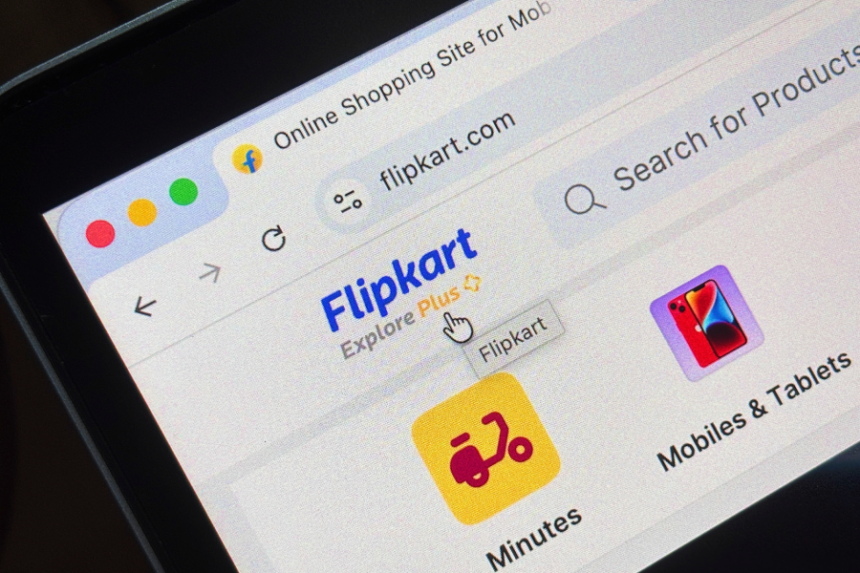
Flipkart’s quick-commerce service, Minutes, crossed 1,000 micro-fulfillment centers on Tuesday – less than two years after its August 2024 launch – covering more than 130 cities and 8,000 postal codes across India, and the trajectory behind that number is the part that NewsTrackerToday maps as the race’s real story. Orders on Minutes grew approximately 400% year-on-year. Customer retention improved 20% in the same period. Gen Z shoppers now account for more than 40% of the platform’s customer base and represent its fastest-growing cohort. Flipkart is targeting 1,500 micro-fulfillment centers by year-end. Amazon, entering from a standing start with its Amazon Now service, is live in more than 15 cities with over 500 centers and has announced plans to expand to 100 cities and more than 1,000 centers, backed by an investment of approximately 2,800 crore rupees.
The competitive field has compressed dramatically. Quick commerce in India began as a metropolitan convenience play, a category owned by startups willing to absorb losses for market share in Bengaluru, Mumbai, and Delhi. What Flipkart’s Tuesday announcement describes is a different animal: a network that has grown 42-fold in Tier-2 and Tier-3 cities in a single year, expanding into places like Ambala, Bokaro, Darbhanga, and Jorhat. Kunal Gupta, head of Flipkart Minutes, said demand is increasingly coming from electronics, beauty, and personal care products rather than just groceries, which describes a platform that has moved beyond the impulse-snack and daily-staple use case into something closer to a general retail substitute.
Daniel Wu, who covers geopolitics and energy, places the infrastructure buildout in a competitive historical frame: “India’s quick-commerce market is following the same pattern as logistics competition in every high-growth emerging market: the winner is determined by who builds physical infrastructure fastest, not who has the best app. Flipkart’s Walmart ownership gives it the supply chain and capital discipline to sustain a physical buildout at a pace that pure-play VC-backed startups cannot maintain indefinitely. Amazon’s entry at 500 centers is still a fraction of what Flipkart has built, but Amazon has the capital and the Prime ecosystem to close that gap aggressively.” Blinkit, owned by food-delivery platform Eternal, remains the market leader with 2,243 dark stores, and the comparison is what NewsTrackerToday holds as the benchmark that frames Flipkart’s achievement: 1,000 centers puts Flipkart ahead of Zepto’s 1,139 and Swiggy Instamart’s 1,143, not yet at Blinkit’s level but in the same competitive tier.
Ethan Cole reads the macroeconomic dimension directly: “India’s quick-commerce sector is operating on a structural thesis that urban and semi-urban consumption will increasingly substitute planned retail for on-demand delivery. The Tier-2 and Tier-3 growth numbers say that thesis is not limited to tier-one metro consumers. If 42-fold year-on-year expansion in secondary cities holds even partially through the next 12 months, the addressable market assumptions that justify the infrastructure investment are tracking correctly.” Amazon India country manager Samir Kumar told reporters that Prime customers in Amazon Now cities spend three times more on the platform monthly compared to non-Now Prime customers, and that the service has grown around 25% month-on-month in recent periods. That Prime retention multiplier is the commercial logic behind Amazon’s aggressive center expansion plan.
The product mix evolution on Flipkart Minutes is what NewsTrackerToday reads as the Tier-2 signal that changes the story’s scale: a quick-commerce platform moving from grocery-dominated orders to electronics, beauty, and personal care in secondary cities describes a consumer behavior shift with implications for traditional retail across India, not just for fast delivery in metros. When someone in Bokaro orders a beauty product in 15 minutes rather than waiting three days for a standard delivery, that is a structural substitution, not an impulse purchase.
The most defensible near-term projection is that the quick-commerce infrastructure race in India accelerates further through 2026, with Flipkart likely reaching or approaching its 1,500-center target, Amazon Now hitting 1,000 centers earlier than its stated plan if Prime customer retention data continues to show the multiplier Samir Kumar described, and Blinkit maintaining its category leadership while Zepto and Swiggy Instamart compete for the second-tier positions that Flipkart is now directly challenging. The category’s expansion into Tier-2 cities is the growth driver that News Tracker Today carries forward as the one that will determine which platform owns India’s next hundred million quick-commerce customers.